
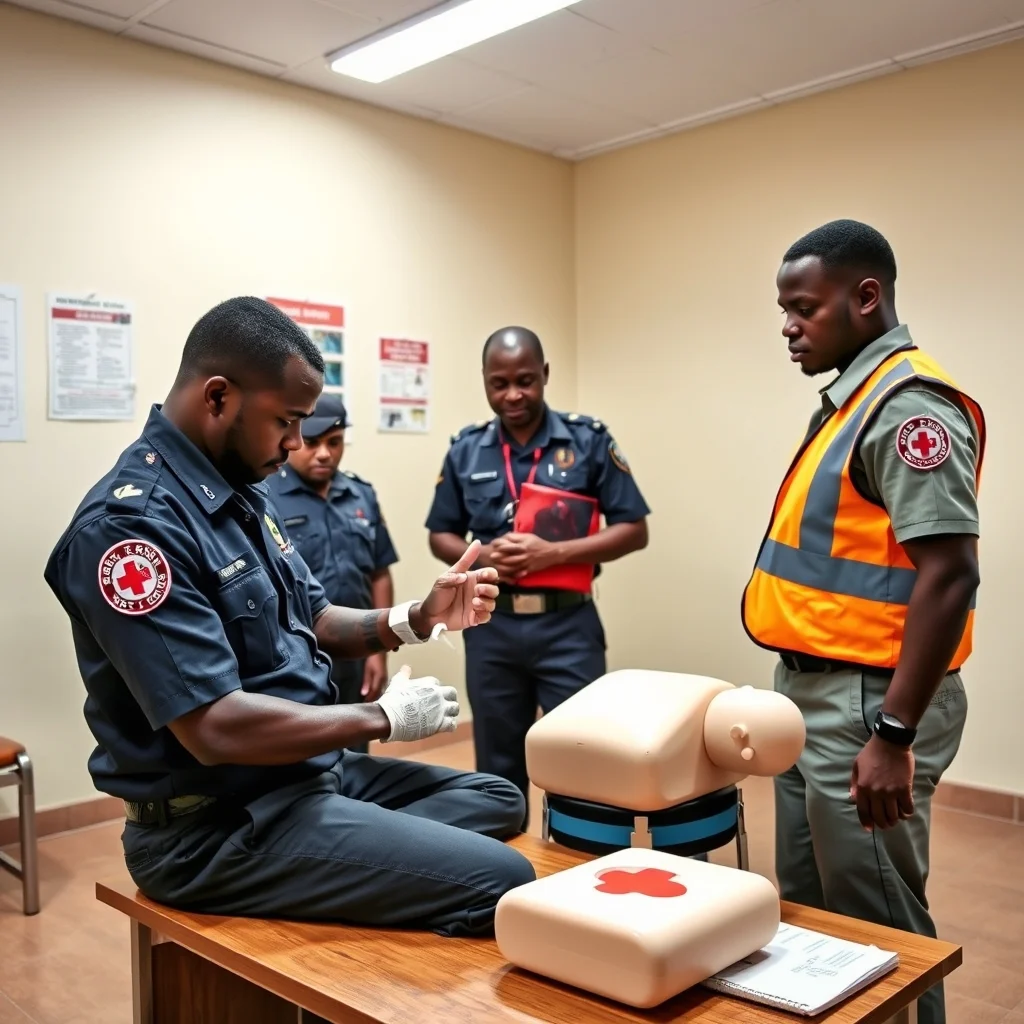
Officers at the Ankaful Prison Complex recently completed a two-day Emergency Response Training program, organized by the Ghana Red Cross Society. The initiative, aimed at bolstering the prison’s capacity to manage various emergencies, took place at the Ankaful Prison Complex and concluded this week.
Boosting Preparedness in a Unique Environment
The training was a direct response to the need for enhanced safety and security protocols within correctional facilities. It focused on equipping prison officers with critical skills to handle a spectrum of potential crises, from medical emergencies and fire outbreaks to riots and natural disasters.
This program was facilitated by the Business Development and Special Initiatives Unit in collaboration with the Public Relations Unit, operating under the broader “Think Prison 360 Degrees” agenda. This agenda underscores a commitment to a holistic approach to prison management and reform.
The Central Regional Prisons Commander, DDP Joseph Asabre, officially opened the training. He emphasized the vital role of emergency response skills in maintaining order and ensuring the well-being of both inmates and staff. Commander Asabre urged participants to actively apply the acquired knowledge to improve the overall safety and security within the prison system.
Comprehensive Skill Development
The Ghana Red Cross Society, through its Central Regional Manager Mohammed Baidoo, led the comprehensive training sessions. Baidoo expressed gratitude for the collaboration with the Prisons Service leadership and advocated for more frequent training to continuously build officers’ life-saving capabilities.
Key training modules covered the fundamental principles of emergency response. Participants received instruction in basic first aid, cardiopulmonary resuscitation (CPR), and the effective management of critical situations such as severe bleeding, fractures, burns, and unconscious casualties. Incident reporting procedures were also a core component.
The training was not purely theoretical. It incorporated practical exercises designed to simulate real-world scenarios. These included hands-on casualty handling, proper bandaging techniques, and CPR simulations, allowing officers to practice their skills in a controlled environment.
Expert Endorsement and Data
Mohammed Baidoo, Central Regional Manager of the Ghana Red Cross Society, highlighted the importance of such collaborations. “Preparedness is key in any high-risk environment, and prisons present unique challenges,” Baidoo stated. “Regular, updated training ensures that officers are confident and competent when seconds count.”
While specific data on past incidents at Ankaful Prison was not detailed, the general trend in correctional facilities globally indicates a persistent need for robust emergency response plans. According to the U.S. Bureau of Justice Statistics, medical emergencies and fires are among the most common critical incidents within prisons, underscoring the relevance of the training provided.
Implications for Safety and Future Training
The successful completion of this training signifies a proactive step by the Ankaful Prison Complex to enhance its operational resilience. Officers are now better equipped to respond effectively to emergencies, potentially mitigating harm to life and property.
This initiative aligns with broader efforts to modernize prison management and improve conditions within correctional facilities. By investing in the skills of its personnel, the prison administration demonstrates a commitment to safety, security, and the welfare of all individuals within its jurisdiction.
The collaboration with the Ghana Red Cross Society is expected to continue, with calls for more regular training sessions. This suggests a forward-looking approach, aiming to maintain a high level of readiness and adapt to evolving emergency management best practices. The “Think Prison 360 Degrees” agenda will likely see further practical training modules rolled out to address other facets of prison operations and safety.









Leave a Reply