
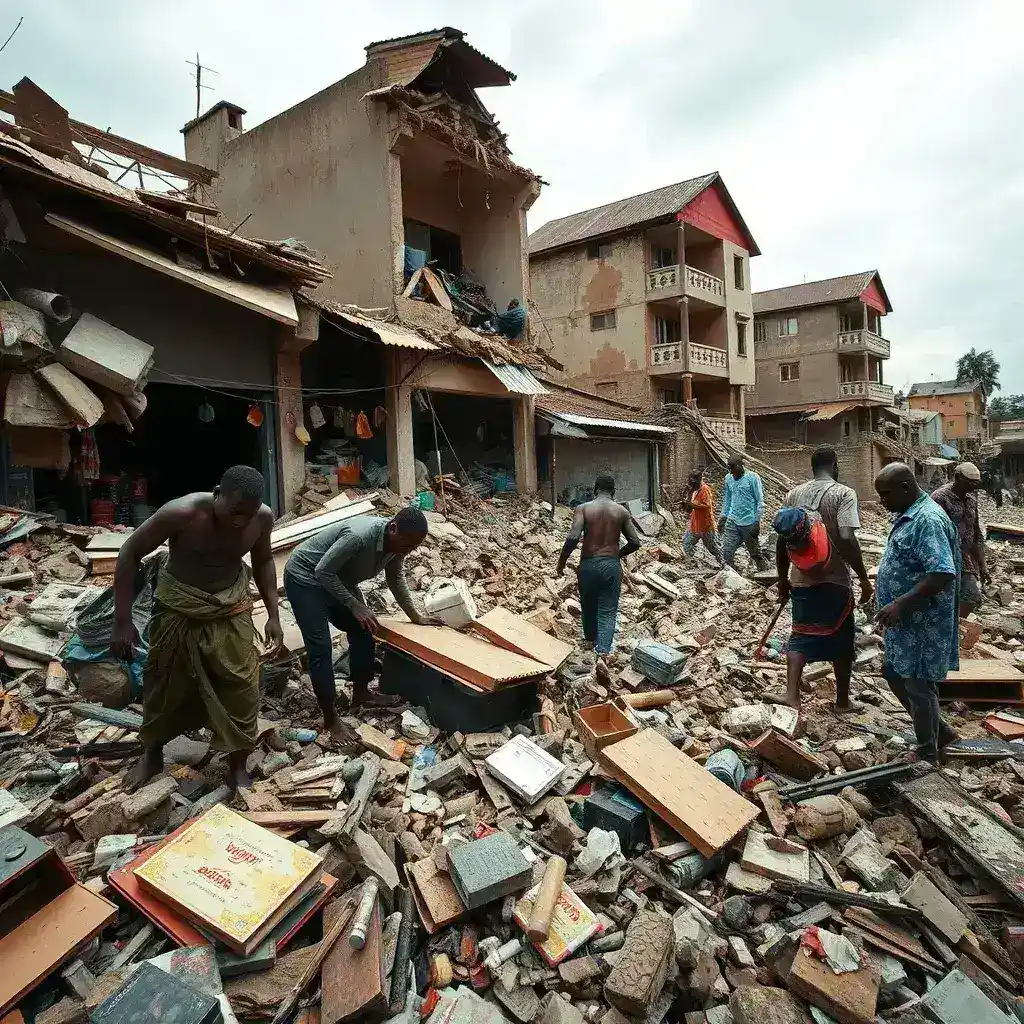
Dozens of traders in Ashaiman, Greater Accra Region, were left in distress and financial ruin after a private developer allegedly carried out a demolition exercise on Thursday, May 21, 2026, to reclaim land occupied by their businesses. The operation, conducted in the early morning hours, destroyed over 50 shops and structures, along with goods and personal belongings valued in the thousands of cedis.
Context of Land Dispute
The affected traders, who specialize in plumbing materials, electrical appliances, provisions, and generators, claim the demolition occurred without any prior warning. They allege that the disputed land has been in their possession and that of previous settlers for over five decades. This long-standing occupation, they assert, is supported by legal documentation secured over years of engagement with state institutions, dating back to the administrations of former Presidents Jerry John Rawlings and John Agyekum Kufuor.
Allegations of Intimidation and Unlawful Action
Traders recounted receiving calls around 4:00 a.m. on the day of the demolition, informing them of heavy equipment at the site. By the time many arrived around 5:30 a.m., the demolition was complete, and the perpetrators had departed. Joseph Eli, speaking on behalf of the affected traders, explained that previous attempts to have them sign agreements transferring ownership of the land to another party were rejected because the documents sought to place the land under a different name.
Traders further accused influential individuals in Ashaiman of leveraging their authority to intimidate occupants and force them off the land. Baba Tahiriniya, who has operated in the area since 1996, described the demolition as both unlawful and unfair. He stated that no formal notice was served, yet the demolition proceeded with police protection, even while the matter is reportedly still before the courts.
Official and Political Responses
An official from the Ashaiman Municipal Assembly confirmed that the land is indeed the subject of ongoing litigation between the traders and a private developer asserting ownership. In response to the incident, the Member of Parliament for Ashaiman, Ernest Norgbey, visited the affected area and assured traders of continued investigation. He strongly condemned the demolition, emphasizing that no entity has the right to interfere in a matter under judicial consideration.
The MP highlighted that the dispute over the land is under active court review and any demolition exercise should have been stayed until a judicial determination. The affected traders are now appealing to President John Dramani Mahama and other relevant authorities for intervention to ensure that due process is followed. They remain committed to pursuing justice through the courts and are demanding compensation for their destroyed properties.
Implications and Future Outlook
This incident underscores a recurring issue of land disputes and the vulnerability of informal trading spaces in urban areas. The lack of clear demarcation and enforcement of property rights can lead to significant economic hardship for small business owners. The traders’ reliance on legal channels, coupled with allegations of intimidation and forceful eviction, points to a potential breakdown in established legal and administrative processes.
The situation in Ashaiman raises critical questions about the protection of property rights for citizens, particularly those in informal economic sectors. It also highlights the challenges faced by local governance in managing land use and resolving disputes effectively. As the traders pursue legal recourse and appeal for presidential intervention, the outcome of this case could set a precedent for how similar land disputes are handled in the future. The focus will be on whether the legal system can provide timely and just resolution, and whether authorities will step in to prevent such unilateral actions that disrupt livelihoods and erode trust in governance.










Leave a Reply