
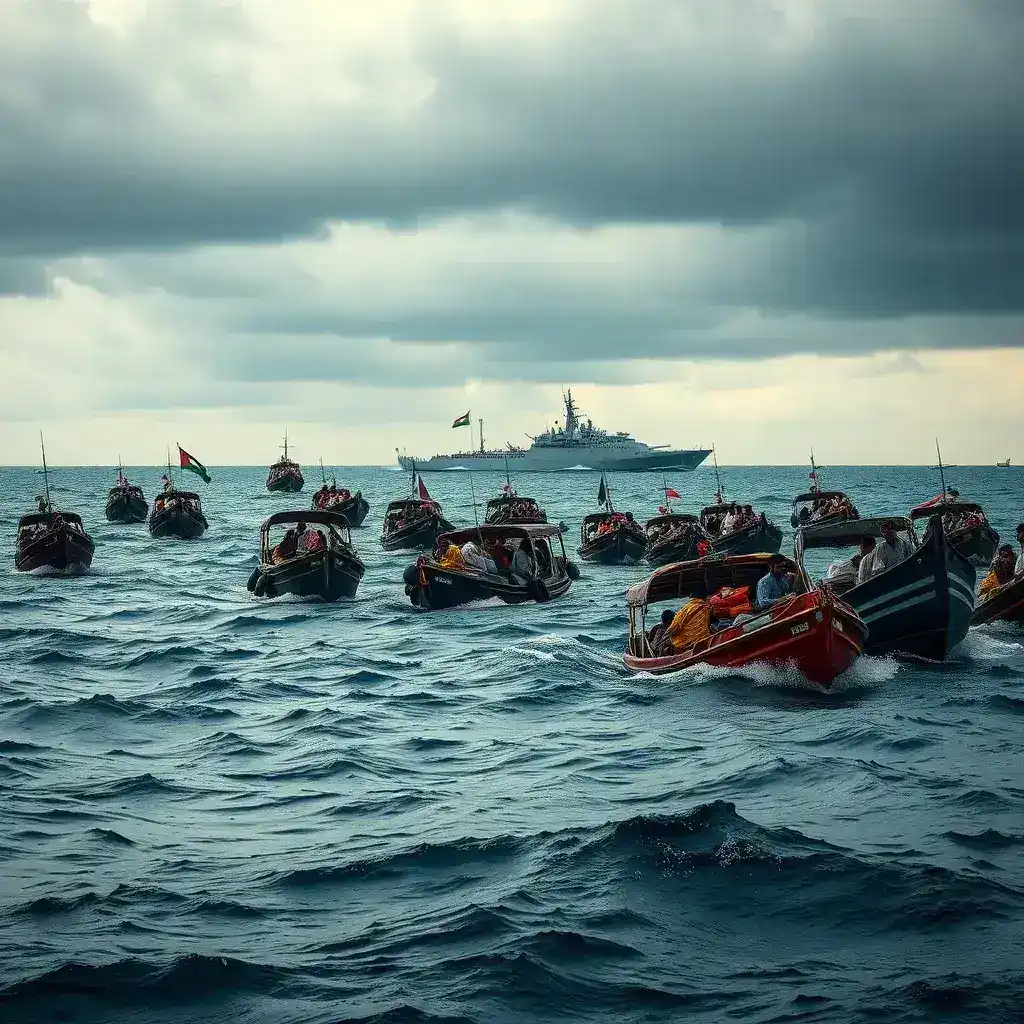
Approximately 175 pro-Palestinian activists, detained by Israeli forces after their aid flotilla was intercepted in international waters near Crete, have been released in Greece. The interception occurred on Thursday, with the Global Sumud Flotilla (GSF) condemning the action as “piracy” and stating the activists were seized unlawfully. Israel’s foreign ministry labelled the flotilla a “PR stunt” and confirmed two individuals remain in Israeli custody.”
Context of the Flotilla and Blockade
The Global Sumud Flotilla set sail two weeks prior with a total of 58 vessels originating from Spain, France, and Italy. Its stated objective was to challenge Israel’s naval blockade of Gaza and to advocate for a permanent humanitarian corridor. This action follows a pattern, as Israel intercepted a previous GSF flotilla last October, detaining and deporting over 470 participants.
Israel maintains a naval blockade on Gaza, which it states is a security measure. The GSF, however, argues this blockade is illegal and contributes to dire humanitarian conditions within the Gaza Strip. The United Nations has highlighted severe challenges in Gaza, including food insecurity and the near-collapse of essential services, despite some improvements in aid delivery.
The Interception and Detainment
According to the GSF, Israeli naval forces conducted a “violent raid in international waters” northwest of Crete on Thursday. They allege that forces “intercepted, boarded, and systematically disabled and destroyed various boats,” detaining participants and leaving some stranded on damaged vessels. The GSF reported that communications were jammed and an engine was smashed during the operation.
Israel’s foreign ministry stated the operation was carried out peacefully and in compliance with international law. They cited the need to prevent the breach of a lawful blockade and indicated that “early action was required” due to the flotilla’s size and the risk of escalation. Initial inspections reportedly revealed “materials that appear to be drugs and contraceptives.”
Differing Accounts and Accusations
The GSF has called for the immediate release of the two activists still held by Israel, Saif Abu Keshek and Thiago Ávila, demanding international pressure on the “Israeli regime.” Israel’s foreign ministry identified Abu Keshek as “suspected of affiliation with a terrorist organisation” and Ávila as “suspected of illegal activity.” The GSF has denounced these claims and called for their unconditional release.
Israel’s foreign ministry further accused the flotilla’s organisers of collaborating with Hamas to sabotage a peace plan and divert attention from Hamas’s alleged refusal to disarm. This accusation was made in the context of the ongoing conflict that began with the Hamas-led attack on Israel on October 7, 2023, which resulted in approximately 1,200 deaths and the taking of 251 hostages.
International Reactions and Diplomatic Efforts
The United States backed Israel’s interception, with a State Department spokesman calling the flotilla a “meaningless political stunt.” Conversely, Spain and Italy expressed strong concerns. Italian Prime Minister Giorgia Meloni demanded the immediate release of detained Italians, while Spanish Prime Minister Pedro Sánchez accused Israel of “violating international law” and pledged assistance for Spanish nationals.
Greek authorities prepared to receive the released activists on the island of Crete. The activists were transported by naval vessel to Atherinolakkos, with buses arranged to take them onward to Heraklion. The Greek foreign ministry offered diplomatic assistance, facilitating the safe return of the passengers to their home countries.
Humanitarian Situation in Gaza
The interception occurred amidst a severe humanitarian crisis in Gaza. A senior UN official recently informed the Security Council that Gaza’s 2.1 million inhabitants face “ongoing and deadly Israeli strikes and dire humanitarian conditions.” While some improvements in aid delivery have been noted, food security remains a significant challenge, and essential services are on the brink of collapse.
Experts from the Integrated Food Security Phase Classification (IPC) previously confirmed famine conditions in Gaza City. Although improvements in nutrition and food supplies were observed following a ceasefire last October, a substantial portion of the population continued to experience catastrophic conditions, with projections indicating a decrease in such cases.
Looking Ahead
The incident highlights the ongoing tension surrounding the Gaza blockade and the lengths to which activists are willing to go to challenge it. As the two remaining activists face questioning in Israel, the international community will be watching for further developments and any potential shifts in diplomatic pressure. The GSF’s commitment to challenging the blockade suggests future attempts may be planned, while Israel’s stance on enforcing it remains firm.







Leave a Reply