
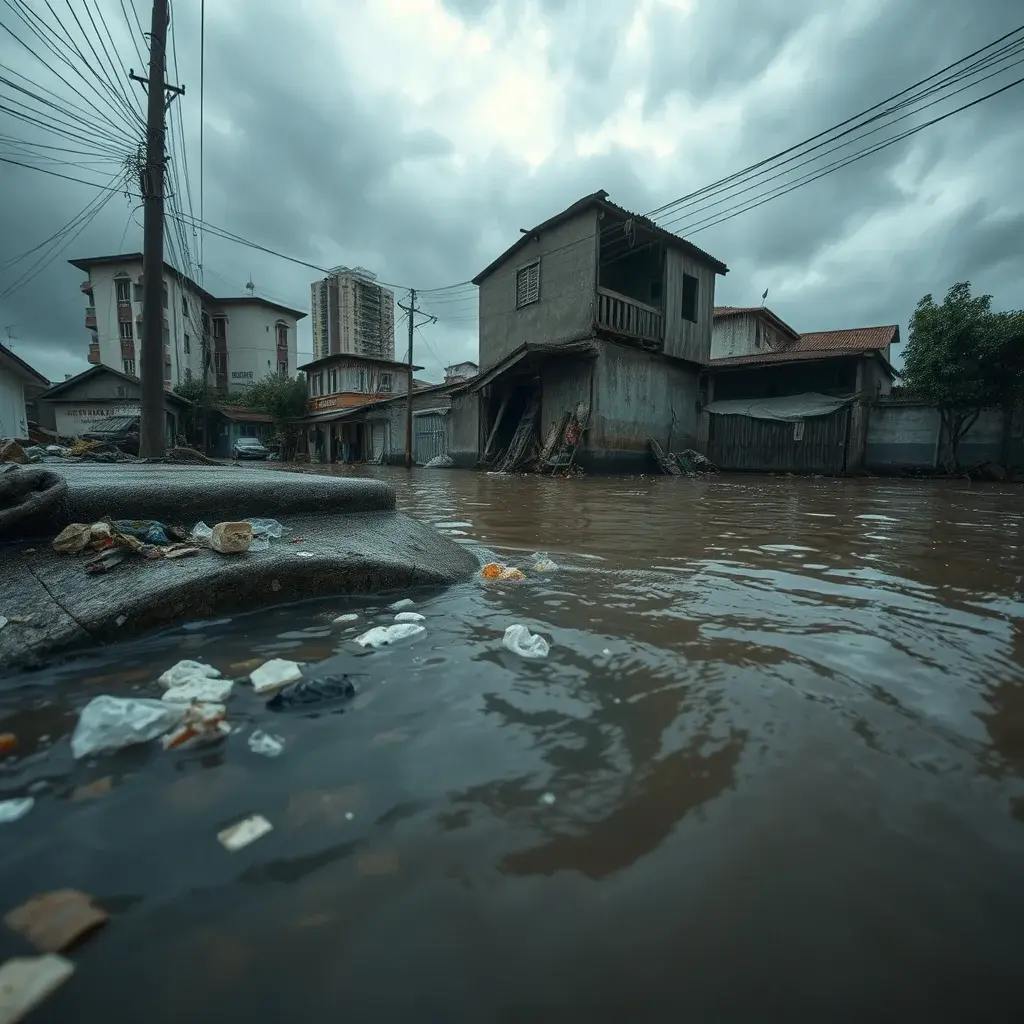
Accra, Ghana – On the night of June 3, 2015, a catastrophic fire at a petrol station near the Kwame Nkrumah Interchange, built perilously close to a floodplain in a city lacking enforced land-use planning, claimed at least 150 lives. The disaster, ignited by floodwaters surrounding the fuel infrastructure, underscored a deep-seated failure in urban management that continues to plague Ghana’s capital and other urban centers. Despite promises of change following the 2015 tragedy, the nation has repeatedly experienced devastating floods, highlighting a pattern of inaction, indifference, and institutional amnesia rather than a response to natural meteorological events.
Since 1935, floods in Ghana have resulted in over 3,000 deaths, displaced more than 700,000 people, and caused significant financial losses to property and livelihoods. This ongoing crisis is not merely a consequence of rainfall but a manufactured disaster, perpetuated by the continuous erection of buildings on waterways and floodplains, choked drainage systems overwhelmed by plastic waste and refuse, and a persistent failure to enforce urban planning regulations.
The cycle of flooding is grimly familiar. As the rainy season arrives, areas like Nima, Kaneshie, Dansoman, Kasoa, and Mallam Junction inundate. Eyewitness accounts consistently point to drains clogged with plastic waste, household refuse, and debris, serving as stark evidence of a society treating vital drainage systems as dumping grounds.
In May 2025, heavy rains alone resulted in four deaths and displaced over 3,000 individuals across the Greater Accra region, with flooding reported in Weija, Kaneshie, Adabraka, Adentan, Oyarifa, and parts of Tema. This event followed a similar pattern in March 2026, when, despite warnings from the Ghana Meteorological Agency weeks prior, Accra was again submerged by rains, demonstrating a persistent lack of preparedness.
The tragedy of Ghanaian flooding is fundamentally political. Since 2016, the country has faced annual catastrophic floods, each met with the same sequence: shock, mourning, committee meetings, and subsequent forgetting. This recurring pattern suggests that flooding in Ghana is largely a man-made disaster, driven by the continued construction on natural watercourses, an unresolved waste management crisis, and the nominal enforcement of urban planning.
June 3, 2015, was anticipated to be a turning point, a moment for Ghana to fundamentally alter its relationship with its geography. Instead, it has become an annual memorial, marked by candlelight and commentary, yet seemingly devoid of lasting consequence. The public outcry that resurfaces each rainy season dissipates as quickly as the floodwaters recede.
The persistent question each flood season is whether Ghana has learned anything. The answer, evident in the submerged streets of Accra year after year, remains a stark ‘not yet.’
What Must Change?
While the case for despair is easily made, the case for action is the only one that holds promise. Ghana is not destined to be perpetually inundated. Other rapidly urbanizing nations have successfully broken similar cycles, demonstrating that structural change and proactive investment, rather than mere sympathy, are key.
Enforce the Land Use and Spatial Planning Act
Ghana enacted the Land Use and Spatial Planning Act in 2016, a year after the pivotal June 3 disaster. However, the act has largely remained on paper, with construction continuing in waterways, floodplains, and buffer zones. Strict enforcement of this act is the most critical and immediate intervention, requiring no financial outlay to initiate. Every structure built on a floodplain that is not demolished or relocated represents a future catastrophe pre-approved by the government. District Assemblies, the Lands Commission, and the Ministry of Works and Housing must treat planning violations as the life-and-death matters they are.
Invest in Drainage Infrastructure as Basic National Security
Ghana’s drainage crisis is well-documented, with research consistently pointing to inadequate facilities as a primary cause of urban flooding. Despite this, drainage budgets remain chronically underfunded. Accra’s drainage network, designed for a fraction of its current population, is incapable of handling the runoff from millions of residents and surrounding peri-urban areas. The national infrastructure discourse must reframe drainage not as a municipal housekeeping issue but as critical national security infrastructure requiring commensurate funding.
Integrate Nature-Based Solutions into City Planning
Engineering solutions alone are insufficient to address a problem partly created by concrete infrastructure. Cities like Sekondi-Takoradi are exploring hybrid plans that combine engineered drainage with nature-based interventions such as wetland restoration, green corridors, and urban gardens. These approaches are globally recognized for their cost-effectiveness in flood mitigation. Accra and other Ghanaian cities should adopt similar strategies, recognizing wetlands as valuable, free infrastructure rather than wastelands that can be paved over at the cost of future disasters.
Build a Functional, Community-Embedded Early Warning System
The warning for the March 2026 floods reached social media analysts before vulnerable communities. An effective early warning system must ensure timely dissemination to those most at risk. Building on initiatives like the UNESCO project to strengthen community resilience, Ghana must invest in last-mile communication channels, including community radio, local language text alerts, and neighborhood watch systems focused on identifying residents in flood-prone areas.
Reform Waste Management as Flood Policy
Blocked drains are often a symptom of a broader waste management failure. Ghana’s flooding and waste management crises are intrinsically linked. Governments serious about flood mitigation must address them concurrently. Policies such as extended producer responsibility, stringent enforcement of waste disposal laws, and investment in collection infrastructure in low-income urban areas are not merely environmental measures but crucial flood prevention strategies.
Make NADMO a Pre-Disaster Agency, Not a Post-Disaster Apology
It is unacceptable that NADMO, ten years after the June 3 disaster, publicly admitted a lack of relief items. The organization’s mandate should shift from post-disaster relief to prevention and preparedness. Its funding must align with the scale of flood events, and its staff should include urban planners, hydrologists, and community organizers, not solely logistics officers. An agency primarily structured for post-catastrophe aid has already failed its fundamental purpose.
Make Politicians Legally Accountable for Flood-Prone Development Approvals
No Ghanaian official has faced legal consequences for approving development on floodplains, neglecting drain maintenance, or under-resourcing disaster management agencies. Until genuine accountability, beyond mere reassignments, is established, the political calculus will not change. Parliament should create clear accountability mechanisms, including independent post-flood inquiries with the power to identify individuals and a public registry of flood-zone development approvals.
None of these proposed changes are beyond Ghana’s technical capacity. The knowledge and, in some cases, the legislation already exist. The critical missing element is the political will to treat flooding as the civilizational threat it has become, rather than a fleeting seasonal news story. The 150 lives lost on June 3, 2015, and the thousands more since, serve as a tragic testament to the cost of inaction. Ghana faces a choice: continue with symbolic gestures or implement the necessary structural changes. The rains, indifferent to human resolve, will continue.










Leave a Reply