
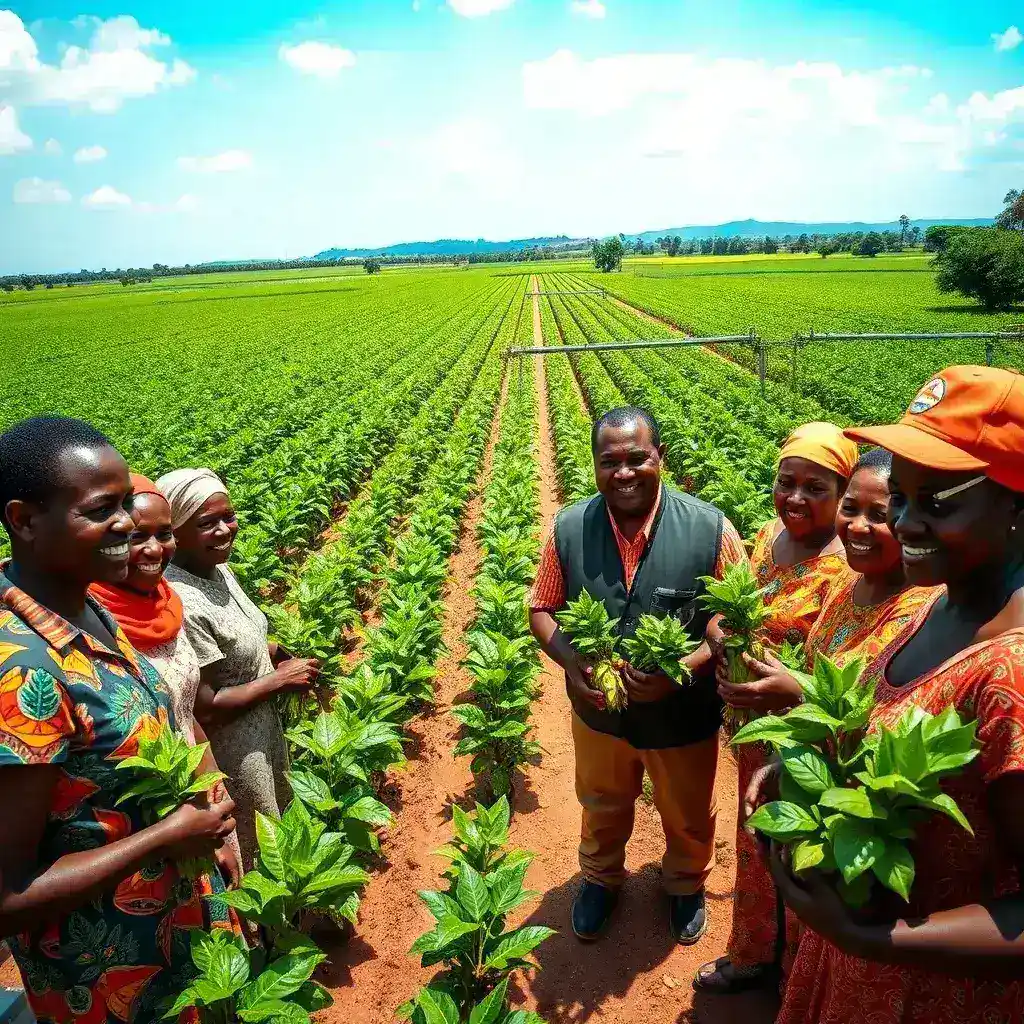
Afarinick Company Limited (ACL) distributed over 400,000 improved cocoa seedlings free to farmers in the Volta Region recently, aiming to rapidly expand cocoa cultivation, enhance farmer incomes, and establish the region as a primary cocoa production hub for Ghana. This significant distribution event occurred at Kpando, the site of ACL’s 2,000-acre Sustainable Commercial Cocoa Plantation, recognized as Ghana’s largest of its kind.
Context for Cocoa Growth
The initiative by Afarinick addresses a critical need within Ghana’s vital cocoa sector. Access to high-quality, disease-resistant planting materials is a cornerstone for increasing yields and improving the economic standing of cocoa farmers. Historically, the Ashanti Region has dominated cocoa production, but efforts are underway to diversify and expand cultivation into other suitable areas like the Volta Region.
The distribution is part of Afarinick’s broader strategy to support farmers and promote sustainable cocoa expansion. This move aligns with national goals to boost cocoa production and maintain Ghana’s position as a global leader in the industry. The event drew attendance from various stakeholders, including local Members of Parliament, traditional leaders, and agricultural experts, underscoring the project’s significance.
Large-Scale Distribution and Infrastructure
The 400,000 seedlings provided are derived from improved varieties engineered for higher yields, robust disease resistance, and better adaptation to evolving climate conditions. Farmers from multiple districts across the Volta Region received these seedlings to establish new farms or revitalize existing ones. Afarinick expects this program to substantially increase the cocoa acreage in the region, complementing government efforts to boost national output.
Davida Pappoe, Programs Manager at Afarinick, highlighted the distribution as a key component of the company’s Corporate Social Responsibility (CSR). “Our investments in seedling production and the provision of quality planting materials are designed to support cocoa expansion, improve farm productivity, and create sustainable livelihood opportunities for rural households,” Pappoe stated.
These seedlings were cultivated at Afarinick’s advanced nursery facility in Kpando, which boasts an annual production capacity exceeding two million improved cocoa seedlings. This nursery is positioned as one of Ghana’s largest, established to meet the escalating demand for superior planting materials and foster the sustainable growth of cocoa farming nationwide.
Showcasing Sustainable Practices
The distribution coincided with a tour of Afarinick’s 2,000-acre Sustainable Commercial Cocoa Plantation. This plantation serves as a model for modern cocoa farming, incorporating advanced irrigation systems, climate-smart agricultural techniques, sustainable land management, and innovative production methods. It represents a significant private sector investment aimed at demonstrating the viability of large-scale, environmentally conscious cocoa production in Ghana.
The Members of Parliament present, including Sebastian Fred Deh (Kpando), Thomas Worlanyo Tsekpo (Hohoe), Fred Agbenyo (Guan), and Jean-Marie Formadi (Biakoye), lauded Afarinick’s commitment. They emphasized that quality planting materials are crucial for enhancing production, yields, and farmer incomes, recognizing the intervention as transformative for the Volta Region’s economy.
Implications for the Future
For the recipient farmers, the free seedlings eliminate a significant financial barrier, enabling them to invest in cocoa farming and improve their economic prospects. Stakeholders view this initiative as a strategic investment in livelihoods and the future of cocoa cultivation in the Volta Region.
As Ghana strives to solidify its global leadership in cocoa production, Afarinick’s actions—distributing hundreds of thousands of seedlings, establishing Ghana’s largest sustainable commercial plantation, and developing a mega-nursery—underscore the pivotal role of private sector engagement. This development positions the Volta Region to become a major contributor to Ghana’s cocoa industry, marking a new frontier for sustainable cocoa farming practices across the nation.










Leave a Reply