
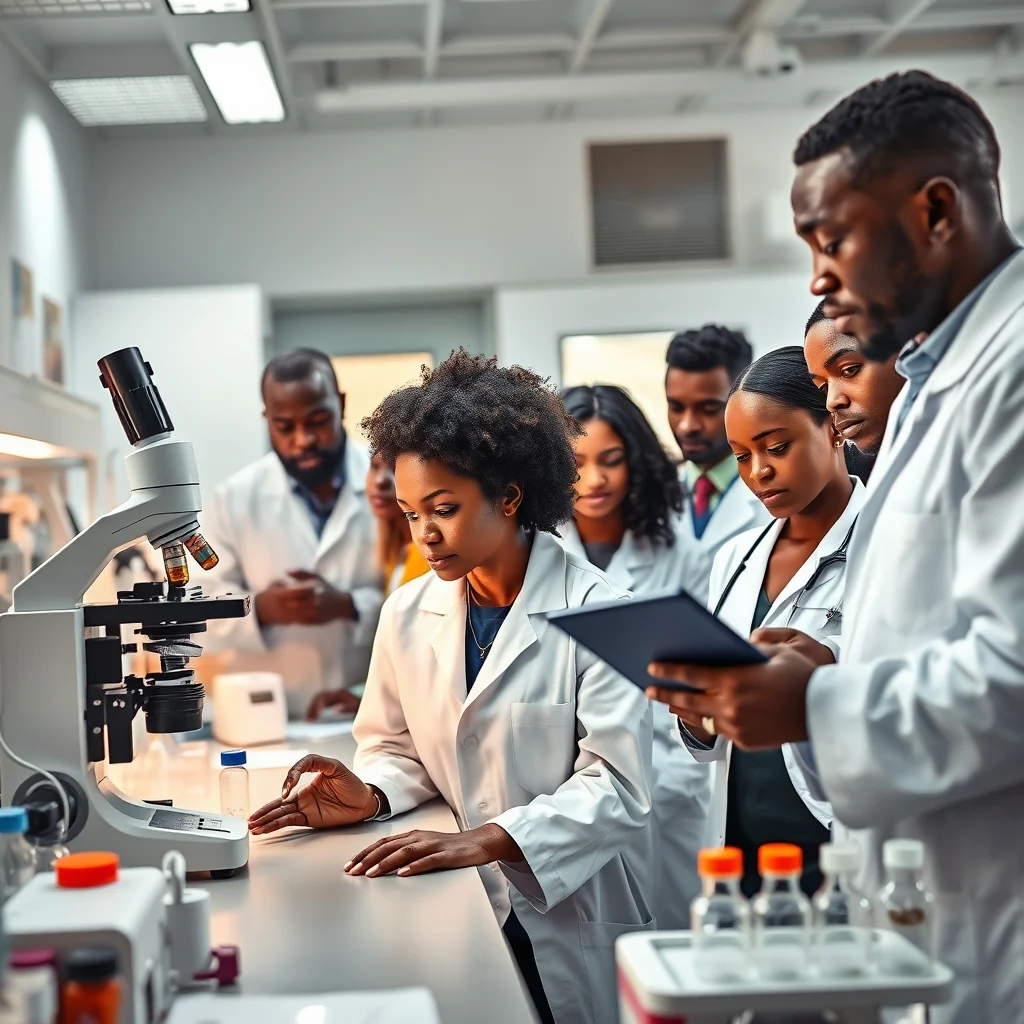
Eight healthcare professionals from six African nations are honing their skills in modern laboratory technology at the Noguchi Memorial Institute for Medical Research (NMIMR) in Accra, Ghana. The training, a collaboration between NMIMR and the Japan International Cooperation Agency (JICA), aims to strengthen the continent’s capacity to combat infectious diseases. The program, which began with an online component in April and concludes with a four-week in-person session in June 2026, addresses the urgent need for enhanced diagnostic and research capabilities across Africa.
Building Capacity Against Emerging Threats
The intensive eight-week training program is designed to equip biomedical scientists with advanced knowledge and practical skills in key areas of infectious disease management. The curriculum spans foundational principles, parasitology, bacteriology, and virology, with a strong emphasis on the latest developments, biosafety, biosecurity, and laboratory quality management systems. These modules are delivered by seasoned scientists from NMIMR and other regional experts, ensuring a comprehensive and relevant learning experience.
Participants hail from Ghana, Liberia, Nigeria, Sierra Leone, Togo, and Zambia, representing a diverse group of African nations facing significant infectious disease challenges. The training is co-funded by JICA and NMIMR, underscoring a shared commitment to improving health outcomes across the continent.
A Proven Track Record in Disease Response
This initiative marks the sixth iteration of this training program since 2019, building on a successful history of capacity development. Previous training sessions have empowered 72 professionals, many of whom have played crucial roles in their countries’ responses to major health crises. Notably, past participants significantly contributed to the COVID-19 pandemic response, assisting with surveillance, sample collection, RNA extraction, and testing.
The current training cohort is particularly timely given the recent resurgence and persistent threat of infectious diseases such as Marburg, Mpox, Hanta Virus, Lassa Fever, and Ebola in the West African region. The enhanced expertise gained by these healthcare professionals will be vital for early detection, accurate diagnosis, and effective containment strategies within their home countries.
Expert Insights and Collaborative Networks
The in-person sessions at the NMIMR Advanced Research Laboratories (ARL) provide hands-on experience with cutting-edge laboratory techniques. Participants not only gain proficiency in diagnostics but also develop crucial laboratory management skills. This practical application, combined with theoretical knowledge, aims to elevate the overall diagnostic and research capabilities of the participating nations.
Beyond individual skill enhancement, the program fosters a collaborative environment. Trainees are encouraged to share best practices and experiences from their respective countries, laying the groundwork for stronger regional networks. These connections are expected to facilitate future partnerships and collaborative research efforts, further strengthening Africa’s collective defense against infectious diseases.
The Path Forward: Sustaining Vigilance
The collaboration between NMIMR and JICA highlights a sustained commitment to advancing biomedical research and capacity development in Africa. As infectious disease threats continue to evolve, the skills and networks forged through programs like this are indispensable. The success of past trainees in responding to pandemics serves as a testament to the program’s effectiveness.
Looking ahead, the focus will be on how these newly skilled professionals integrate their advanced knowledge into their national health systems. Continued investment in such training, coupled with robust laboratory infrastructure and international cooperation, will be critical in ensuring Africa’s preparedness and resilience against future infectious disease outbreaks. Observers will be watching to see how these enhanced laboratory capabilities translate into improved public health surveillance and response mechanisms across the participating countries.










Leave a Reply