
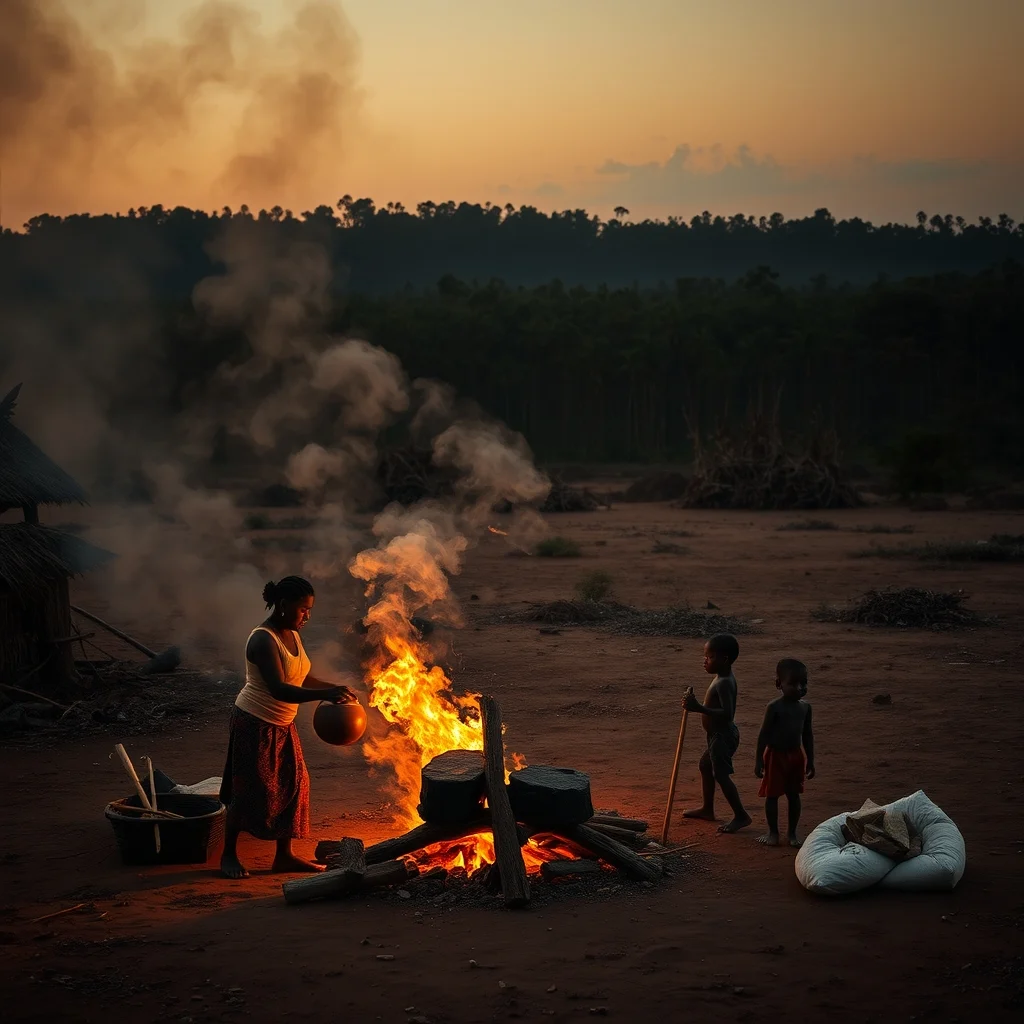
A new study reveals that Africa’s heavy reliance on charcoal and firewood for household energy is significantly accelerating forest loss, posing severe health risks, and contributing to environmental degradation across several key nations, including Madagascar, Rwanda, Zambia, Nigeria, and Togo. The research, commissioned by the African Forest Forum (AFF) and supported by the Swedish International Development Cooperation Agency, highlights that while biomass remains crucial for millions, current practices are unsustainable.
Context: Biomass as a Foundation of African Energy
For a vast majority of households in many African countries, especially in rural and increasingly in urban areas, charcoal and firewood are the primary sources of energy for cooking and heating. This reliance stems from accessibility and affordability, making biomass a backbone of daily life. However, the procurement, processing, and consumption of these resources have historically placed immense pressure on the continent’s forest ecosystems.
Intensifying Demand and Rural Extraction
The study identifies a clear pattern: growing urban demand is the primary driver of intensive rural extraction. As cities expand, their need for charcoal and firewood escalates, shifting the burden onto surrounding rural landscapes, which are often already fragile. In Rwanda, cities like Kigali are heavily dependent on charcoal and firewood sourced from nearby rural areas, straining local forest resources.
Madagascar and Nigeria are experiencing similar trends, where expanding urban populations fuel complex, informal supply chains. These chains are characterized by continuous forest extraction to meet the constant demand. In Zambia, while some regions still possess significant biomass resources, there is increasing pressure, with valuable fruit trees being cut down for charcoal production.
Togo faces a particularly severe situation, with reports indicating that forest depletion is already advanced in some protected areas, leading to rapid resource loss. This intensive extraction, driven by urban centers, directly impacts the ecological balance and biodiversity of these regions.
Inefficient Technologies Exacerbate Deforestation
A critical finding of the study is the widespread continued use of outdated and inefficient energy technologies. Traditional charcoal kilns and basic three-stone cooking systems remain dominant across all five surveyed countries. These methods are highly inefficient, leading to significant energy losses and requiring a much larger volume of wood for the same amount of usable energy.
In Nigeria, researchers estimate energy losses of up to 70% due to inefficient production methods. Similarly, Togo’s traditional earth kilns operate at very low efficiencies compared to improved alternatives, which have yet to gain widespread adoption. Madagascar and Zambia report comparable reliance on these outdated systems, which are major contributors to higher wood demand and accelerated deforestation.
The environmental consequences of these inefficient technologies are substantial, including increased carbon emissions and faster rates of forest degradation. Beyond the environmental toll, the study also underscores the serious health impacts associated with indoor air pollution generated by burning biomass.
Health Risks and Weak Regulation
The health implications of relying on traditional biomass energy are profound. In Madagascar, smoke from charcoal and firewood is estimated to contribute to thousands of premature deaths annually. Women and children in Nigeria and Togo are particularly vulnerable, facing daily exposure to toxic fumes in poorly ventilated kitchens.
The continued use of open fires across all five countries remains a significant public health concern. The biomass energy sector is largely informal, fragmented, and inadequately regulated. In Rwanda, market systems for biomass energy lack structure and oversight. While the charcoal trade in Zambia supports local economies, particularly for women and young people, it operates largely without regulation.
In Togo, women are the backbone of the retail charcoal trade, comprising over 90% of sellers, yet the sector is informal and insecure. Madagascar and Nigeria exhibit complex supply chains with multiple intermediaries, which not only reduce profits for producers but also complicate regulatory efforts.
Women Bear the Burden, Lack Support
A prominent gender dimension emerges from the study: women play a central role in fuel collection, cooking, and the charcoal trade across all surveyed nations. In Nigeria, they also face the highest exposure to smoke-related illnesses. Despite their pivotal position in the biomass energy economy, women often lack access to essential resources such as finance, modern technologies, and decision-making power.
The report warns that without targeted interventions and support, existing gender inequalities within the biomass economy are likely to persist. This lack of support hinders their ability to adopt more efficient and healthier practices.
Policy Gaps and Implementation Challenges
While all five countries have established energy, forestry, or climate policies, their implementation remains a significant challenge. Rwanda and Zambia report weak coordination between relevant institutions responsible for policy execution. Togo’s regulatory framework for wood trade is noted as outdated.
Madagascar’s efforts are heavily reliant on donor support, indicating a potential gap in domestic funding and capacity. Nigeria faces challenges with weak enforcement mechanisms and poor cross-sectoral coordination, creating a disconnect between national plans and on-the-ground realities in forests and markets.
Opportunities for Sustainable Change
Despite the extensive challenges, the study identifies several promising opportunities for transitioning towards more sustainable biomass energy systems. Rwanda suggests exploring agroforestry systems, promoting clean cookstoves, and developing alternative fuels like briquettes.
Zambia highlights the potential of sustainable woodlots and the adoption of improved production technologies. Togo sees promise in modern kiln designs and biogas systems as viable alternatives. Madagascar advocates for the production of eco-charcoal and robust reforestation initiatives.
Nigeria proposes a comprehensive approach that integrates improved forest management, increased investment in clean energy solutions, and strengthened governance structures. The report concludes that Africa’s biomass energy system, while deeply embedded in daily life, is increasingly unsustainable in its current form. Without urgent improvements in technology, governance, and investment, the continued reliance on charcoal and firewood will exacerbate forest loss, health crises, and social inequalities across the region.










Leave a Reply