
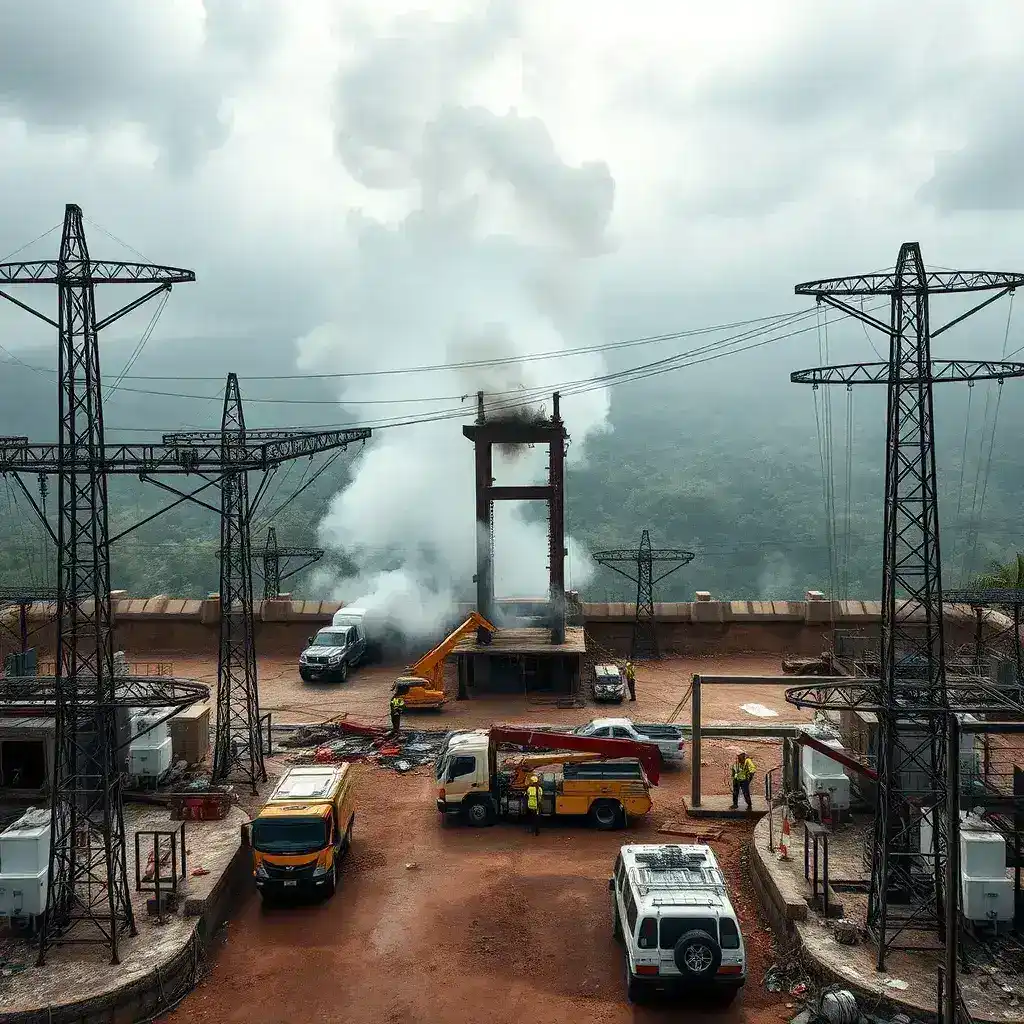
JoyNews’ flagship analysis program, Newsfile, is set to dissect two critical national issues this Saturday: the recent fire outbreak at the Akosombo substation of the Ghana Grid Company Limited (GRIDCo) and the Bank of Ghana’s substantial GH¢15.6 billion loss recorded in 2025. The program, hosted by Samson Lardy Anyenini, will explore the causes, responses, and implications of both events for Ghana’s energy security and economic stability.
Akosombo Fire Disrupts National Power Supply
A significant fire incident at the GRIDCo substation near Akosombo earlier this year led to widespread power outages across Ghana. The blaze caused a considerable reduction in electricity supply from the vital Akosombo hydro system, impacting homes, businesses, and industries nationwide.
Emergency teams from GRIDCo, the Volta River Authority (VRA), and other power sector stakeholders swiftly mobilized to restore power. This involved rerouting electricity and undertaking repairs on the damaged infrastructure. Power restoration efforts began in phases, with several generating units brought back online to alleviate pressure on the national grid.
By April 29, a substantial portion of the lost power generation capacity had been reinstated. Full restoration was achieved by May 1, 2025, when authorities confirmed that all generating units at Akosombo were operational, and the national power supply had stabilized. Investigations into the exact cause of the fire are ongoing, and long-term repairs to the affected substation are expected to continue over the upcoming months.
While the incident caused significant disruption, officials have highlighted the rapid recovery as a testament to improved coordination and resilience within Ghana’s power sector. However, the event has ignited a national debate regarding potential systemic weaknesses within the energy sector versus the possibility of an isolated accident.
Bank of Ghana Reports GH¢15.6 Billion Loss
The second major topic slated for discussion is the Bank of Ghana’s reported loss of GH¢15.6 billion for the fiscal year 2025. This figure represents a significant increase compared to the previous year’s financial performance and has prompted considerable public and expert commentary.
The central bank has attributed this substantial loss to a combination of factors. Aggressive measures implemented to control inflation, coupled with foreign exchange revaluation losses and accounting adjustments related to gold and reserve management, are cited as primary drivers. Some economic analysts view these losses as a necessary consequence of essential economic stabilization policies.
Conversely, other stakeholders are expressing concerns about the long-term sustainability of such losses and their potential impact on the Bank of Ghana’s balance sheet. The discussion on Newsfile aims to provide a factual breakdown of these financial figures and critically examine the policy decisions that contributed to this outcome.
Broader Implications for Ghana
Newsfile’s examination of these two critical issues seeks to shed light on their interconnectedness and their broader implications for Ghana’s economic trajectory. The program will delve into what these events signify for the nation’s energy security infrastructure and the overall health of its financial system.
Understanding the root causes of the Akosombo substation fire and the factors leading to the Bank of Ghana’s financial deficit is crucial for informed policy-making and public trust. The discussions are expected to foster a solutions-focused national conversation, aiming to identify pathways toward greater resilience and stability in both the energy and financial sectors.
The program will be broadcast live on JoyNews, with streaming options available via JoyNews’ Facebook and YouTube channels, as well as MyJoyOnline. Listeners can also tune in via Joy 99.7 FM or Luv 99.5 FM, or access the discussion through Google or Apple Podcasts.
What to Watch Next
Moving forward, attention will remain fixed on the ongoing investigations into the Akosombo fire and the implementation of long-term repair strategies. Furthermore, the Bank of Ghana’s future financial reports and the effectiveness of its monetary policy measures will be closely monitored. The public and industry stakeholders will be keen to see how these challenges are addressed to safeguard Ghana’s economic future and energy independence.










Leave a Reply