
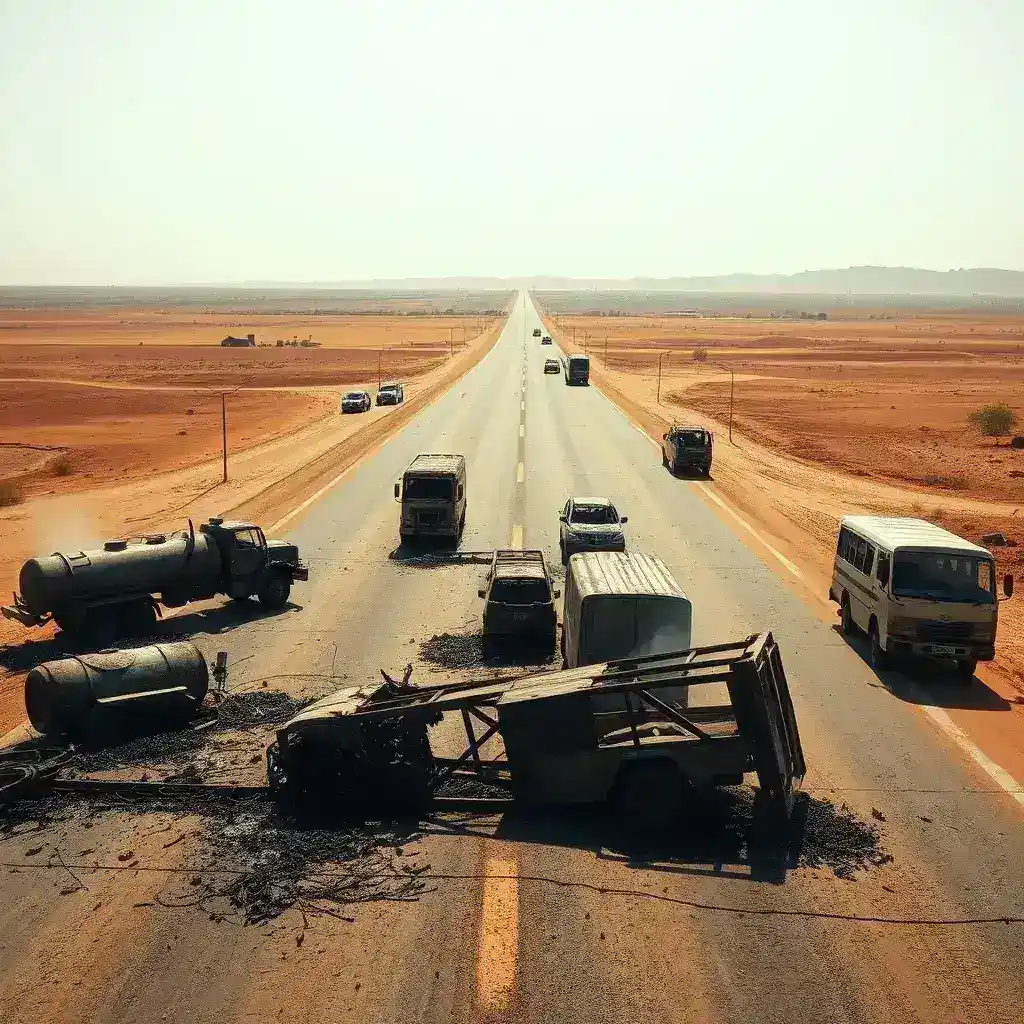
Dozens of vehicles, including fuel tankers, minibuses, and trucks, were set ablaze near Mali’s capital, Bamako, as jihadist forces, identified as Jama’at Nusrat al-Islam wal-Muslimin (JNIM), tightened a blockade on the city. The BBC confirmed the incident, which occurred approximately 45km west of Bamako, ahead of the crucial Islamic holiday of Eid al-Adha.
Context of the Blockade
Mali, a landlocked nation, relies heavily on fuel imports from neighboring coastal countries like Senegal and Ivory Coast. JNIM, an al-Qaeda-affiliated group, first imposed a fuel blockade on Bamako last year, escalating their actions after a significant attack on the city last month. This blockade aims to cripple Mali’s economy and undermine the authority of the current military leadership, led by General Assimi Goïta.
Escalating Violence and Verified Reports
Videos authenticated by the BBC show the burnt wreckage of numerous vehicles on a key road. BBC Verify used satellite imagery and AI manipulation checks to confirm the footage’s authenticity. NASA’s FIRMS platform also detected a significant heat signature at the reported location on Tuesday, corroborating the destruction.
Militants have previously targeted fuel convoys, kidnapping drivers and destroying over 100 fuel trucks on major highways since last year. While some convoys have managed to reach Bamako under military escort, the latest incident signifies a renewed and intensified effort by JNIM to cut off supplies.
Economic and Social Impact
The tightening blockade is already causing widespread shortages and significant price hikes for essential goods in Bamako. This is particularly felt as the Eid al-Adha holiday approaches, a period when families traditionally sacrifice an animal. The difficulty in transporting livestock to the city has driven up prices, making it unaffordable for many.
One resident noted that the price of a kilogram of potatoes has risen from 350 CFA francs to 500 CFA francs. “Everything in the market has become expensive,” he stated. The scarcity of sheep for sale, a common sight before Eid, highlights the severe disruption caused by the blockade.
Beyond economic hardship, the blockade also poses safety risks for travel. Residents are hesitant to journey to their home villages for the holidays due to the danger of encountering militants. “Travelling would put your life at risk, as well as that of your family,” said one Bamako resident who chose to remain in the capital.
Government Response and Russian Involvement
Mali’s military government, which came to power in a 2020 coup, has struggled to contain the insurgency despite enlisting the help of the Russian paramilitary group Africa Corps, an entity that evolved from the Wagner Group. General Assimi Goïta appointed Brigadier General Famouké Camara in January to lead operations against the fuel blockade, but attacks have persisted.
In recent weeks, Africa Corps has been instrumental in escorting convoys, including fuel tankers and heavy trucks, to the capital, a fact highlighted by daily social media posts from the group. Analysts suggest this publicity campaign aims to counter criticism regarding their inability to halt rebel advances. The Kremlin has affirmed its commitment to supporting Mali in combating “extremism, terrorism, and other negative manifestations.”
Broader Security Landscape
The junta initially enjoyed popular support for its promise to address the security crisis, which began with a separatist rebellion in the north and was later co-opted by Islamist militants. However, their efforts to quell the insurgency have been largely unsuccessful, leaving large parts of the country ungovernable.
Last month, coordinated attacks by ethnic Tuareg separatists and JNIM targeted major towns and cities, resulting in the death of Defense Minister Sadio Camara in an apparent suicide truck bombing near the capital. This underscores the complex and multi-faceted security challenges facing Mali’s leadership.
Looking Ahead
The continued success of JNIM in enforcing the blockade, despite the presence of Russian forces, raises questions about the effectiveness of Mali’s security strategy. The upcoming Eid holiday will likely be overshadowed by shortages and elevated prices, further straining the patience of the population. Observers will be watching to see if the government can break the siege and how the involvement of Africa Corps evolves in response to these escalating challenges.










Leave a Reply