
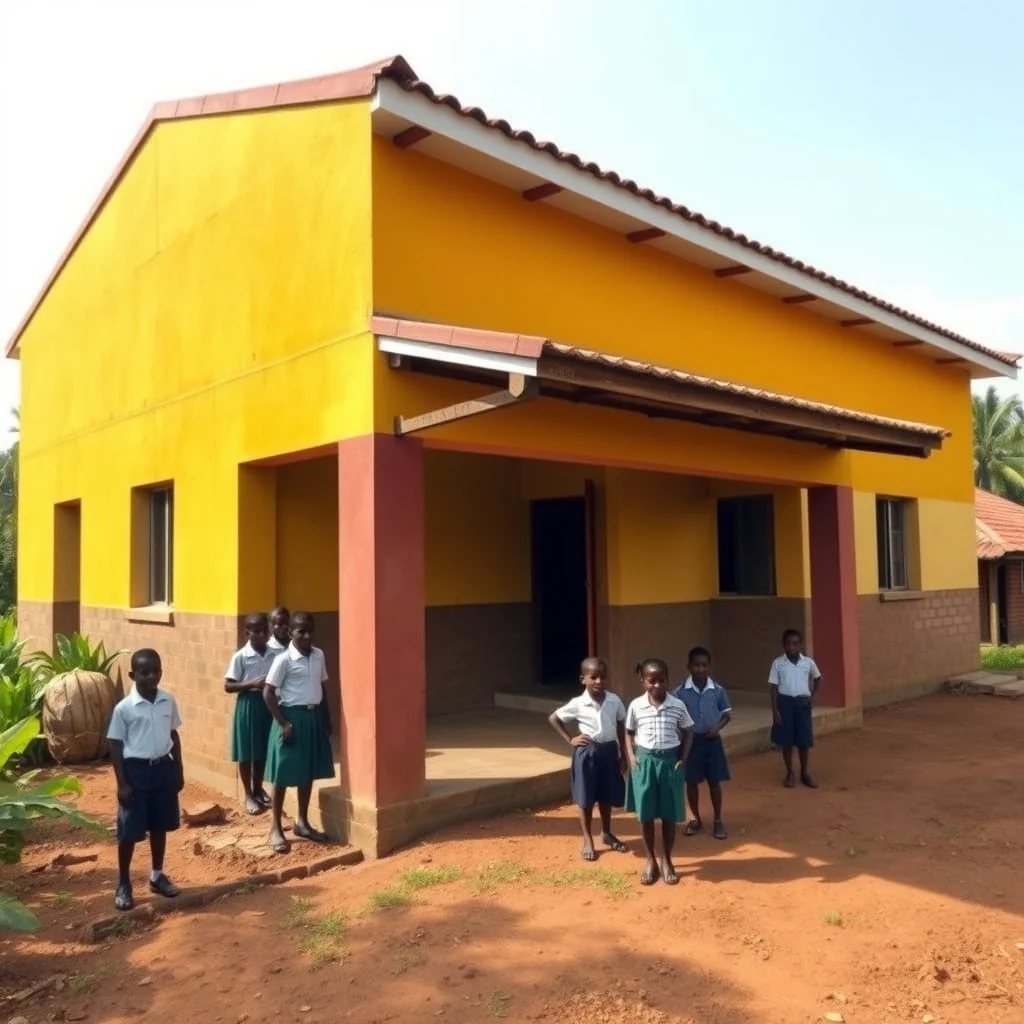
The Asunafo North Municipal Cooperative Cocoa Farmers and Marketing Union Limited, in partnership with Tony’s Open Chain and the Chocolonely Foundation, has inaugurated a new modern classroom block at Edwenase M/A Basic School in the Ahafo Region, Ghana. This significant development, which took place on Wednesday, May 20, 2026, directly addresses years of severe infrastructure deficits impacting early childhood learners in six hard-to-reach rural farming communities.
Addressing a Critical Infrastructure Crisis
For an extended period, 82 kindergarten students at Edwenase M/A Basic School were forced to share a single, overcrowded classroom. Many children lacked proper seating, resorting to learning on raw wooden logs due to a critical shortage of classrooms and essential learning materials. This dire situation highlighted the urgent need for intervention in a region heavily reliant on cocoa farming.
The newly commissioned facility is a modern, fully furnished classroom block designed to enhance the learning environment. It includes standard furniture, dedicated office spaces, storerooms, and crucially, electricity to support Information and Communication Technology (ICT) learning. Ceiling fans have also been installed to mitigate the intense afternoon heat, creating a more conducive atmosphere for education.
Expanding Educational Support Across the Municipality
This project at Edwenase M/A Basic School is part of a broader initiative by the Union and its partners to uplift educational standards in the Asunafo North Municipality. Earlier, a three-unit classroom block was commissioned for Anwianwia Methodist Junior High School, aiming to improve teaching and learning outcomes in that rural community.
Furthermore, a four-unit teachers’ quarters was handed over in Manukrom, another rural community. This addresses a persistent accommodation crisis that has historically deterred teachers from accepting postings to the area, thereby impacting the availability of qualified educators in remote locations.
Community and Government Recognition
Local education officials have lauded these interventions. Mr. Samuel Jatong Laar, the Asunafo North Municipal Director of Education, praised the Union and its partners for their comprehensive support. This includes previous contributions such as mechanised boreholes, educational materials, tricycles, and a modern printer for the Municipal Education Directorate.
The Municipal Chief Executive (MCE) for Asunafo North, Mr. Joseph Akparibo, emphasized the vital role of private sector collaboration in development. He noted that government resources alone are insufficient to meet all societal needs, especially with a noted decline in foreign aid and grants.
Mr. Akparibo acknowledged the municipality’s ongoing struggle with significant classroom deficits across all educational levels, from kindergarten to tertiary institutions. He expressed gratitude to the Farmers Union, Tony’s Open Chain, and the Chocolonely Foundation for their direct investment in the cocoa-producing communities that form their supply chain.
A Model for Sustainable Corporate Social Responsibility
The collaborative approach seen in Asunafo North exemplifies a global trend in corporate social responsibility (CSR) and sustainable sourcing. By investing directly in the communities from which they source, companies can foster mutual benefits and strengthen their supply chains.
Mr. Erasmus Kumah Hemans, Manager of the Asunafo North Municipal Cooperative Cocoa Farmers Union, highlighted the Union’s growth and its vision to reduce income disparities among members by 2030. This expansion signifies a commitment to improving the livelihoods of cocoa farmers.
Studies by organizations like the International Cocoa Initiative support the impact of such infrastructure investments. These initiatives can directly lower household operational costs for farmers, effectively increasing their net incomes.
Academic research consistently links accessible, high-quality school infrastructure to a reduction in child labour within West African cocoa-growing regions. Improved educational facilities provide a viable alternative for children and a stronger incentive for families to keep them in school.
Data from sustainable sourcing initiatives also indicate that brands co-investing in social infrastructure experience greater supply chain loyalty and a decrease in side-selling by farmers. This investment builds trust and fosters long-term partnerships.
Looking Ahead
The success in Asunafo North provides a scalable model for other cocoa-producing regions facing similar educational infrastructure challenges. Continued investment and collaboration between cocoa cooperatives, international brands, and foundations will be crucial in addressing the persistent deficits. The focus will likely remain on how these strategic partnerships can further enhance farmer livelihoods, improve educational outcomes, and combat issues like child labour through tangible infrastructure development and community empowerment.










Leave a Reply