
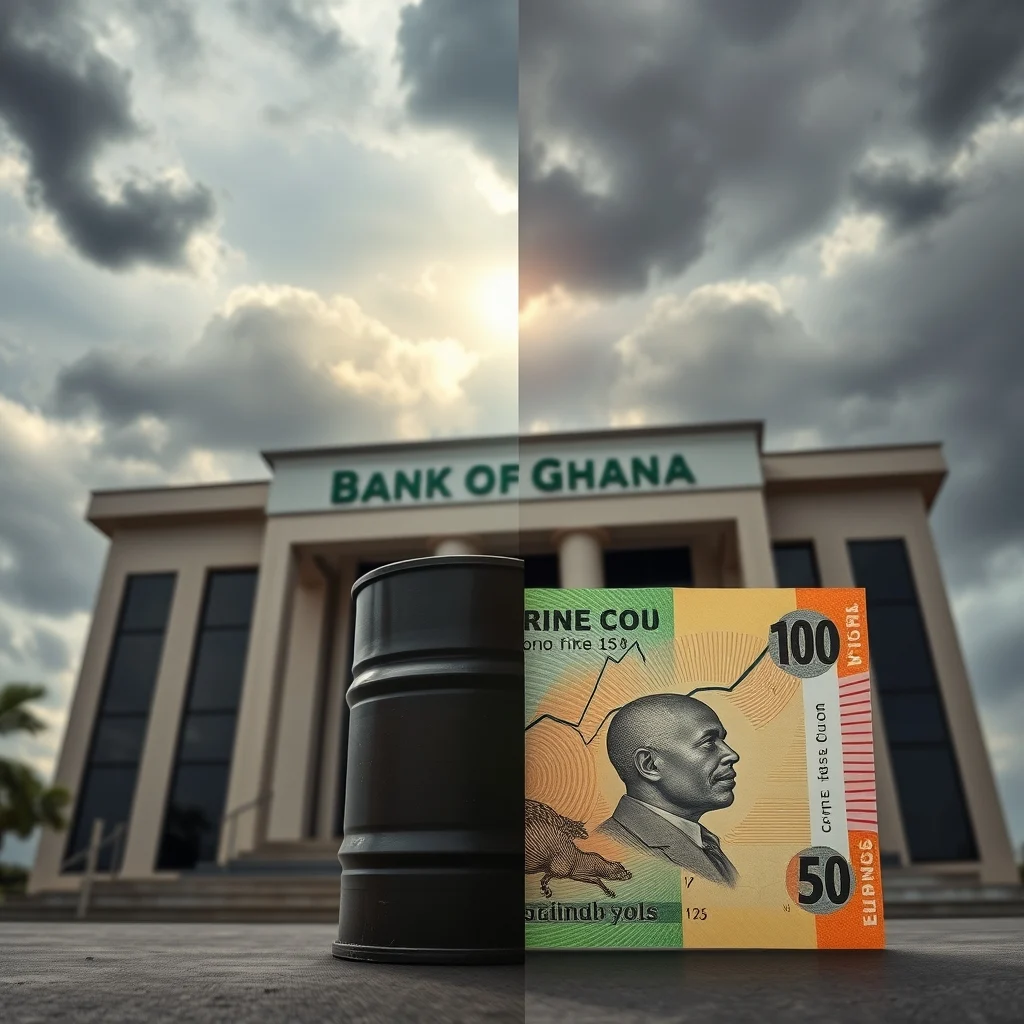
The Bank of Ghana (BoG) is projecting a potential rise in inflation above 10 percent by the year’s end, driven by escalating international crude oil prices. This projection, derived from the central bank’s internal models guiding monetary policy, highlights concerns about the economic impact of sustained high energy costs.
Context: Inflation Targets and Economic Pressures
Ghana operates under an Inflation Targeting Framework, with the Bank of Ghana setting an upper bound target for inflation. Breaching this target could signal economic instability and prompt policy adjustments. The current economic climate is already sensitive, making external price shocks particularly impactful.
The central bank’s internal projection model, a key tool for informing monetary policy, has simulated various scenarios. One such scenario indicates that if crude oil prices remain above $100 per barrel throughout June, it could create significant inflationary pressures in the subsequent months.
Rising Crude Oil Prices Fuel Inflation Fears
The primary driver behind the BoG’s concern is the sustained increase in global crude oil prices. This directly affects the cost of imported refined petroleum products in Ghana.
Analysts and the central bank anticipate a ripple effect, commonly known as the ‘pass-through’ effect. This means higher fuel costs are expected to translate into increased transportation fares, impacting the cost of goods and services.
Furthermore, the quarterly review of utility tariffs, which are often influenced by energy costs, could add another layer of upward pressure on inflation. These combined factors present a complex challenge for price stability.
Monetary Policy Implications
The potential breach of the inflation target band could influence the decisions of the Monetary Policy Committee (MPC) at its upcoming meeting. The MPC is scheduled to convene from July 20 to 22, 2026, to review the policy rate.
Members may opt to increase the policy rate to combat rising inflation, a move that would likely lead to higher interest rates across the country. This could potentially dampen economic activity by making borrowing more expensive for businesses and consumers.
The Ghana Reference Rate for May 2026 stood at 10.03 percent, and a policy rate hike could push this benchmark even higher in the coming months.
Expert Views and Geopolitical Factors
Bank of Ghana Governor Dr. Johnson Asiama has acknowledged the external pressures. Speaking at the Ghana-UK Investment Summit, he indicated that recent geopolitical developments, particularly in the Middle East, might necessitate a










Leave a Reply