
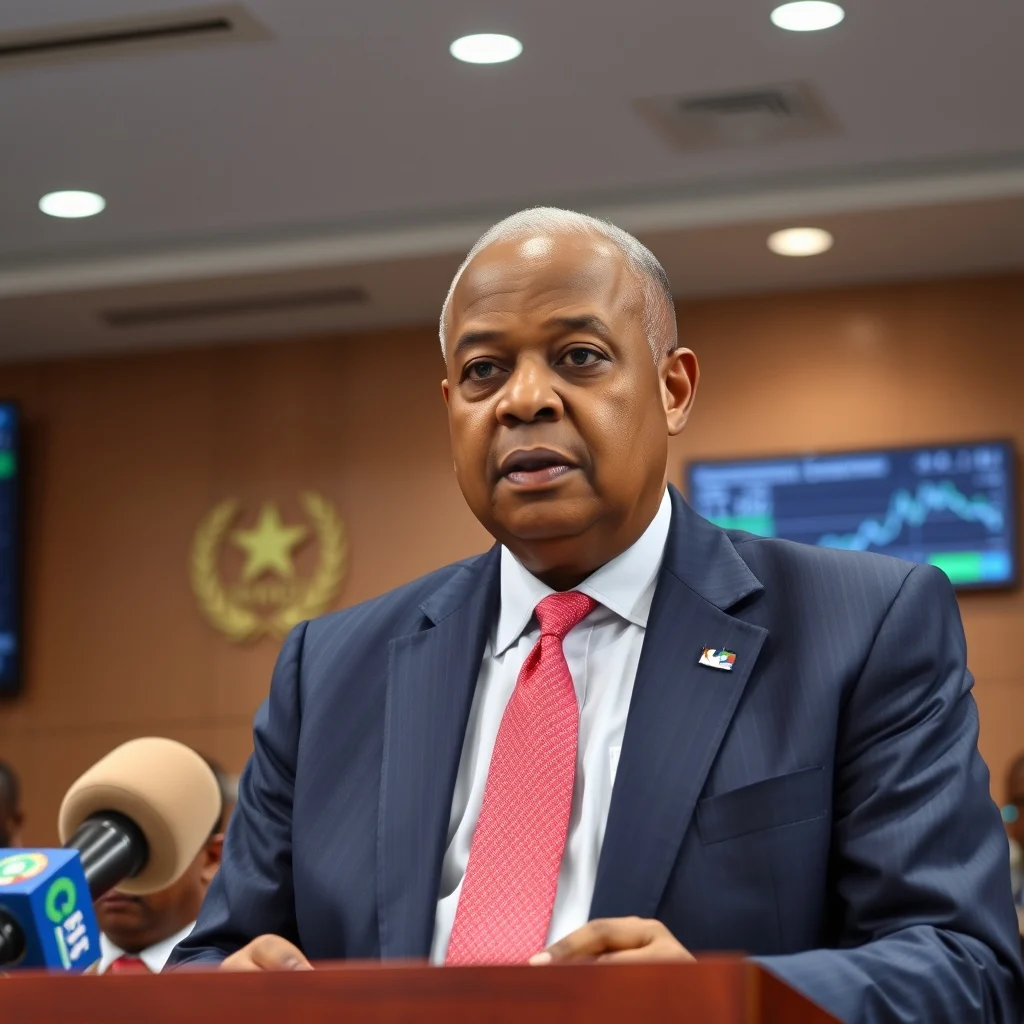
The Bank of Ghana (BoG) has maintained its policy rate at 14 percent, a decision announced on Wednesday at the 130th Monetary Policy Committee (MPC) press briefing in Accra. Governor Johnson Pandit Asiamah cited the escalating Middle East conflict as a primary driver for this cautious stance, stating that the geopolitical tensions represent a significant “elephant in the room” that clouds the nation’s inflation outlook.
Global Uncertainty Overshadows Domestic Positives
While domestic economic indicators might suggest room for monetary policy easing, the central bank is prioritizing stability in the face of external risks. Governor Asiamah explained that the potential for the Middle East crisis to be long-lasting could negatively impact inflation expectations and trigger second-round effects, necessitating a pause in rate reductions.
The MPC’s decision reflects a careful balancing act. They evaluated both the improving local economic conditions and the potential for unforeseen external shocks. This led to the consensus to “pause and evaluate all incoming data” before making further adjustments at the next MPC meeting.
Commercial Banks and Lending Rate Adjustments
Addressing concerns about the slow pass-through of lower benchmark interest rates to commercial bank lending rates, Governor Asiamah acknowledged the gradual nature of such adjustments. He emphasized that banks need time to adapt to the new interest rate environment while ensuring robust credit risk management.
“When interest rates are falling, it may take a while. You don’t just rush into giving loans,” Dr. Asiamah stated. He added that banks must ensure adequate bankable projects and maintain their credit appraisal standards. He expressed confidence that lending rates would eventually decline if the low-interest-rate regime persists.
Monetary Policy Tools and Future Frameworks
The MPC also decided to revise the dynamic cash reserve ratio to a uniform 20 percent for domestic currency, effective June 4, 2026. This move, according to the Governor, follows a review of earlier liquidity management measures and is intended to complement the central bank’s open market operations.
In preparation for these policy changes, the Bank of Ghana plans to meet with Chief Executive Officers of commercial banks next week to discuss their implications. This proactive engagement aims to ensure a smooth implementation and understanding of the new directives.
Exchange Rate Stability and Reserves
Regarding the recent depreciation of the Ghanaian Cedi, Governor Asiamah reiterated that Ghana operates a managed floating exchange rate system. He noted that currency fluctuations are expected, with the central bank’s focus being on preventing excessive volatility.
He attributed recent exchange rate pressures primarily to increased demand for foreign exchange. This demand was driven by rising crude oil prices and significant dividend repatriations by multinational companies during the April-May reporting period. The cost of importing the same volume of crude oil has approximately doubled in foreign exchange terms.
Despite these pressures, the central bank assures the public of its capacity to stabilize the market. Governor Asiamah revealed that Ghana’s Net International Reserves have seen a healthy increase, rising from US$10.9 billion in April to US$12.43 billion currently. “We have the buffers. We are building them on a daily basis,” he stressed, aiming to prevent a return to the high volatility seen in previous years.
Financial Innovation and Non-Performing Loans
Looking ahead, the Bank of Ghana is actively developing a digital credit framework. This initiative aims to enable individuals and businesses to access regulated mobile-based loans easily. “So very soon, no matter which sector you are involved in, you can just raise a loan on your mobile phone,” Governor Asiamah announced.
Furthermore, Ghana is on the cusp of launching its first non-interest banking institution before the end of the year. The regulatory framework for this is being developed in alignment with international best practices. This move signifies a growing diversity in the country’s financial sector offerings.
On the issue of non-performing loans (NPLs), commercial banks have been directed to reduce their bad loans by the end of 2026. While the gross NPL ratio stands at 18 percent, the net figure after provisions is around eight percent. The central bank aims to mitigate moral hazard by not fully erasing provisioned loans.
Gold Exports and Ongoing Trade
Concerns about disruptions to Ghana’s gold exports due to the Middle East crisis have been addressed. Temporary challenges affecting shipments to the United Arab Emirates have reportedly been resolved through alternative arrangements, ensuring that shipments continue uninterrupted.
Looking Ahead
The Bank of Ghana’s decision to hold the policy rate signals a period of watchful waiting, with the global geopolitical landscape playing a crucial role in future monetary policy decisions. The success of new policy measures, the impact of digital credit frameworks, and the development of non-interest banking will be key indicators to monitor in the coming months. The central bank’s commitment to maintaining exchange rate stability, supported by growing reserves, will also be closely observed as global economic conditions evolve.










Leave a Reply