
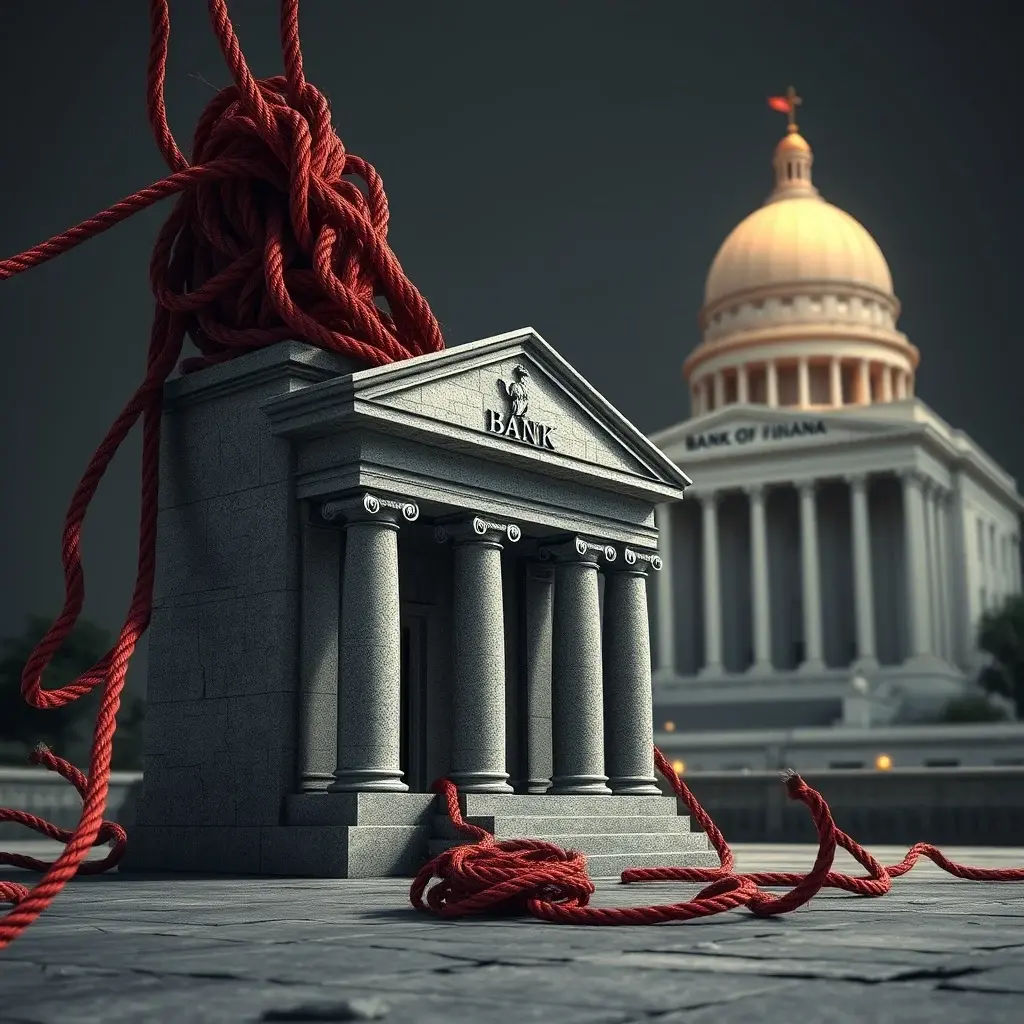
A policy analysis by the Centre for Economic Research and Policy Analysis (CERPA) has warned that Ghana’s growing overlap between fiscal and monetary policy could undermine the credibility and independence of the Bank of Ghana (BoG). The think tank’s review of BoG’s financial performance from 2018 to 2025 highlights mounting losses linked to policy interventions and heavy exposure to government debt.
Context: Central Bank’s Mandate and Financial Strain
The Bank of Ghana traditionally focuses on maintaining price stability and managing the nation’s currency. However, in recent years, it has faced significant financial strain. This pressure stems from efforts to control inflation, high interest rates, and foreign exchange volatility.
CERPA’s analysis points to a notable shift away from the BoG’s core functions. The central bank’s substantial holdings of government debt and its involvement in quasi-fiscal operations are central to these concerns.
Concerns Over Policy Independence and Fiscal-Monetary Interdependence
The core issue raised by CERPA is not solely the central bank’s financial losses but the broader implications for its operational independence. Persistent financial weakness could erode the BoG’s balance sheet equity.
This erosion might necessitate recapitalization by the government. Such a scenario would foster a dangerous interdependence between fiscal and monetary policy, potentially compromising the central bank’s autonomy.










Leave a Reply