
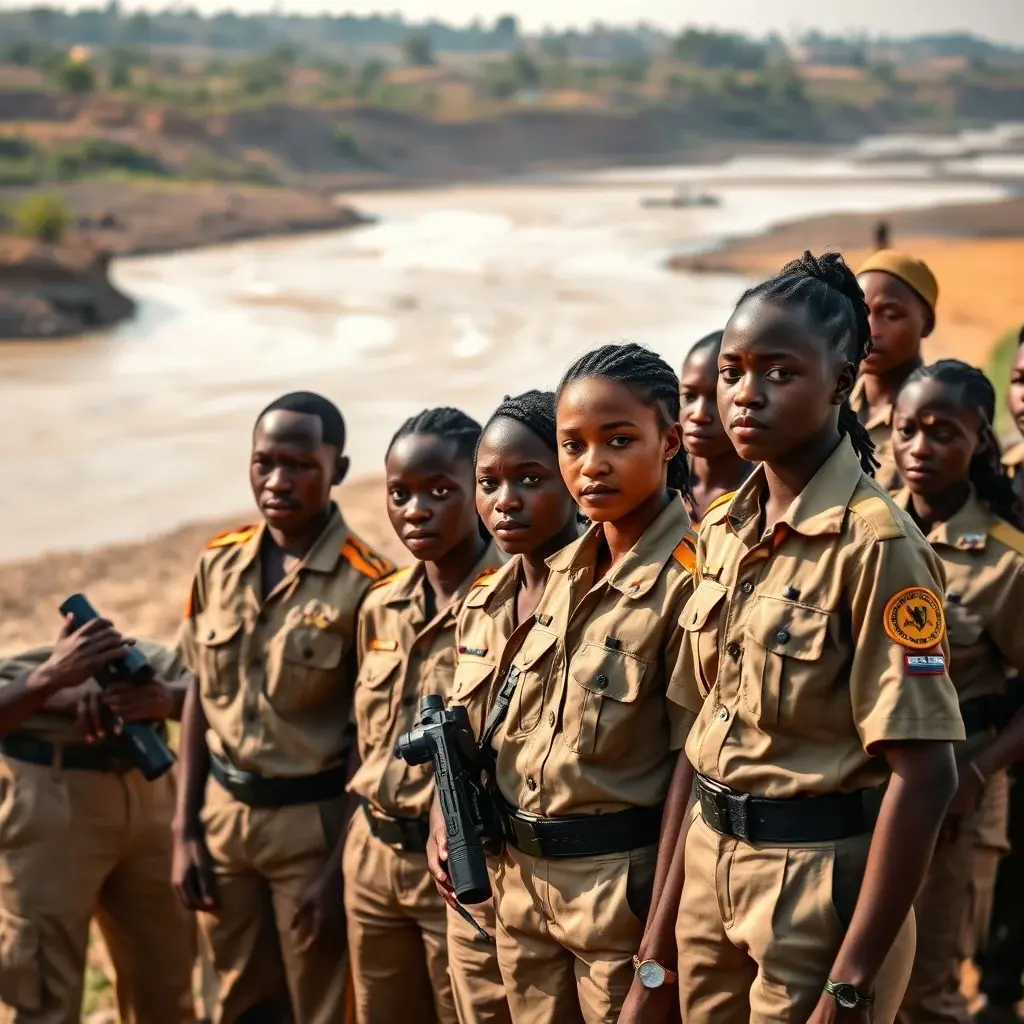
The Western Naval Command in Ezinlibo commissioned another cohort of Blue Water Guards on Friday, May 15, marking an intensified national effort to combat illegal mining and safeguard Ghana’s vital water resources. This latest graduation ceremony, attended by the Minister for Lands and Natural Resources, Emmanuel Armah-Kofi Buah, and other key stakeholders, signals the growing reach of this environmental protection initiative.
Context: The Rise of Galamsey and the Need for Intervention
The Blue Water Guards initiative was established in 2025 under the Ministry of Lands and Natural Resources, in partnership with the Minerals Commission and the Ghana Navy. It was created in direct response to the escalating environmental damage caused by illegal mining activities, commonly referred to as ‘galamsey’. These destructive practices have severely polluted and degraded Ghana’s rivers and streams, threatening ecosystems and public health.
Nationwide Expansion and Deployment
Initially launched in the Western and Western North Regions, the Blue Water Guards program has since evolved into a nationwide environmental protection force. Minister Emmanuel Armah-Kofi Buah highlighted the initiative’s expansion into eight regions and over 100 districts significantly affected by illegal mining. This expansion underscores the government’s commitment to addressing the pervasive issue across the country.
To date, 1,617 trained Blue Water Guards have been deployed across Ghana. Their primary mission is to protect rivers and water bodies from the pollution and destruction wrought by illegal mining operations. The Minister emphasized that what began as a localized intervention has transformed into a robust national force.
Roles and Responsibilities of the Guards
The trained guards are tasked with a range of critical duties. These include conducting routine patrols along major rivers and tributaries, actively monitoring for and identifying illegal mining activities and sites. They are also empowered to confiscate illegal mining equipment and play a crucial role in community engagement through public education and sensitization campaigns.
The initiative aims to train approximately 2,000 young people nationwide. This extensive training program equips them with the necessary skills to effectively monitor water bodies, report illicit operations, and support enforcement actions. Furthermore, they are expected to educate local communities on the importance of environmental protection.
Training and Operational Readiness
The Acting Naval Base Commander at Ezinlibo, Commander Samuel Kwaku Boateng-Asiedu, detailed the rigorous training regimen. The latest program, which commenced on April 17, 2026, incorporated both theoretical instruction and practical field exercises. These were designed to prepare recruits for operations in challenging riverine environments and difficult terrains.
Training focused on enhancing operational skills, improving physical fitness, developing surveillance techniques, and ensuring preparedness for immediate field deployment. Of the 460 recruits who began the training, 452 successfully met the stringent standards and graduated, signifying their readiness for duty.
Impact and Collaboration
Minister Buah reported encouraging results from weekly assessments. These evaluations indicate a reduction in illegal mining activities along several rivers, increased public awareness regarding the issue, and improved collaboration between environmental agencies and security forces. “Almost every district where we have deployed Blue Water Guards has witnessed improvement in our water systems,” the Minister stated.
He further described the Blue Water Guards as a significant deterrent to illegal miners who previously operated with perceived impunity in riverside communities. The guards are expected to work in close coordination with the Ghana Navy, the Minerals Commission, traditional authorities, and local communities. This collaborative approach is vital for protecting key rivers such as the Pra, Ankobra, Tano, Bonsa, and Fia.
A National Responsibility
The government consistently emphasizes that protecting Ghana’s water bodies is a national responsibility. This requires the active support of a broad spectrum of society, including chiefs, religious leaders, youth groups, civil society organizations, and residents living in mining-affected communities.
Looking Ahead
As the Blue Water Guards program continues its nationwide rollout and graduates more cohorts, the focus will be on sustaining these gains and adapting strategies to counter evolving illegal mining tactics. Continued investment in training, equipment, and inter-agency cooperation will be crucial. The long-term success will depend on integrated approaches that combine enforcement with community engagement and sustainable livelihood alternatives for affected populations. Observers will be watching to see if this expanded force can significantly curb the environmental devastation and ensure the long-term health of Ghana’s precious water resources.










Leave a Reply