
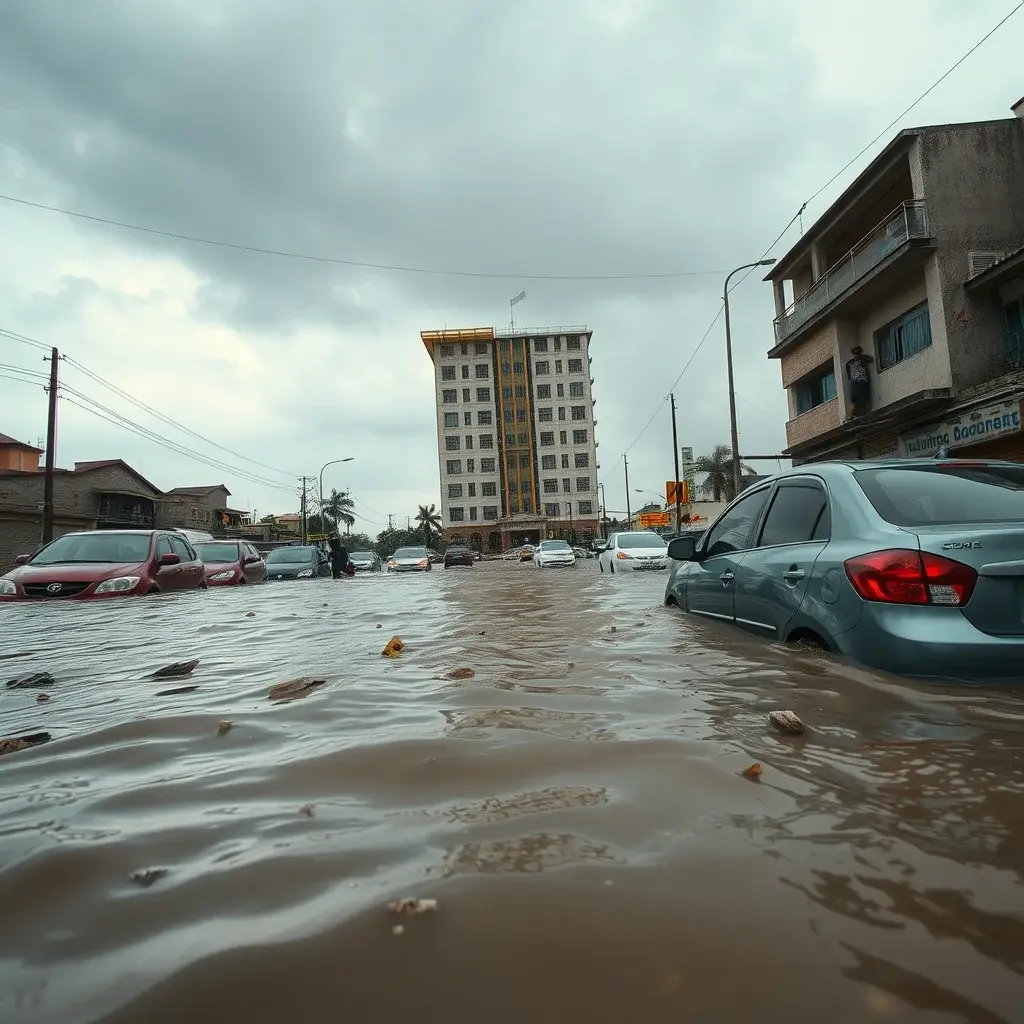
Accra, Ghana – Finance and economic expert Senyo Hosi has asserted that Ghana’s persistent flooding issues are not acts of nature but rather a direct consequence of governance failures, poor leadership, and a lack of accountability. Speaking on JoyNews’ Newsfile program on Saturday, June 6, Hosi argued that successive governments have failed to enforce planning laws and hold officials responsible, leading to annual avoidable tragedies.
A Man-Made Disaster
Hosi firmly stated that the destruction wrought by heavy rains should not be accepted as inevitable. He described the recurring floods as “governance disasters” and “leadership disasters,” emphasizing that these are not natural phenomena.
“Until we stop treating floods as a weather problem and start treating them as a governance and an accountability problem, we’ll be here every June counting more avoidable disasters,” he declared.
Erosion of Duty of Care
The expert highlighted that public officials have a constitutional duty to protect citizens, a duty he believes has been consistently neglected. He questioned why waterways have been allowed to be encroached upon by buildings and settlements.
Comparing Ghana to well-planned societies, Hosi noted that while floods can occur elsewhere, they are anticipated and managed through robust infrastructure. In contrast, Ghana experiences significant problems from minor rainfall due to inadequate planning and enforcement.
The Shadow of June 3, 2015
Hosi recalled the tragic June 3, 2015 disaster, which claimed numerous lives due to severe flooding and a fuel station explosion. He commended broadcaster Samson Lardy Anyenini for his eight-year pursuit of justice for the victims.
However, Hosi questioned the lack of accountability within the government for this tragedy. “Can somebody tell me who has been held accountable within government for failing to undertake their duty of care to the people of the country?” he asked.
Enforcement Failures and Political Expediency
He criticized authorities for permitting settlements to expand into waterways, often treating the issue as a political matter rather than enforcing existing laws. “For watching people build in waterways, for watching Sodom and Gomorrah grow and make it a political matter, who has been held accountable?” he demanded.
Hosi pointed out that government action, such as demolition orders, often materializes only after lives have been lost. This reactive approach, he argued, demonstrates a failure to uphold their responsibility proactively.
Accountability in the Construction Sector
The construction industry also came under scrutiny, with Hosi questioning the role of engineers who approve unsafe buildings. He wondered if any engineers had faced legal consequences for supervising shoddy construction projects.
He referenced the Melcom building collapse as an example where public promises of accountability yielded no tangible results. “Nothing happened,” he stated.
A Call for Presidential Action
Hosi urged the current administration to demonstrate leadership by holding public officials responsible for the latest flooding incidents. He directly addressed the President, asking who would be held accountable for current and past disasters, referencing the 2015 tragedy when the President was in office.
He warned that successive governments have failed to act decisively, leading to a cycle of recurring disasters framed within “the idiotic frame of politics.”
Building an Accountable Society
Ultimately, Hosi called for Ghana to foster a culture of responsibility and accountability to prevent future tragedies. He reiterated that the floods are avoidable disasters stemming from poor governance, not mere natural occurrences.










Leave a Reply