
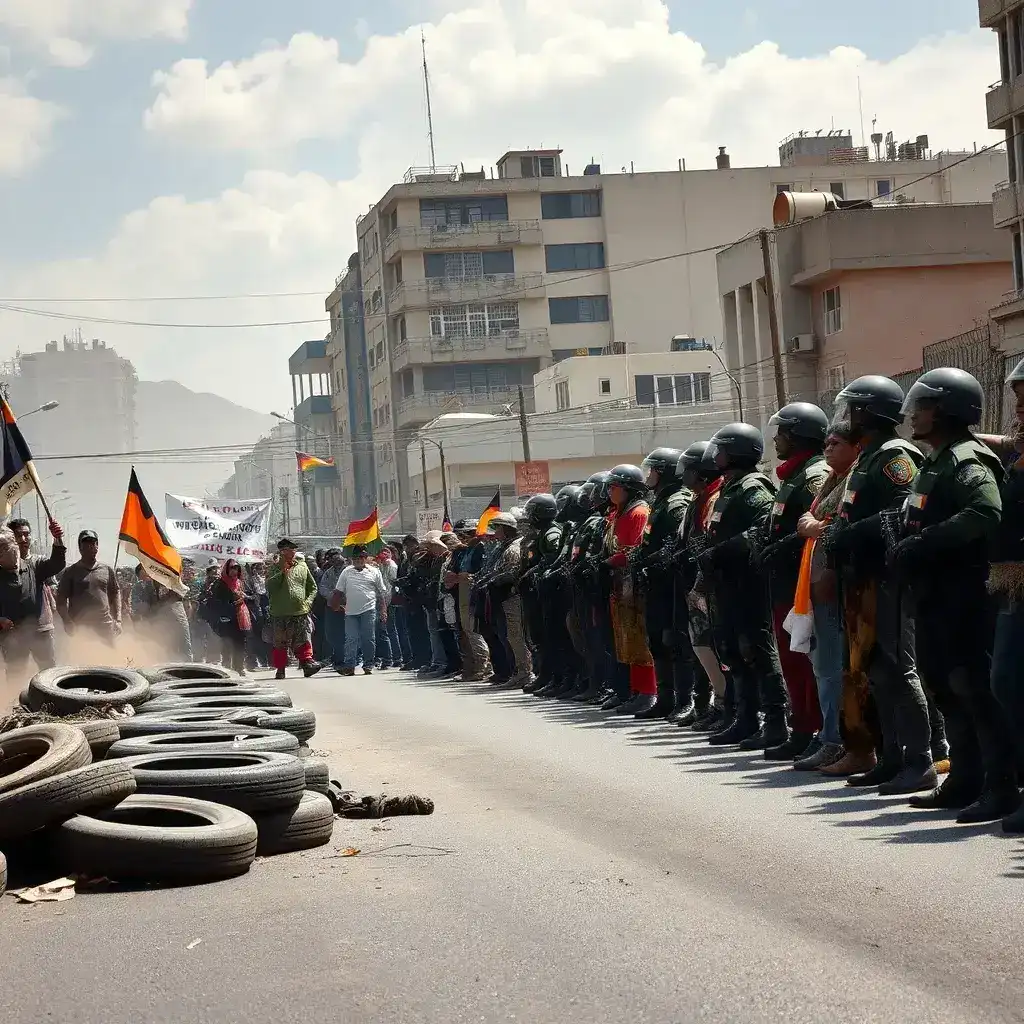
Bolivia’s President Rodrigo Paz declared the nation is “at breaking point” following a month of widespread anti-government protests that have resulted in seven fatalities and hundreds of arrests. Demonstrations, spearheaded by unions and indigenous groups, have established roadblocks across the country, causing significant shortages of essential goods and paralyzing major sectors of the economy.
Nationwide Disruption and Demands
The protests, which began at the end of April, were initially triggered by a proposed land reform measure. Small-scale farmers feared the reform would facilitate the acquisition of their properties by large landowners, despite government assurances of voluntary sales. This concern quickly escalated into nationwide action.
Following the government’s subsequent withdrawal of the land reform, the movement broadened as other societal sectors joined, voicing a range of grievances. A key demand from the demonstrators is the reinstatement of fuel subsidies, which were recently scrapped by the government amidst existing shortages and inflation. The rollback of these subsidies has significantly increased the cost of living, further fueling public anger.
The roadblocks, erected by protesters, have severely exacerbated fuel shortages, creating a detrimental cycle of scarcity and unrest. These disruptions have led to estimated daily economic losses exceeding $50 million nationwide, according to government figures.
Government Response and Escalation
President Paz has appealed for dialogue and stressed the necessity of restoring order. However, he has also indicated a willingness to employ “constitutional instruments” to dismantle the blockades and quell the unrest. In a significant development on Tuesday, Bolivia’s Congress voted to grant the president expanded powers to declare a state of emergency and deploy the military to regain control.
Supporters of this legislative move argued that “violent” groups should not hold sway over an elected government. Conversely, opponents warned that such measures could inflame social tensions and potentially lead to further conflict.
Prior to this congressional vote, President Paz had attempted to de-escalate the situation through various initiatives. These included a cabinet reshuffle, a salary reduction for himself and his ministers, and the establishment of a council intended to negotiate with marginalized societal sectors. These measures, however, have thus far failed to quell the pervasive public anger.
Economic Strain and Social Unrest
The ongoing protests have placed immense strain on Bolivia’s economy. The paralysis of transportation networks due to roadblocks has crippled supply chains, leading to shortages of food, medicine, and fuel in urban centers. Businesses have reported significant losses, and the uncertainty surrounding the political and economic situation is deterring investment.
The government’s austerity measures, coupled with the removal of fuel subsidies, have disproportionately affected lower-income populations. Critics argue that these policies are exacerbating existing inequalities and pushing more citizens into poverty. The union and indigenous groups leading the demonstrations represent a significant portion of the population that feels marginalized by the current administration’s economic agenda.
Looking Ahead
The coming days will be critical in determining the trajectory of Bolivia’s crisis. The government’s ability to balance the restoration of order with addressing the root causes of public discontent will be paramount. The effectiveness of the newly granted emergency powers, and whether they are used judiciously, will also be closely watched. Furthermore, the willingness of different societal sectors to engage in meaningful dialogue, beyond the current impasse, will shape the nation’s path forward. Observers will be looking to see if a sustainable resolution can be found that addresses both the immediate need for stability and the underlying economic and social grievances.










Leave a Reply