
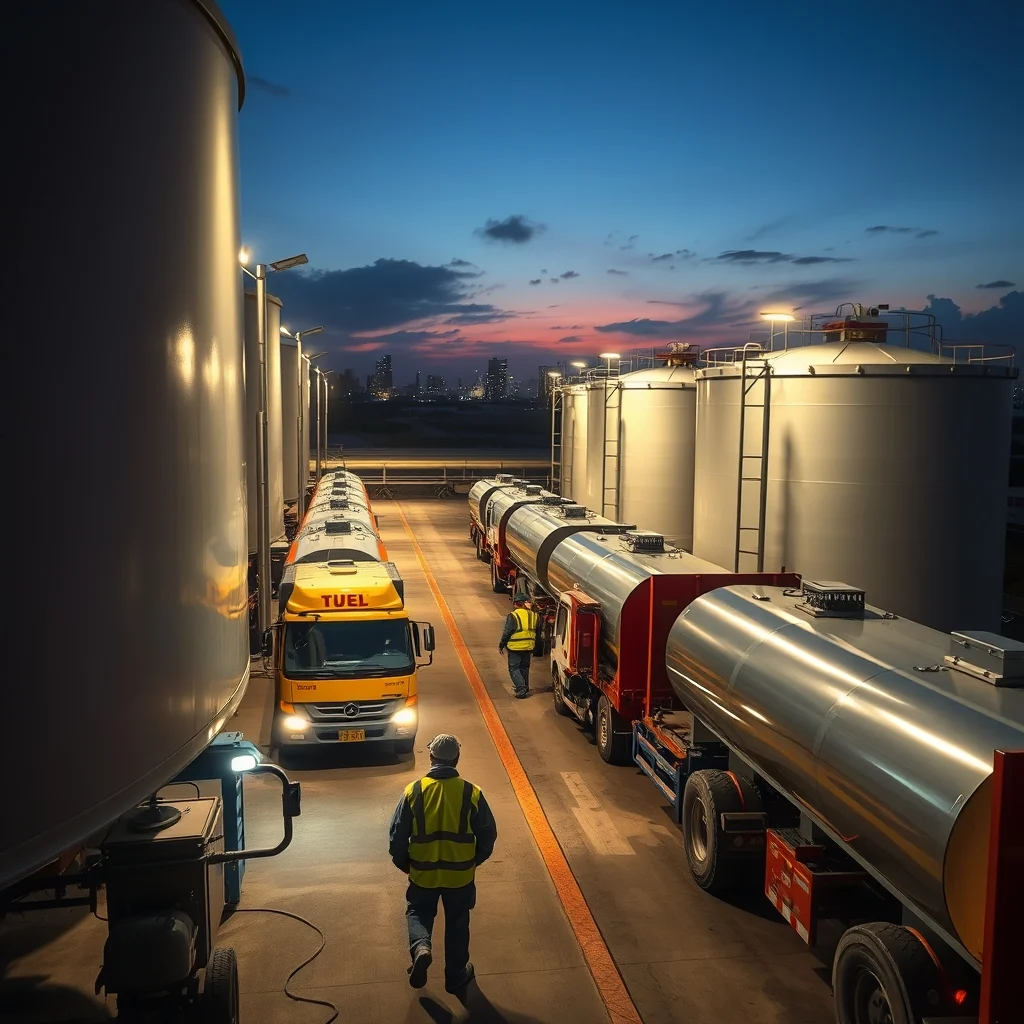
Accra, Ghana – BOST Energies Limited has declared its readiness to fully support the government’s ambitious 24-Hour Economy policy, assuring the nation of an uninterrupted fuel supply. The company has confirmed that its existing infrastructure and operational capabilities are sufficient to sustain round-the-clock fuel distribution as Ghana aims to transition towards a continuous production economy.
Infrastructure and Capacity
Managing Director of BOST, Afetsi Awoonor, stated that the company possesses the necessary systems, a robust logistics network, and extensive storage facilities. These assets are crucial for guaranteeing the availability, accessibility, and security of petroleum products at all times.
Mr. Awoonor highlighted that BOST has made significant, long-term investments in its storage, transmission, and logistics infrastructure. These investments are foundational to ensuring that the nation’s energy needs are met consistently, a prerequisite for a functioning 24-hour economy.
The 24-Hour Economy Vision
The 24-Hour Economy policy, championed by President John Dramani Mahama, is viewed by BOST as a significant national undertaking with the potential to unlock Ghana’s full economic potential. Mr. Awoonor emphasized that a dependable energy backbone, powered by a consistent fuel supply, is indispensable for any nation seeking to operate a 24-hour economy.
Speaking at the launch of the 24-Hour Economy Pilot Programme for the petroleum downstream industry in Accra, Mr. Awoonor lauded the government’s commitment to this transformative agenda. He specifically commended Energy and Green Transition Minister John Abdulai Jinapor for his efforts in fortifying the energy sector to align with the policy’s objectives.
Regulatory Support and Collaboration
The role of regulatory bodies was also acknowledged, with praise directed at the National Petroleum Authority (NPA) Chief Executive, Edudzi Kudzo Tameklo. Mr. Awoonor noted that the NPA’s leadership in the pilot programme demonstrates a strong commitment to leveraging national assets for increased productivity.
Collaboration among various stakeholders is deemed critical for the successful implementation of the 24-hour economy, particularly within the downstream petroleum sector. Mr. Awoonor stressed the need for enhanced coordination.
He called for stronger synergy between security agencies, customs authorities, regulators, and industry players. This integrated approach will ensure that extended operating hours are conducted safely, remain compliant with regulations, and operate with maximum efficiency.
A Shared National Effort
Mr. Awoonor articulated that building a 24-hour economy is not the responsibility of any single institution. Instead, he described it as a collective national endeavor aimed at boosting overall productivity and enhancing Ghana’s global economic competitiveness.
Future Outlook
As Ghana embarks on this pilot phase, the focus will be on refining operational strategies within the petroleum downstream sector. Watch for further announcements regarding the integration of other key industries and the scaling up of the 24-hour operations nationwide. The success of this initiative hinges on sustained inter-agency cooperation and continued investment in critical infrastructure.










Leave a Reply