
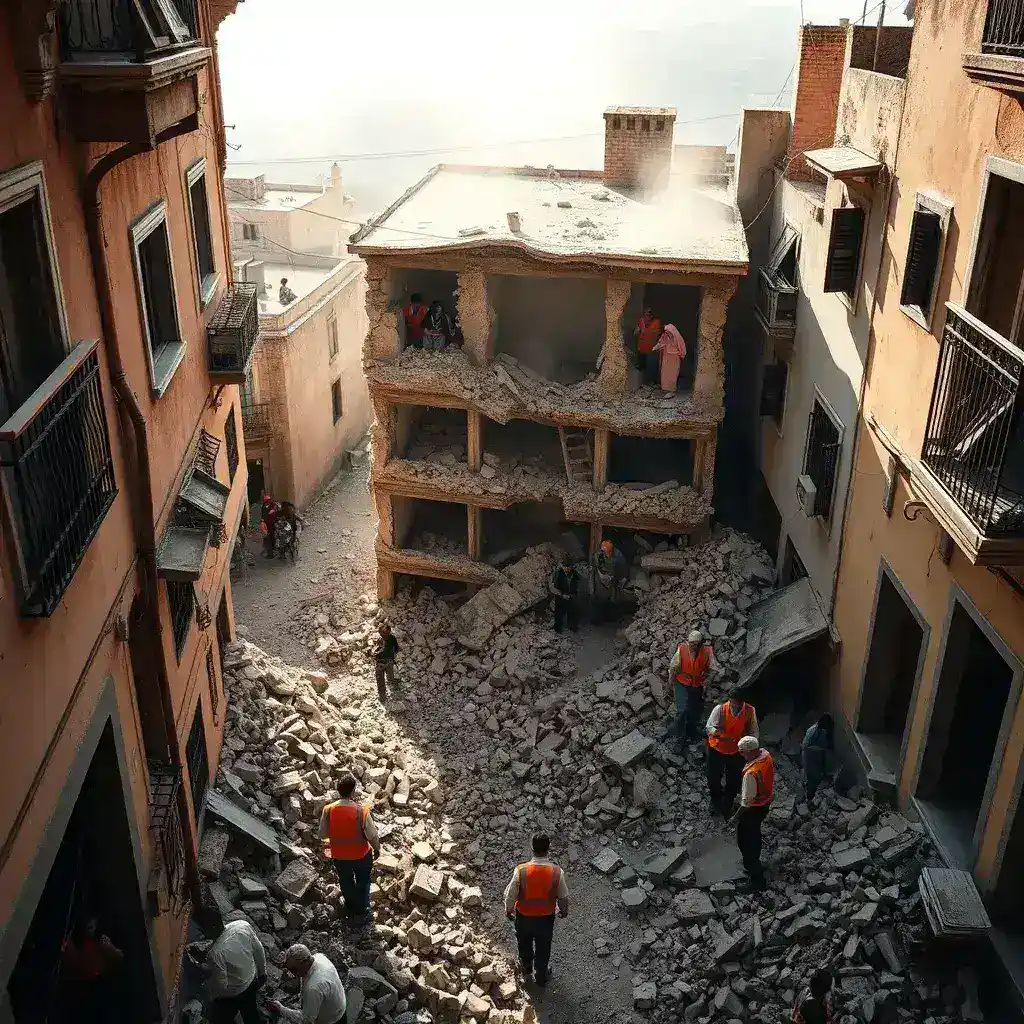
At least nine people died and others were injured when a four-story building collapsed overnight in the historic Moroccan city of Fez, authorities confirmed on Thursday. The incident prompted the evacuation of adjacent structures in the densely populated neighborhood as rescue operations continued to search for survivors in the rubble.
Structural Concerns in Fez
The collapsed building, constructed in the 1980s, crumbled during the night, sending shockwaves through the community. By midday Thursday, six individuals had been pulled alive from the debris, according to state television reports.
A neighbor described the event as creating “a wave of fear,” underscoring the immediate impact on residents living in close proximity to aging infrastructure.
A Pattern of Collapses
Fez, a city with origins dating back to the 8th century and Morocco’s third-largest, has unfortunately experienced similar structural failures recently. In December, the collapse of two separate buildings resulted in at least 22 fatalities, indicating a potential systemic issue with building safety.
This pattern extends beyond Fez. A tragic incident in 2010 saw the collapse of a minaret in the northern city of Meknes, killing 41 people.
National Building Safety Assessment
The frequency of these collapses has drawn attention to the state of buildings across Morocco. Last year, Adib Ben Ibrahim, the housing secretary of state, revealed that approximately 38,800 buildings nationwide had been identified as being at risk of collapse.
This figure suggests a significant challenge for urban planning and infrastructure maintenance in the country. The risk is particularly acute in older, densely populated areas where buildings may not have been constructed or maintained to current safety standards.
Immediate Response and Ongoing Search
Following the Fez collapse, emergency services were immediately deployed to the scene. Rescue teams worked tirelessly through the night and into the following day, sifting through the rubble in hopes of finding survivors.
The evacuation of neighboring buildings was a precautionary measure, aimed at protecting residents from potential secondary collapses and ensuring the safety of rescue workers. The instability of the surrounding structures is a critical concern in such densely built environments.
Broader Implications for Morocco
The recurring building collapses raise serious questions about construction regulations, enforcement, and the long-term management of the nation’s building stock. Fez, with its historic medina and surrounding urban areas, presents a complex landscape for infrastructure assessment and retrofitting.
The government faces pressure to address the findings of the national building safety assessment more proactively. This includes not only identifying at-risk structures but also implementing robust plans for repair, reinforcement, or, where necessary, demolition and rebuilding.
Looking Ahead
The tragic events in Fez serve as a stark reminder of the vulnerabilities inherent in aging urban infrastructure. The focus will now shift to the effectiveness of ongoing rescue efforts and the government’s response in terms of preventative measures and support for affected communities. Residents and urban planners will be watching closely to see if this latest incident spurs more decisive action to mitigate the risks posed by thousands of at-risk buildings across Morocco.










Leave a Reply