
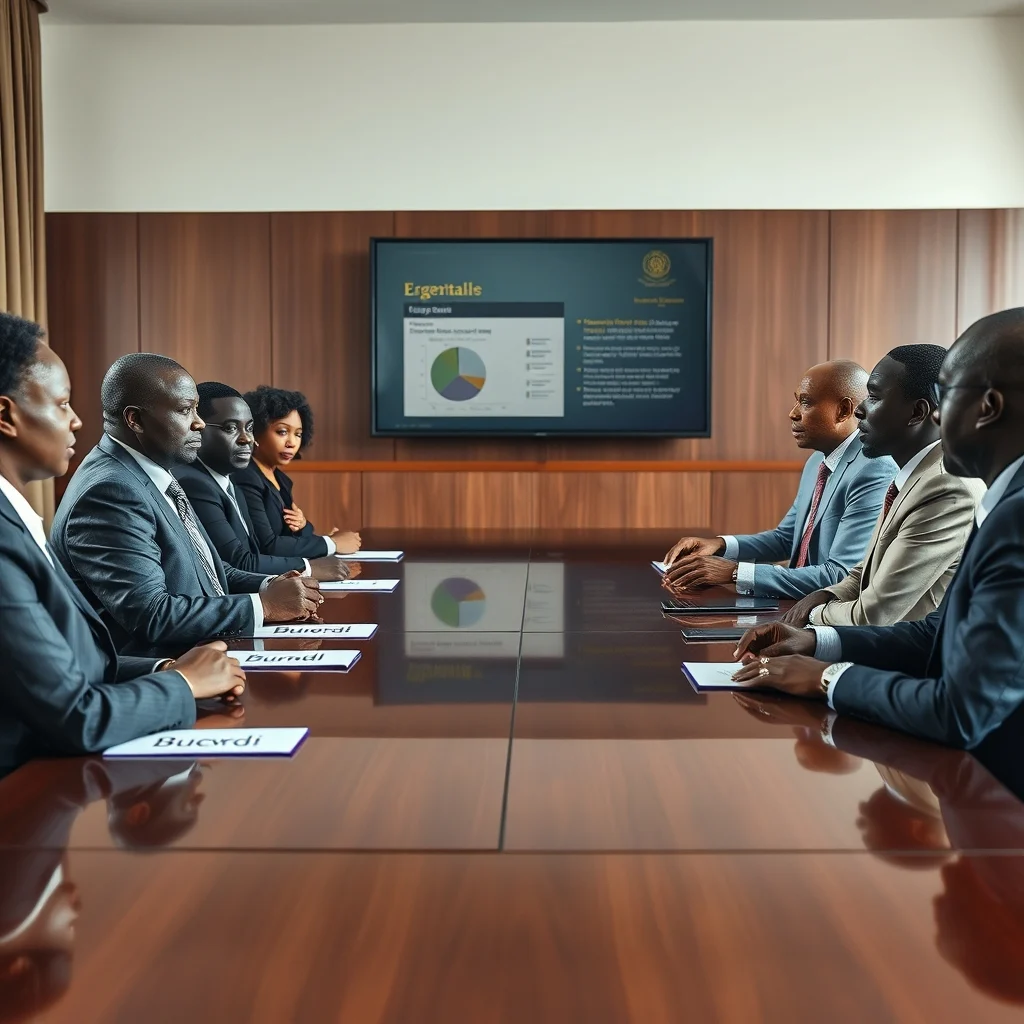
A high-level delegation from Burundi visited Ghana’s Minerals Development Fund (MDF) on May 26 to gain insights into the management of the country’s extractive sector. The visit, part of a week-long study and capacity-building mission, aimed to understand Ghana’s legislative, institutional, and governance frameworks for optimizing mineral revenues for local development.
Understanding Ghana’s Extractive Sector Blueprint
The Burundian delegation, led by Mr. Igiraneza Aristide, Director General in Charge of the Hydrocarbons, Mines and Quarries Programme, met with MDF Administrator Dr. Hanna Louisa Bisiw-Kotei and Director of Operations Mr. Frank Hayford. Dr. Bisiw-Kotei welcomed the bilateral engagement, emphasizing Ghana’s willingness to share its experiences in transforming mineral revenues for community benefit.
Mr. Hayford provided a detailed technical presentation on the MDF’s statutory operations and Ghana’s strategies for managing mining host-community socio-economic development. The session focused on critical aspects of mineral revenue mobilization for sustainable economic growth within mining communities.
A Week of Capacity Building
This exchange is a cornerstone of Burundi’s broader mission to enhance its own capacity in managing its natural resources. The Burundian delegation includes key officials involved in the country’s mineral and hydrocarbon sectors, signaling a strategic effort to learn from Ghana’s established practices.
Ghana’s extractive sector, particularly mining, has a long history and has evolved significantly over the decades. The nation has implemented various legal and institutional reforms to ensure that revenues generated from its rich mineral deposits contribute meaningfully to national development and benefit local populations.
The Role of the Minerals Development Fund
The Minerals Development Fund plays a crucial role in this ecosystem. Established to manage and disburse mineral royalties and other revenues, the MDF aims to channel these funds into projects that improve infrastructure, education, healthcare, and other socio-economic aspects of mining communities. Its operational framework is designed for transparency and accountability.
Ghana’s experience highlights the challenges and opportunities in resource-rich nations. Effectively managing the extractive sector requires robust governance, clear legislation, and dedicated institutions to prevent the ‘resource curse’ and ensure equitable distribution of wealth.
Expert Perspectives and Data
Ghana’s approach to managing extractive revenues has been studied internationally. Reports from organizations like the World Bank and the Natural Resource Governance Institute often highlight Ghana’s efforts in establishing funds like the MDF as positive steps towards resource revenue management. However, challenges related to transparency, project selection, and effective implementation often remain areas for continuous improvement.
Data from Ghana’s Public Interest and Accountability Committee (PIAC) often provides insights into the utilization of petroleum and mineral revenues, underscoring the importance of oversight mechanisms in ensuring funds are used as intended for developmental projects.
Implications for Burundi and Beyond
For Burundi, this study mission represents a significant opportunity to adapt best practices to its own context. Strengthening institutional capacity and governance frameworks is essential for Burundi to maximize the benefits from its own developing extractive sector, which includes significant potential in minerals and hydrocarbons.
The success of such knowledge-sharing initiatives can foster stronger regional cooperation and contribute to more responsible and beneficial resource management across Africa. As more African nations seek to leverage their natural resources for sustainable development, Ghana’s model, with its institutional mechanisms like the MDF, offers a valuable case study.
The ongoing dialogue between Ghana and Burundi underscores a growing trend of African nations looking inward for solutions and expertise, sharing lessons learned in critical sectors like extractive resource governance to foster mutual growth and development.










Leave a Reply