
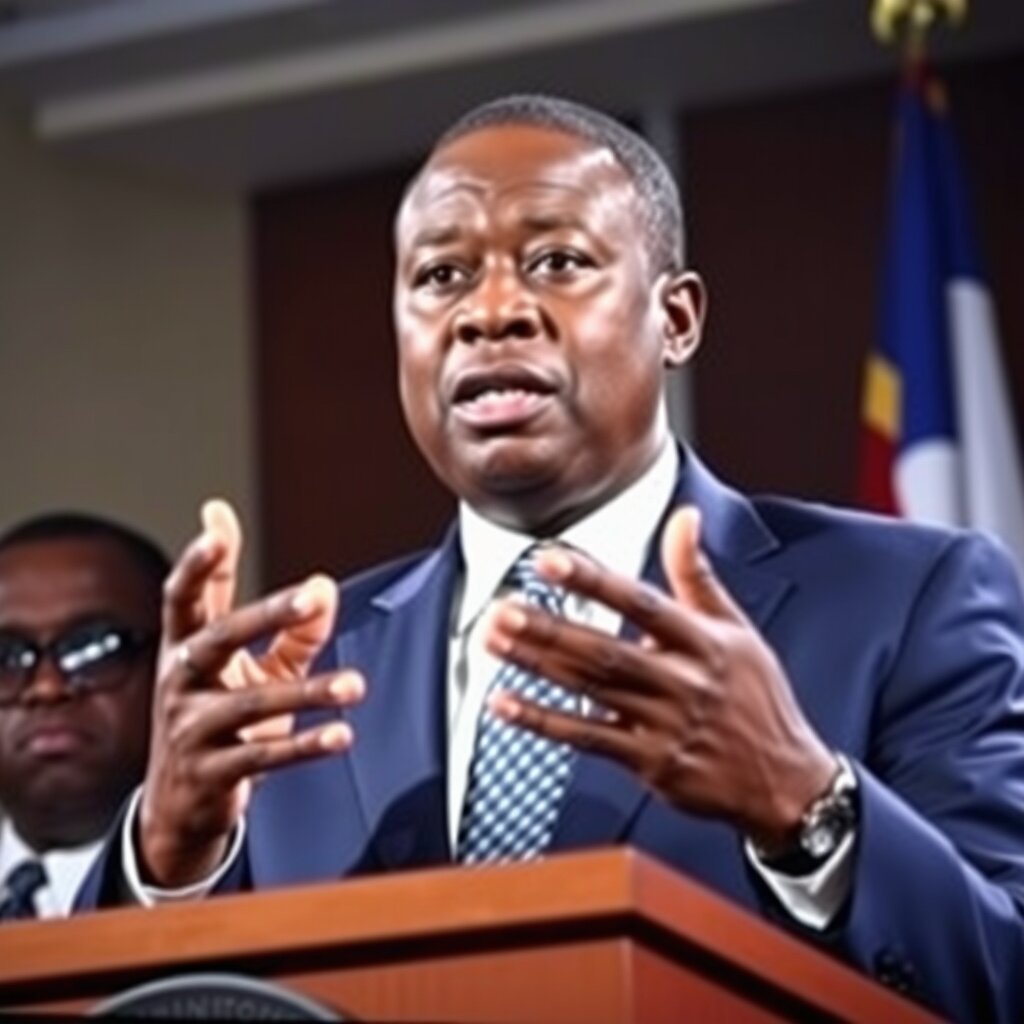
Accra, Ghana – A significant political controversy has erupted in Ghana, with the NPP Director of Communications, Richard Ahiagbah, publicly demanding the removal of the CEO of the Ghana Free Zones Authority. Speaking on Tuesday, Ahiagbah asserted that recent events necessitate decisive action to safeguard democratic discourse and combat a perceived rise in the “politics of insult.”.
Broader National Concern
Mr. Ahiagbah framed the situation as emblematic of a larger national issue where individuals are allegedly attacked and disrespected simply for expressing their views. He emphasized that this is not merely an isolated incident but indicative of a troubling trend in the country’s political communication.
The call for the CEO’s removal follows an emotional public apology issued by the Chief of Staff. Ahiagbah highlighted this apology as a clear signal from the highest echelons of government regarding the gravity of the matter. He stated that the Chief of Staff’s personal intervention and apology before the President underscores a national rejection of disrespectful political rhetoric.
Beyond Remorse: A Call for Action
While acknowledging the significance of the Chief of Staff’s apology, Mr. Ahiagbah insisted that remorse alone is insufficient. He argued for stronger, tangible consequences to act as a deterrent against future transgressions of this nature.
“The next step, respectfully, I’ll appeal to the Chief of staff… is for him to consider removing [her] from a post,” Ahiagbah stated. He believes this action is crucial to signify that such behavior will not be tolerated and to prevent a further degradation of public discourse.
Protecting Constitutional Rights
The Director of Communications stressed that the issue extends beyond individual conduct, touching upon fundamental constitutional rights. He argued that citizens possess the inherent right to express their opinions on national matters without facing intimidation, especially from political operatives.
“…especially when it involves a citizen who has every right protected by this constitution to express their views on national issues, for a political operative to intimidate them… I think that recklessness must be marked,” he added. Ahiagbah underscored the importance of accountability in shaping public behavior.
Setting Precedents
Mr. Ahiagbah invoked historical context, suggesting that Ghana has previously rejected certain behaviors, with individuals facing repercussions. He posited that clear consequences serve as a vital lesson, informing potential future actions and their outcomes.
He further commended the Chief of Staff’s apology as unexpected yet impactful, reflecting positively on his character and principles. However, he reiterated that the situation demands more than expressions of regret.
The Way Forward
“At this point, the next necessary step he must take is to have Madam Mary Awuse removed… That will be instructive. That will be telling all Ghanaians loud and clear that the political class appreciates input from all citizens,” Ahiagbah argued. He believes this decisive action would send a clear message about the value placed on citizens’ contributions.
Ultimately, Mr. Ahiagbah emphasized the imperative to protect democratic participation for all citizens, irrespective of their status or background. He concluded by asserting that every citizen, whether a traditional leader or a religious figure, is first and foremost a Ghanaian whose voice deserves to be heard and not silenced.
Future Implications
The demand for the Free Zones CEO’s removal brings to the forefront the ongoing debate about the tone and conduct within Ghana’s political sphere. Observers will be watching closely to see if the government takes further action beyond the Chief of Staff’s apology. The outcome could set a significant precedent for how alleged instances of intimidation and the ‘politics of insult’ are handled, potentially influencing future political discourse and the protection of citizens’ rights to free expression.










Leave a Reply