
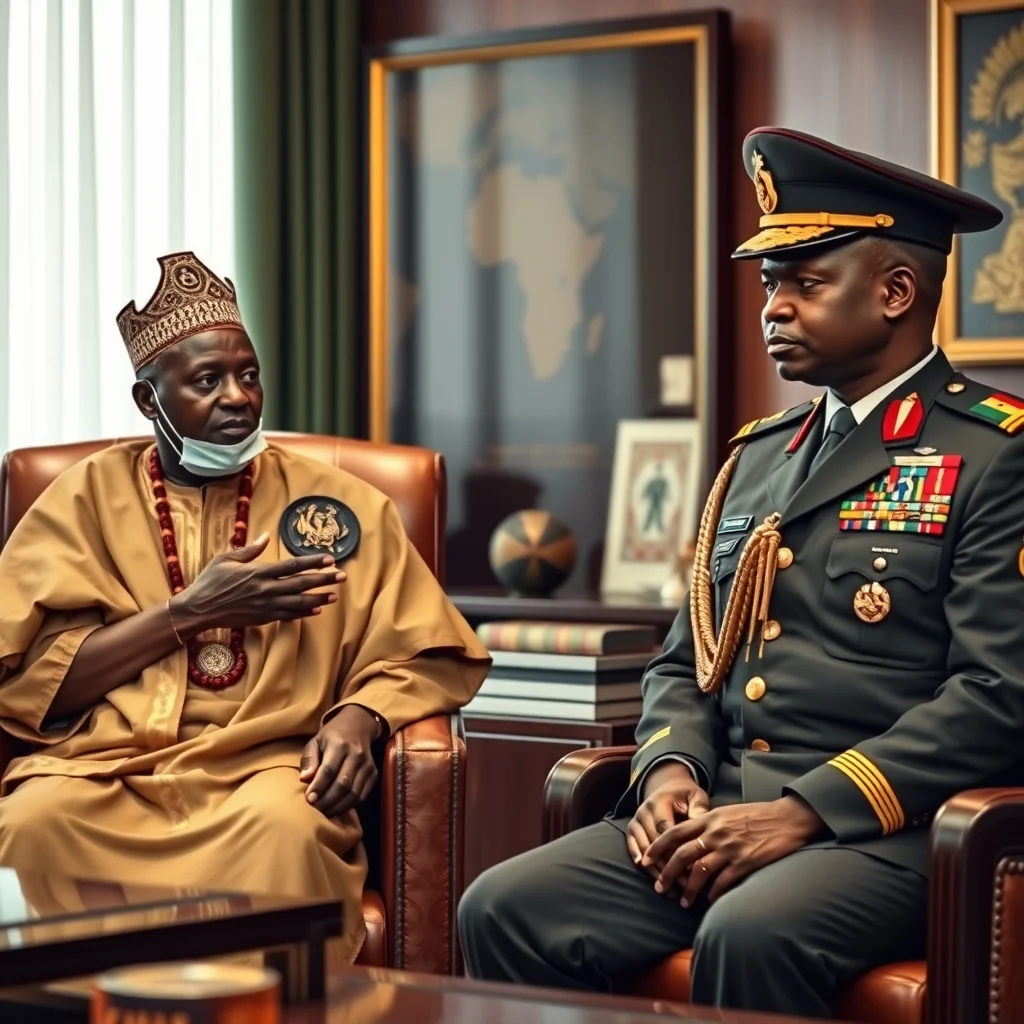
Nana Ansah Kwao IV, the Chief of Akwamu-Adumasa, has urged immediate national action to address the severe housing deficit impacting personnel of the Ghana Armed Forces (GAF). He highlighted the dilapidated state of existing accommodations, many of which are considered unfit for habitation. This call to action, made during a courtesy visit from the Chief of Defence Staff (CDS), Lt. Gen. William Agyapong, at Akwamu Adumasa in the Eastern Region, frames military housing improvement as a shared national responsibility.
Context of the Housing Challenge
The visit by Lt. Gen. Agyapong was part of the Military High Command’s efforts to thank Nana Ansah Kwao IV for his support and participation in the fundraising launch for the Burma Camp Redevelopment Project on April 25, 2026. Nana Ansah Kwao IV serves as a member of the Board of Trustees for this crucial initiative. The CDS, upon assuming office, identified the military housing deficit as a persistent problem, with roots tracing back to the colonial era.
A Shared National Duty
Nana Ansah Kwao IV emphasized that while the government holds primary responsibility, improving the living conditions for military personnel should be viewed as a collective national duty. He described the Burma Camp Redevelopment Project as a revolving fund, underscoring the need for sustained contributions from various stakeholders, including Corporate Ghana, to ensure its long-term success.
The chief directly appealed to corporate organizations to lend their support to the initiative. He believes that such contributions are vital for enhancing the welfare and living standards of military personnel across the country. This appeal highlights the significant gap that government funding alone may struggle to fill.
Military High Command’s Gratitude
Representing the Military High Command, Lt. Gen. William Agyapong conveyed profound gratitude to the traditional authorities of Akwamu-Adumasa, and specifically to Nana Ansah Kwao IV. The CDS acknowledged the chief’s significant support for the housing initiative and his active role in mobilizing broader backing for the scheme. This recognition underscores the importance of traditional leadership and community engagement in addressing national security infrastructure needs.
Implications and Future Outlook
The call for national action signifies a growing recognition of the critical link between the welfare of military personnel and national security. Poor living conditions can impact morale, retention rates, and overall operational readiness. The success of the Burma Camp Redevelopment Project, and similar future initiatives, will likely depend on continued public and private sector engagement. This approach, treating military housing as a shared responsibility, could set a precedent for addressing other critical infrastructure needs within the security services. Stakeholders will be watching to see if this collaborative model gains traction and leads to tangible improvements in the lives of GAF personnel, thereby strengthening national defense capabilities.










Leave a Reply