
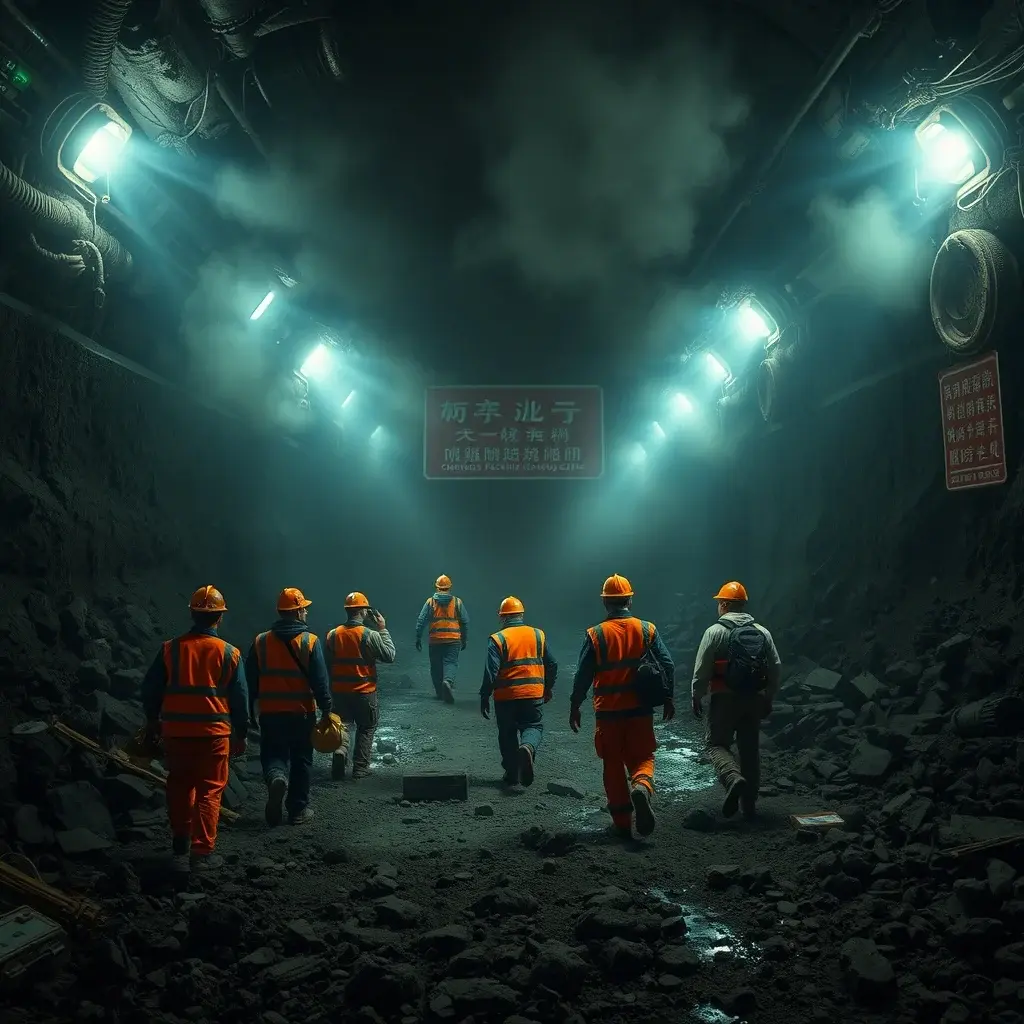
At least 82 miners have died and two remain missing following a devastating gas explosion at the Liushenyu Coal Mine in China’s northern Shanxi province on Friday evening. The blast, which occurred at 19:29 local time, is the deadliest mining accident in the country since 2009, prompting a rigorous investigation and immediate safety reviews across the region.
Mine Disaster Unfolds
Officials confirmed the grim toll on Saturday, revising an earlier figure downward amidst initial confusion and chaotic rescue efforts. The explosion occurred when 247 workers were on duty. Over 100 miners were rescued, but many suffered from inhaling poisonous gases, with 128 currently hospitalized, including two in critical condition. Injured miner Wang Yong described a sudden plume of smoke and a sulfurous smell, recounting how colleagues collapsed from fumes before he lost consciousness.
The cause of the explosion is under investigation, but state media reported that carbon monoxide levels exceeded safety limits. The management team at the mine has reportedly been detained as authorities seek to identify those responsible.
Rescue Challenges and Safety Concerns
The rescue operation faced significant hurdles, including water buildup near the blast site that hindered access to certain areas. Furthermore, mine blueprints provided by the company did not accurately reflect the actual underground layout, complicating search efforts. Rescuers deployed specialized robots equipped with gas sensors and infrared cameras to explore unreachable sections and search for signs of life.
In response to the tragedy, local officials have ordered immediate safety inspections of all coal mines in Shanxi province. Production has been halted at the four mines operated by the Tongzhou Group, the company in charge of the Liushenyu mine. This suspension highlights the severity of the safety concerns, especially as the Tongzhou Group had reportedly received two administrative penalties in 2025 for safety violations.
A Stark Reminder of Mining Dangers
Adding to the concern, state media reported that the Liushenyu mine was flagged as having “severe safety hazards” by the Chinese National Mine Safety Administration in 2024. This incident serves as a stark reminder of the inherent dangers within China’s vast coal mining industry, which remains crucial to the nation’s energy supply.
Shanxi province alone accounts for over a quarter of China’s total coal output. While safety standards have been tightened in recent years, and illegal mining operations have been targeted, accidents continue to occur. This disaster echoes past tragedies, including the 2023 collapse at an open-pit mine in Inner Mongolia that killed 53 people, and the 2009 explosion in Heilongjiang province that claimed over 100 lives.
China is the world’s largest consumer of coal and a major emitter of greenhouse gases, even as it rapidly expands its renewable energy capacity. The Liushenyu mine disaster underscores the ongoing tension between energy demands and worker safety in the country’s critical coal sector.
Looking Ahead
The government has pledged a “rigorous” investigation, with severe punishment promised for those found accountable. The focus now shifts to the ongoing rescue and recovery efforts, the thorough investigation into the cause of the explosion, and the implementation of enhanced safety protocols across China’s mining industry. The effectiveness of these measures and the transparency of the investigation will be closely watched by both domestic and international observers.










Leave a Reply