
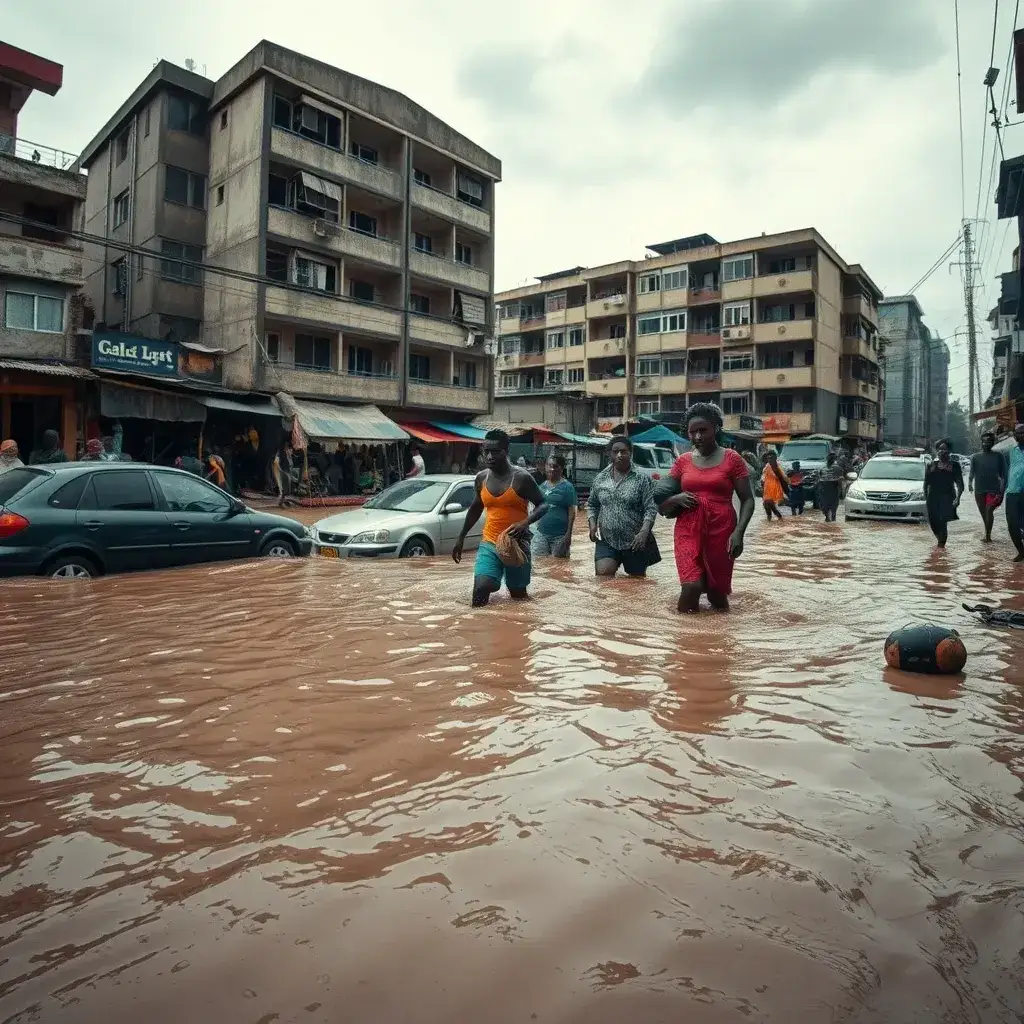
Accra, Ghana – In the wake of devastating recent floods that submerged parts of Accra, citizens are grappling with two divergent explanations for the recurring national disaster, originating from within the highest levels of government. The conflicting narratives, one attributing the floods to public indiscipline and the other to spiritual attacks, have left the populace questioning which explanation to believe and, more critically, who is actively working to solve the persistent problem.
A Predictable Disaster
For many residents of Accra, the recent flooding was not a surprise but a grimly predictable annual event. Decades of unfulfilled promises, numerous committee reports, and repeated assurances from successive governments have failed to yield lasting relief. As the rains fall, the city floods, destroying properties, crippling businesses, and leaving ordinary citizens to tally their losses. Homes were submerged, roads transformed into rivers, and commercial activities ground to a halt, forcing families to anxiously rescue belongings from rising waters.
Divergent Explanations Emerge
President John Dramani Mahama, addressing the issue, largely attributed the persistent floods to a lack of public discipline. He cited poor sanitation habits, the indiscriminate dumping of refuse, and the obstruction of drainage systems as primary contributors to the worsening situation. This perspective is supported by visible evidence across the capital, where drains are frequently clogged with plastic waste, and unauthorized structures encroach upon waterways.
However, shortly after the President’s remarks, a different explanation surfaced from within the presidential staff. Presidential staffer Naana Juantuah reportedly suggested that the nation’s challenges, including the flooding, could be linked to spiritual attacks or spells allegedly cast by political opponents aiming to destabilize the National Democratic Congress administration. This statement immediately ignited public debate, not due to unfamiliarity with spiritual discourse, but because it appeared to directly contradict the President’s explanation.
The Contradiction and Public Trust
The juxtaposition of these two explanations – one rooted in human conduct and practical remedies, the other in supernatural forces requiring unstated solutions – left many Ghanaians perplexed. If indiscipline is the core issue, the government’s response should focus on enforcing sanitation laws, improving urban planning, investing in drainage infrastructure, and launching public education campaigns. Conversely, if supernatural forces are to blame, the available policy solutions become far less clear for a governing body.
Communication from leadership during crises is paramount. Governments are expected to provide clarity, coherent, evidence-based explanations that inspire public confidence. Mixed messages, however, breed uncertainty and erode trust, particularly when citizens recall previous political rhetoric.
Accountability and Past Promises
The controversy takes on added significance when viewed against Ghana’s recent political history. During the 2024 election campaign, then-candidate John Mahama and his party frequently blamed the ruling New Patriotic Party administration for the nation’s economic and social woes, arguing that leadership must be held accountable for citizens’ suffering. This principle resonated with voters and was a key factor in the election’s outcome.
Now, many Ghanaians are applying the same standard to the current administration. The question arises: if flooding under a previous government was evidence of governance failure, should the same logic not apply today? Accountability, many argue, cannot be selective, disappearing once a party assumes power. While governments, slogans, and promises may change, the floodwaters continue their annual return, exposing the same persistent weaknesses.
Persistent Challenges, Demand for Results
Every rainy season reveals the same systemic issues: inadequate drainage, poor urban planning, weak enforcement of building regulations, encroachment on waterways, and ineffective waste management. These problems have been consistently identified by experts, yet the challenge has always been in implementation, not diagnosis. Consequently, many citizens are weary of political blame games and are now demanding tangible results.
Residents want to know about new drainage projects, the removal of illegal structures, and the long-term strategy for protecting lives and property. They are asking if future generations will continue to face these recurring disasters. Leadership, ultimately, is measured by outcomes, not speeches.
Moving Forward: Partnership and Action
Floodwaters do not discriminate based on political affiliation; they simply expose weaknesses in governance and infrastructure. The solution, therefore, cannot lie solely in assigning blame to citizens, opponents, or past administrations. Instead, it requires a partnership between responsible citizenship and effective governance. Citizens must cease choking drains with waste, authorities must enforce regulations impartially, and the government must invest in modern drainage systems and strategic urban planning.
As the nation looks ahead, the conflicting explanations for the current flooding crisis highlight a critical need for clear, unified communication and decisive action. The people of Ghana heard the President’s words and the words of his staffer; now they await tangible results, understanding that history remembers outcomes, not excuses. The focus must shift from political narratives to practical, sustainable solutions that will prevent future devastation.










Leave a Reply