
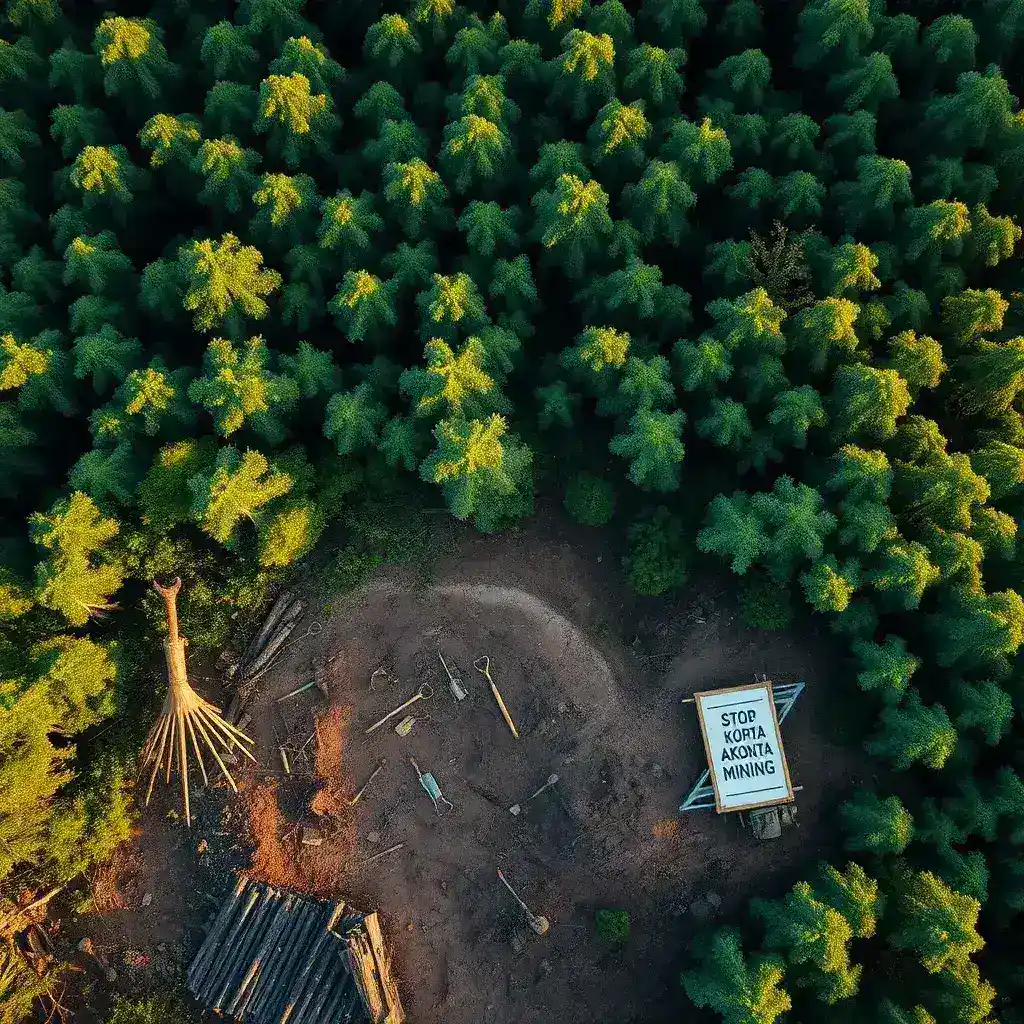
An Accra High Court on Monday rejected two photographs presented by the prosecution in the ongoing illegal mining case against Bernard Antwi Boasiako, also known as Wontumi. The court found the pictures lacked sufficient connection to the alleged activities, particularly failing to depict armed individuals or the accused himself or his company, Akonta Mining Company Limited. However, the court did admit a drone video recorded by the third prosecution witness, Detective Chief Inspector Eugene Akpoh Glover, which captured the extent of alleged damage in the Tano Nnimire Forest Reserve.
Context of the Case
Bernard Antwi Boasiako and his company, Akonta Mining Company Limited, face multiple charges. These include undertaking mining operations without a license, felling approximately 300 merchantable trees within the Tano Nnimire Forest Reserve, and erecting structures without authorization from the Forestry Commission. Boasiako has pleaded not guilty to these charges and is currently on bail.
Evidence Presented in Court
During proceedings, Detective Chief Inspector Glover testified about his visit to the Tano Nnimire Forest Reserve, specifically Compartment 161. He presented a drone video he recorded on July 5, 2025, intended to showcase the alleged damage caused by Akonta Mining Company Limited.
The prosecution, led by Senior State Attorney Nana Ama Prempeh, argued for the video’s admission, stating it was relevant evidence of mining activities within the protected reserve. They countered the defense’s objections, emphasizing that the witness had explained the video’s origin and its role in his investigation.
Defense Objections and Court Rulings
Mr. Andy Appiah-Kubi, counsel for Boasiako, raised objections to both the photographs and the drone video. Regarding the photographs, he argued that they did not show any armed men, Boasiako, or his company, thus lacking a clear link to the case.
For the drone video, the defense contended it lacked sound, a visible date, and a verifiable source, suggesting it could have been obtained online. They also argued it failed to connect Akonta Mining Company Limited or Boasiako to the alleged activities.
The court, however, overruled the objection to the drone video. The judge noted that the witness had already testified to recording the footage on a specific date. The court indicated that the defense would have the opportunity to challenge the video’s authenticity and content during cross-examination.
Company Incorporation Documents Admitted
Earlier in the proceedings, Detective Chief Inspector Glover also testified about obtaining incorporation documents for Akonta Mining Company Limited from the Registrar of Companies. These documents were subsequently admitted into evidence.
Future Proceedings
The case has been adjourned to Friday, May 29, 2026, with the defense expected to further challenge the admitted evidence and present their case.
Implications and What to Watch
The court’s decision to admit the drone footage, despite defense objections, signifies a crucial step in the prosecution’s attempt to visually demonstrate the alleged environmental damage. The rejection of the photographs highlights the court’s strict adherence to evidentiary standards, requiring clear nexus between the evidence and the accused parties. As the trial progresses, the defense’s cross-examination of Detective Chief Inspector Glover regarding the drone video will be critical. Observers will also be watching how the prosecution builds its case using the admitted video and company incorporation documents to link Boasiako and Akonta Mining Company Limited to the illegal mining activities. The outcome could set precedents for how environmental damage evidence is handled in future mining-related prosecutions in Ghana.










Leave a Reply