
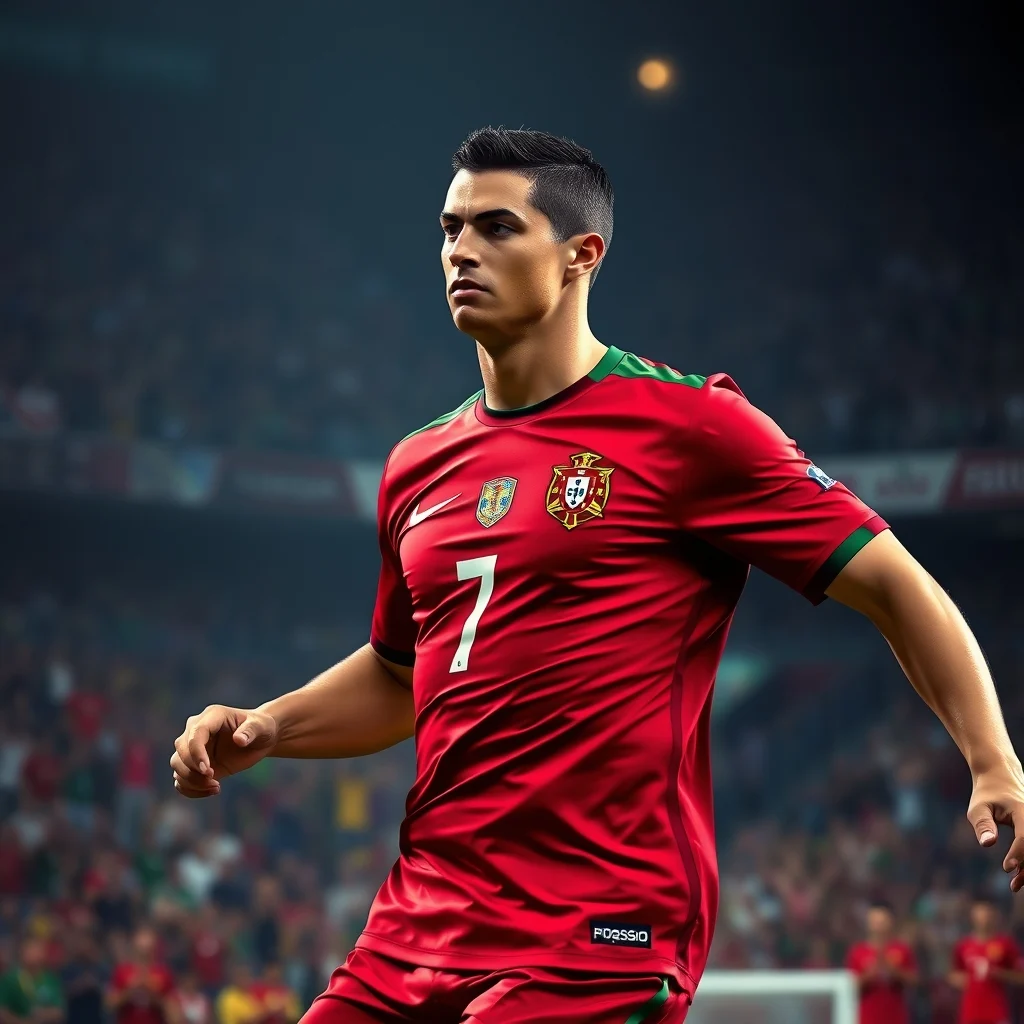
The 2003 friendly against Kazakhstan, a seemingly minor match played on a less-than-ideal pitch in Chaves, Portugal, marked the senior national team debut of Cristiano Ronaldo. Twenty years later, this fixture is remembered not just as the beginning of an extraordinary career, but as the genesis of a profound transformation in Portuguese football, culminating in Ronaldo’s potential record-equalling sixth World Cup appearance in 2026.
A National Icon and His Evolving Role
Cristiano Ronaldo’s impact on Portuguese football transcends statistics, though his record 143 international goals speak volumes. He has reshaped the nation’s sporting identity, instilling a belief in global success that was previously unimaginable for a small country.
As Joao Aroso, who worked with Ronaldo at both Sporting and the national team, told BBC Sport, “Cristiano allows our small country to be known worldwide for something great – because of all the positive things he stands for.” This sentiment underscores the unique cultural significance of the player.
Despite approaching 41, Ronaldo’s status within the team has historically been untouchable. However, scrutiny over his role has intensified since the 2022 World Cup in Qatar. Openly questioning his place in the starting lineup, once considered akin to treason, is now a more prevalent discussion.
Shifting Perspectives and Tactical Debates
Some figures from Portugal’s footballing past have voiced concerns about Ronaldo’s current influence. Antonio Simoes, a member of the 1966 World Cup squad, argued, “He doesn’t play to win, he plays to be the main figure.” Simoes contrasted this with the team-first mentality of legends like Eusebio, stating, “Let’s call things by their name. I have nothing against him. I can still see, I can still hear and I can still think. But I can’t run away from the reality of the facts.”
Coach Roberto Martinez, however, dismisses such debates as mere “lift talk.” He consistently highlights Ronaldo’s recent performance metrics, pointing to “25 goals in his past 31 games for the Selecao.” Martinez maintains that Ronaldo’s inclusion is based on his continued high-level performance, not past achievements.
Ronaldo is set to participate in his sixth World Cup, aiming to add to his eight World Cup goals and, crucially, help Portugal secure the coveted trophy for the first time. His ability to perform in high-stakes matches remains a key argument for his continued presence.
Portugal’s Performance Without Ronaldo
While Ronaldo’s presence is widely acknowledged for its mental and technical value, particularly for younger players, questions persist about whether Portugal functions more effectively without him on the field. Abel Xavier, a former international, emphasized Ronaldo’s experience in big moments and his overall contribution beyond physical speed.
Ricardo, a former goalkeeper and current national team staff member, echoed this, noting that while Ronaldo’s speed might be marginally reduced, his “physical, technical and mental qualities” still make him a “devastating force.”
Under Martinez, Ronaldo has featured in a significant majority of games, with absences often due to injury or suspension. Notably, Portugal recorded their largest victories of the current cycle—9-0 against Luxembourg and 9-1 against Armenia—in matches where Ronaldo did not play.
These results have fueled the debate. Pundit Sofia Oliveira commented, “He doesn’t have the football any more to be a starter for a side that wants to win the World Cup.” She added a crucial caveat: “The problem is that the national team has not been preparing for it.”
Navigating the Post-Ronaldo Future
Managing the transition away from an iconic figure like Ronaldo presents significant challenges. Former coach Fernando Santos faced considerable backlash after dropping Ronaldo during the 2022 World Cup, ultimately leading to his departure.
Coach Martinez appears less concerned about similar repercussions, while the Portuguese Football Federation (FPF) president, Pedro Proenca, has denied any suggestion that Ronaldo would influence coaching decisions.
The FPF’s recent partnership with AVA CR7, a recovery company owned by Ronaldo, has drawn attention, though the federation asserts no conflict of interest exists, stating Ronaldo was not involved in negotiations.
Financially, the FPF is robust, projecting record revenue and maintaining profitability for over a decade. Proenca stated that the federation is preparing for the post-Ronaldo era without unnecessary drama, acknowledging the player’s deep connection to Portugal.
“The FPF has always prepared for its present and its future. Of course, we know the importance Cristiano has. The two brands overlap – Cristiano Ronaldo and the FPF – I have to be honest and sincere about that,” Proenca admitted. He guaranteed the federation’s financial security for a natural transition following Ronaldo’s eventual departure.
Looking Ahead
As Cristiano Ronaldo prepares for what is likely his final World Cup, the conversation surrounding his role and Portugal’s future continues. The team’s performance in this tournament, and how coach Martinez balances the legacy and current capabilities of their greatest-ever player with the emerging talent, will be closely watched. The FPF’s stated commitment to preparing for a future beyond Ronaldo suggests a strategic approach to maintaining the nation’s footballing strength, regardless of individual stars.










Leave a Reply