
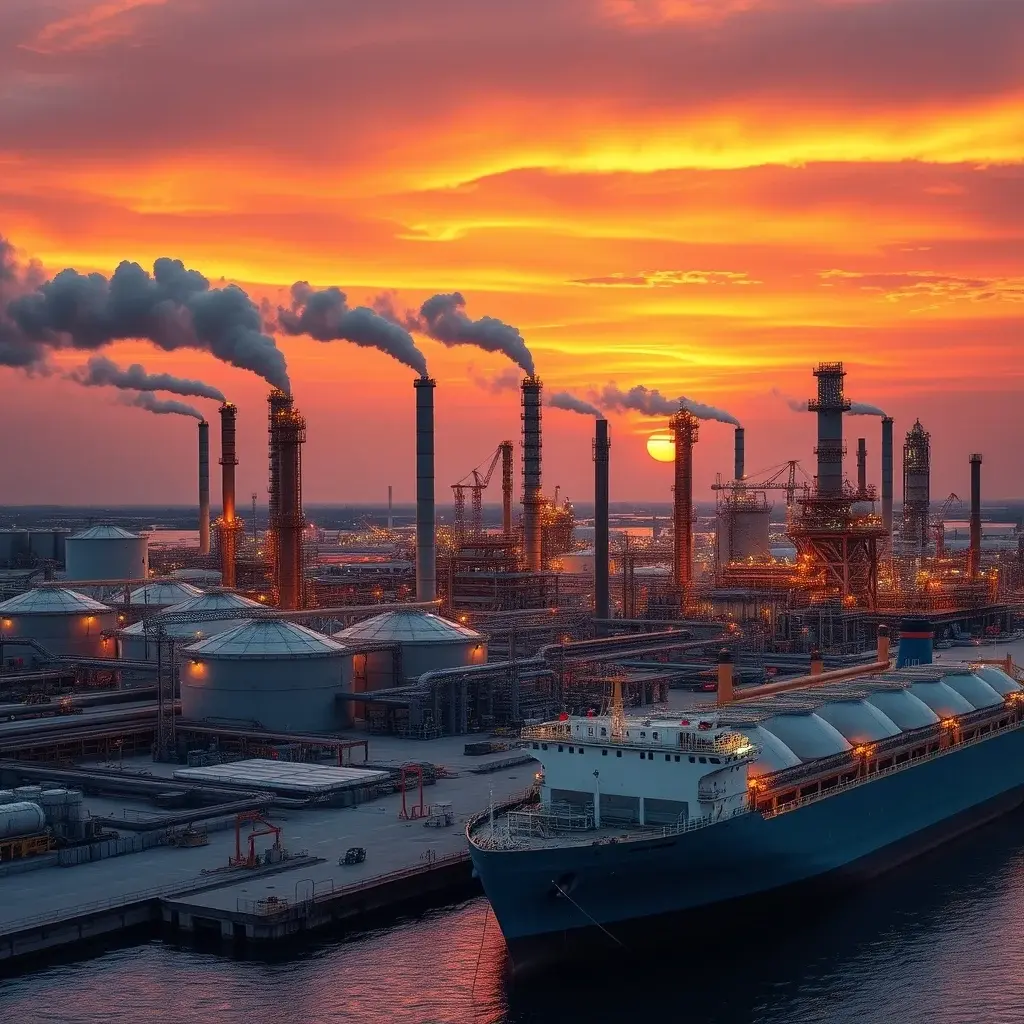
Nigeria’s Dangote Petroleum Refinery has achieved a significant operational milestone, processing 700,000 barrels per day (bpd) during performance tests conducted by process licensors. This output exceeds the refinery’s nameplate capacity of 650,000 bpd and signals its growing role in both domestic and international fuel markets, as announced by the company on Thursday.
Operational Ramp-Up and Expansion Plans
The impressive performance test results are part of a larger strategic vision for the Dangote refinery. Devakumar Edwin, vice president for oil and gas at Dangote Industries, stated that the company plans to expand its capacity to 1.4 million bpd within the next 30 months. Such an expansion would position the facility among the largest global refineries.
Since commencing fuel production in 2024, the refinery has steadily increased its output of essential petroleum products, including petrol, diesel, and jet fuel. This scaling of operations is crucial for meeting growing energy demands.
Market Presence and Export Reach
The Dangote refinery is not only serving Nigeria’s domestic market but is also emerging as a key exporter. Products are being supplied to various African nations, as well as to European countries such as the United Kingdom, France, and the Netherlands. Additionally, shipments have reached markets as far as the United States and Saudi Arabia.
This extensive export reach is particularly significant amid current global supply chain disruptions, especially those stemming from Middle East tensions. African buyers are actively seeking more dependable sources for their fuel imports, a demand that Dangote is increasingly meeting.
Data Highlights Shifting Trade Patterns
Data from analytics firm Kpler illustrates this growing influence. Exports from the Dangote refinery climbed to 353,000 barrels per day in April, a substantial increase from 168,000 bpd in February. Approximately half of these volumes were directed to other African countries.
This surge underscores the refinery’s rapid emergence as a major regional supplier. However, analysts advise caution, noting that it remains too early to definitively assess whether this trend represents a permanent shift in global trade patterns. Exports saw a slight pullback to 285,000 bpd in May, indicating market fluctuations.
Expert Views on Regional Supply
Mick Strautmann, a market analyst at Vortexa, observed a clear movement towards regional fuel sourcing. “We’re seeing a clear shift toward regional barrels, with Dangote steadily increasing its share of Africa’s seaborne fuel imports,” Strautmann commented.
The refinery’s Chief Executive, David Bird, also highlighted its capability in the jet fuel market. He noted on Tuesday that the refinery has built up a substantial surplus of jet fuel, positioning it to supply global markets effectively. This rising output has garnered significant interest from international crude suppliers and commodity trading firms.
Implications for the Energy Landscape
The successful performance and increasing output of the Dangote refinery carry significant implications for the African energy sector and global fuel markets. For Nigeria, it promises greater energy security and reduced reliance on imported refined products, potentially improving its balance of trade.
Across Africa, the refinery’s capacity offers a more stable and proximate source of refined fuels, potentially stabilizing prices and reducing logistical challenges for neighboring countries. This regional strengthening could reshape established trade routes and reduce dependence on distant suppliers.
What to Watch Next
Key developments to monitor will include the refinery’s progress in achieving its planned 1.4 million bpd capacity and how consistently it can maintain output above its nameplate level. Further analysis of export destinations and volumes will reveal the extent to which it can displace traditional suppliers and solidify its position as a global refining powerhouse.
The company’s ability to secure consistent crude feedstock and navigate evolving international regulations will also be critical. The long-term impact on global oil prices and refining margins will depend on how effectively Dangote integrates its massive capacity into the complex dynamics of the international energy market.










Leave a Reply