
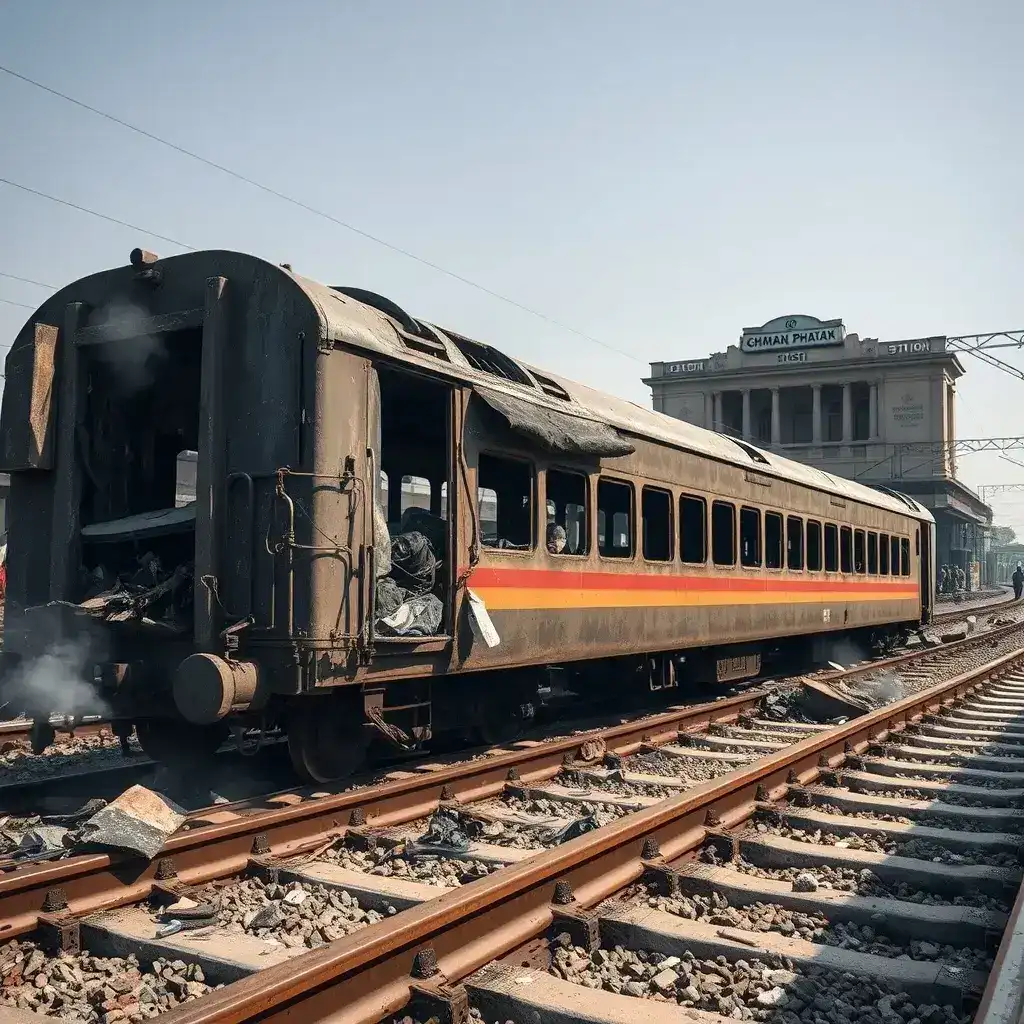
At least 20 people were killed and 70 others injured in an explosion that targeted a train carrying military personnel and their families in Chaman Phatak station, Quetta, Pakistan, on Sunday morning. The blast caused multiple carriages and the engine to derail and overturn, disrupting holiday travel plans for those aboard.
Context of the Attack
The targeted shuttle service was en route from a nearby military encampment to Quetta’s main railway station. Passengers, primarily service personnel and their families, were heading home for the Eid holiday. The train was moving when the explosion occurred, according to local resident Naseer Ahmed, whose home windows were shattered by the blast.
Railway officials confirmed that three coaches and the engine derailed, with two additional carriages overturned. Emergency services were mobilized, and hospitals in the region declared an emergency to treat the injured. The death toll is feared to rise as the extent of the casualties becomes clearer.
Claim of Responsibility and Official Response
The Balochistan Liberation Army (BLA), a separatist group, claimed responsibility for the attack, stating it was a suicide bombing. Pakistani officials have not yet independently confirmed the nature of the attack but are investigating. Prime Minister Shehbaz Sharif strongly condemned the act, calling it a “cowardly act of terrorism” and affirming that “such cowardly acts of terrorism cannot weaken the resolve of the people of Pakistan.” He also expressed national solidarity with the people of Balochistan during this time of grief.
Broader Regional Instability
This incident is not an isolated event in the restive Balochistan region. The BLA has a history of targeting trains, with the Jaffar Express being attacked multiple times in recent years. In March 2025, militants hijacked a train and took passengers hostage while it was en route to Peshawar.
The BLA’s stated grievance centers on the federal government’s alleged exploitation of Balochistan’s rich mineral resources without equitable benefit to the local population. Balochistan, Pakistan’s largest province by land area, covers nearly 44% of the country’s territory and shares volatile borders with Iran and Afghanistan. Despite its vast size, it is home to only about 5% of Pakistan’s over 240 million people.
Escalating Violence in Balochistan
The attack occurs against a backdrop of heightened violence in the region. In early February, clashes between BLA fighters and Pakistani security forces in Quetta and surrounding areas resulted in the deaths of 31 civilians. The latest train bombing underscores the ongoing security challenges and the persistent insurgency in Balochistan.
Implications and Future Outlook
The bombing is likely to intensify security measures in Balochistan and may strain relations between the federal government and the province. The targeting of a civilian train, especially during a holiday period, is expected to draw widespread condemnation and could lead to increased pressure on the government to address the root causes of the insurgency. The confirmation of the BLA’s involvement, particularly if it was a suicide attack, could signal an escalation in their tactics.
What remains to be seen is the government’s response and whether it will lead to more robust counter-insurgency operations or renewed efforts at dialogue. The upcoming holiday period, which often sees increased travel, may also become a focal point for security concerns across the region.










Leave a Reply