
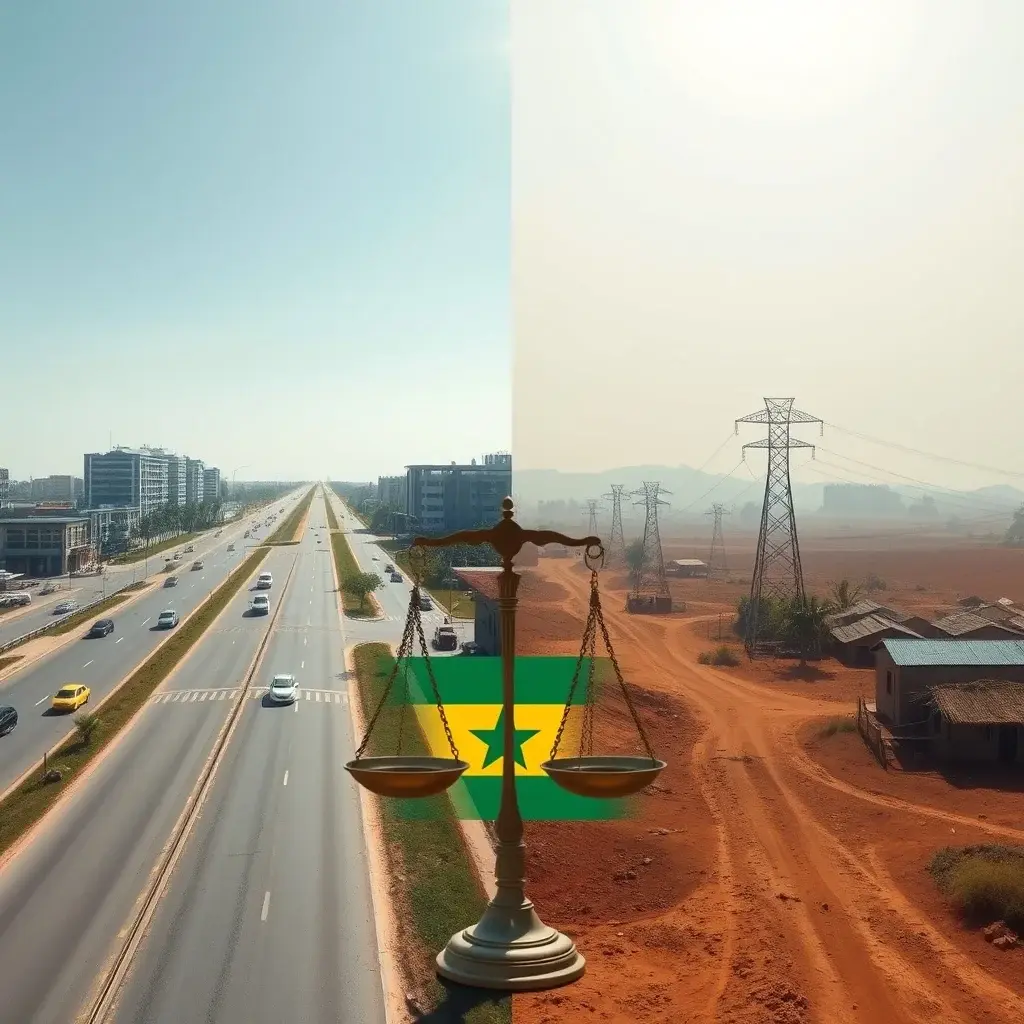
Dr. Nii Moi Thompson, Chairman of the National Development Planning Commission (NDPC), has voiced serious concerns regarding significant inequalities in the disbursement of the District Assemblies Common Fund (DACF). Speaking at the Ishmael Yamson & Associates Business Roundtable 2026, he highlighted that these disparities are exacerbating poverty and widening infrastructure gaps across Ghana, posing a direct threat to the nation’s development agenda.
Context of Regional Inequality
The issue stems from a persistent geographical divide where the Savannah Belt of Ghana faces ongoing challenges of poverty, largely attributed to insufficient investment in infrastructure and an uneven distribution of resources. This region, despite its size and population, has historically lagged behind in development.
Recent findings from the Ghana Statistical Service’s Multidimensional Poverty Report underscore this disparity. The report identifies the seven poorest regions in Ghana—Northern, Savannah, Upper East, Upper West, North East, Oti, and Bono East—as all being situated within the Savannah Belt.
Collectively, these seven regions constitute approximately 54 percent of Ghana’s total landmass and are home to about 26 percent of the nation’s population. The report further details that these areas suffer from inadequate basic amenities, including limited access to electricity, poor housing conditions, insufficient sanitation facilities, and a lack of clean drinking water, all indicative of deep-seated infrastructure deficits.
Uneven DACF Allocations Fueling Disparities
Dr. Thompson argued that the current system for allocating the District Assemblies Common Fund is actively worsening these existing inequalities. He presented data indicating a clear imbalance in fund distribution when compared to population distribution.
Specifically, the seven poorest regions, which represent 25.85 percent of Ghana’s population, received a smaller share of DACF disbursements, amounting to only 24.93 percent. This suggests a shortfall in funding relative to their population needs.
In stark contrast, the top seven recipient regions, which house a much larger proportion of the population at 69.5 percent, received a disproportionately higher share of DACF allocations, exceeding 72 percent. This significant difference highlights a systemic issue in resource allocation.
Consequences for Development










Leave a Reply