
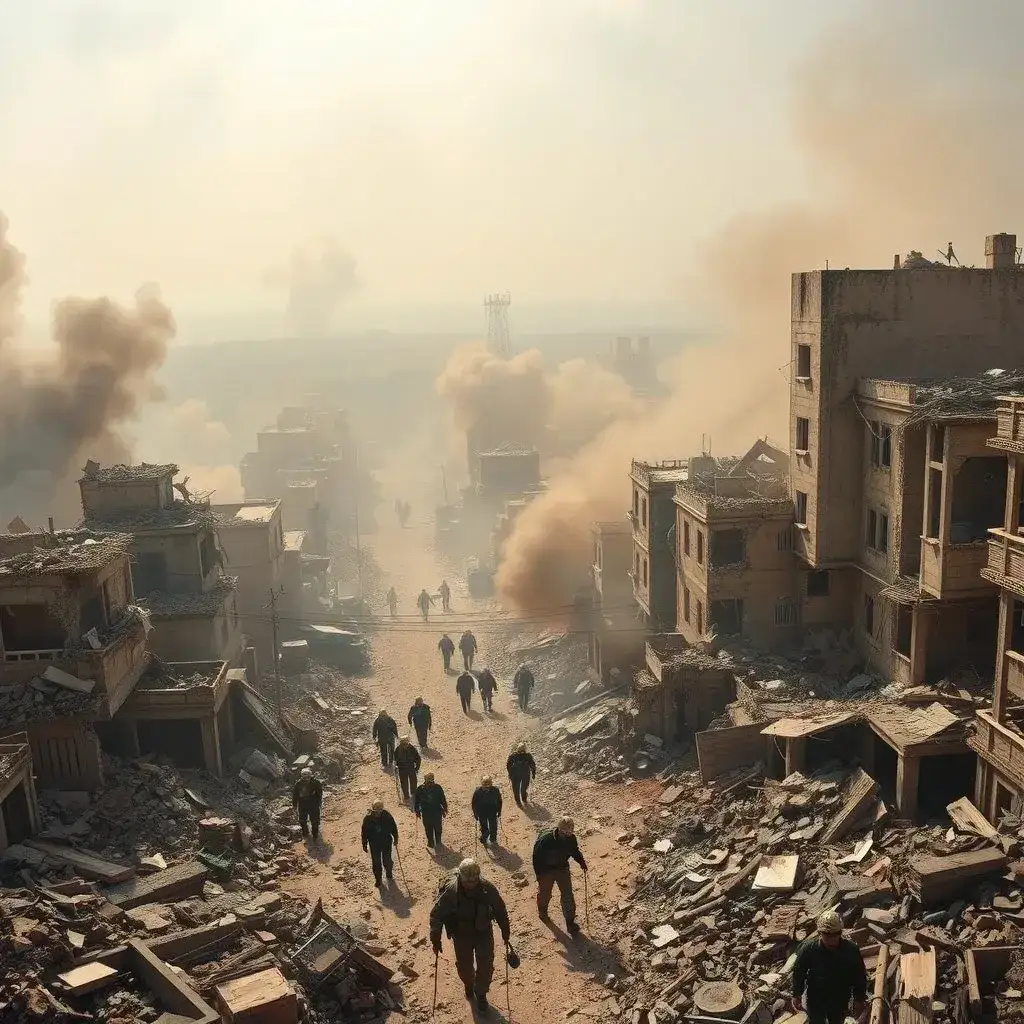
Dozens of people were killed across southern and eastern Lebanon on Tuesday following an intensive wave of Israeli airstrikes and expanding ground operations. The heavy bombardment, which claimed at least 31 lives including children and women, according to Lebanon’s health ministry, followed a direct vow from Israeli Prime Minister Benjamin Netanyahu to intensify military actions against Hezbollah. The Israeli military stated it targeted over 100 Hezbollah sites, marking one of the heaviest bombardments since a mid-April ceasefire, as Hezbollah reported confronting advancing Israeli troops deeper into Lebanese territory.
Context of Escalating Conflict
The latest military surge aligns with a policy directive from Jerusalem to fundamentally alter the security landscape along the border. Prime Minister Netanyahu confirmed Israel’s systematic expansion of its footprint to prevent cross-border operations by the Iran-backed Hezbollah. This shift follows a video statement where Netanyahu declared Israel would increase the volume and intensity of strikes to counter Hezbollah’s evolving deployment of fibre-optic drones that have evaded standard air defenses.
Israeli Ground Operations Deepen
Israeli forces have begun operating beyond the initial, self-declared “Yellow Line,” extending roughly 10 kilometers inside Lebanon. An Israeli military official confirmed troops are seizing dominant terrain to “fortify the security zone” and protect northern Israeli communities. Prime Minister Netanyahu vowed to “deal them a crushing blow,” signaling a significant escalation in military objectives.
Humanitarian Toll and Urban Impact
The deadly strikes heavily impacted southern municipal areas, with significant casualties reported in Burj al-Shamali, Kawthariyat al-Riz, Habbush, Maarakeh, and Salaa. In the eastern Bekaa Valley town of Mashghara, an overnight strike destroyed multiple residential homes, killing 11 people including two girls and a woman, and wounding 15 others. Structural damage was reported near critical humanitarian infrastructure and historical landmarks like the 900-year-old Beaufort Castle.
Netanyahu’s warnings triggered panic in Beirut’s southern suburbs, a Hezbollah stronghold, prompting thousands of families to flee. While the capital itself was spared direct overnight strikes, Israeli warplanes conducted dozens of strikes across nearly 50 locations nationwide. Survivors like seven-year-old Mohammad, pulled from the debris after his father and sisters were killed in Mashghara, recounted harrowing experiences.
Hezbollah’s Response and Military Calculations
The Israeli Defense Forces (IDF) defended its campaign, releasing footage of strikes on Mashghara, asserting targets were specific “Hezbollah infrastructure sites.” The military reported hitting 90 weapons storage facilities and command centers. Col. Avichay Adraee, IDF’s Arabic-language spokesman, issued evacuation orders for at least 50 southern and eastern towns, citing Hezbollah’s ceasefire violations as justification.
Hezbollah reported confronting advancing Israeli forces in Zawtar al-Sharqiyah, utilizing heavy artillery and close-quarters engagements. The group characterized its actions as a response to Israeli ceasefire violations. The IDF confirmed the death of a soldier in southern Lebanon on Sunday, bringing total Israeli military losses to 23 soldiers and one civilian contractor since early March. Conversely, the Lebanese health ministry stated that Israeli strikes have killed at least 3,185 people in the same period.
Threats to Civil Infrastructure and Diplomacy
The geographical expansion of the conflict raises alarms for Lebanon’s civil infrastructure. Airstrikes near the Qaraoun Dam on the Litani River, a vital water and power installation, prompted a warning from the Litani River Authority about potential catastrophic risks. The agency implored international diplomats to intervene to protect the dam.
The risks to humanitarian workers have also increased. A first responder in Qaraoun died from wounds sustained during a strike, and another rescuer in Srifa was killed. The total number of dead rescue workers has reached 121 since March. The escalating violence threatens to derail diplomatic talks aimed at salvaging a cessation of hostilities, with UN peacekeepers detecting a significant increase in airspace and firing incidents.
Diplomatic Crossroads and Future Outlook
As the U.S.-brokered truce unravels, the conflict stands at a critical juncture. Israel frames its incursions as a defensive necessity, while Hezbollah maintains its commitment to resistance. International mediators are working to preserve the diplomatic framework, but the accelerating violence risks pushing both factions into a broader war of attrition, with civilian populations bearing the brunt of the conflict.










Leave a Reply