
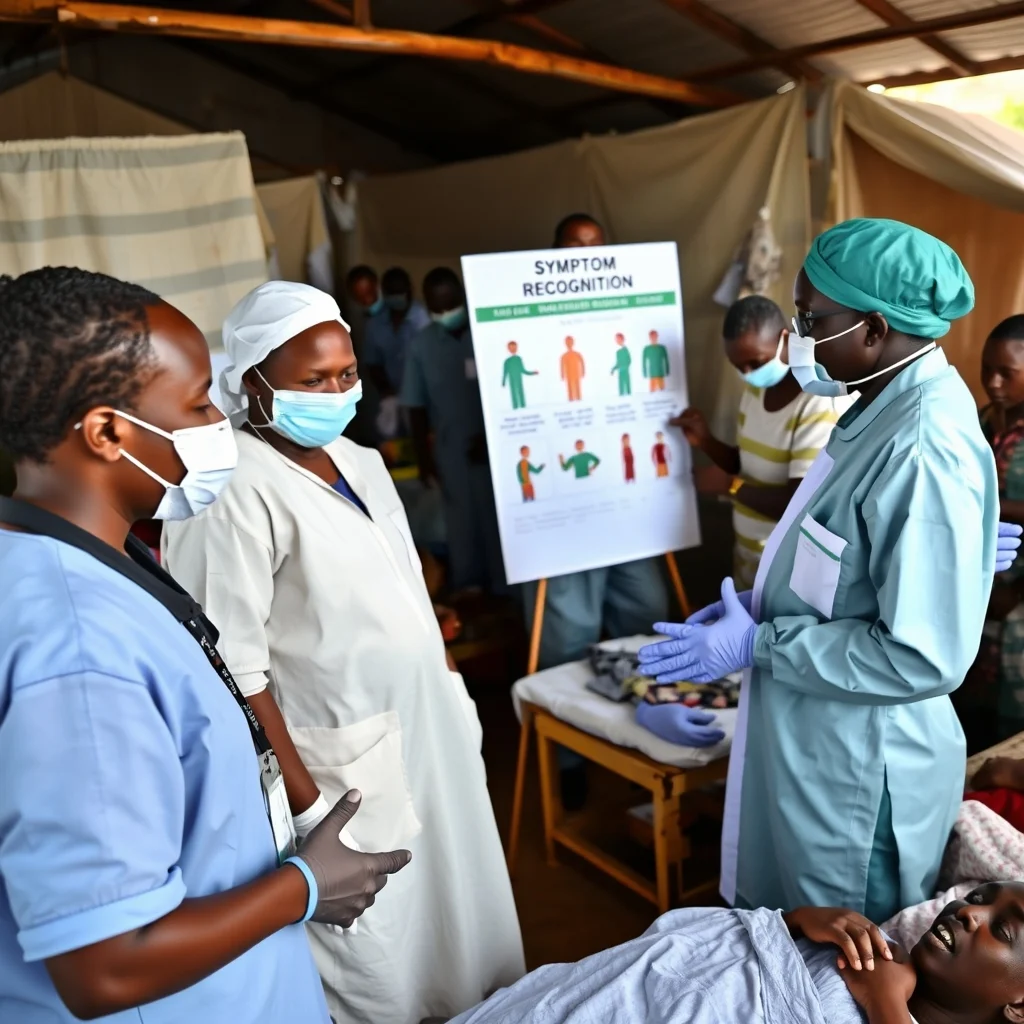
The Government of the Democratic Republic of Congo (DRC), in collaboration with the World Health Organisation (WHO), has intensified efforts to contain an outbreak of Ebola Virus Disease caused by the Bundibugyo strain. The outbreak is currently affecting the provinces of Ituri, North Kivu, and South Kivu, prompting a swift mobilization of resources by health authorities and international partners to prevent further transmission and protect vulnerable populations.
This latest outbreak presents significant challenges, as highlighted in a joint statement by the DRC Government and WHO. Crucially, there is currently no licensed vaccine or specific treatment available for the Bundibugyo strain of the Ebola virus. This absence necessitates a strong reliance on established public health measures to control the disease’s spread.
Despite the lack of a targeted vaccine, health experts emphasize that proven public health interventions remain highly effective. Early detection of cases, prompt medical care, and supportive treatment are critical factors in significantly improving survival rates for infected individuals. These measures form the cornerstone of the current response strategy.
Health authorities are urging the public to adhere to key preventive measures. These include consistent hand washing, seeking immediate medical attention upon the development of symptoms, and avoiding direct contact with the bodily fluids of infected individuals. Strict adherence to guidance provided by health officials is paramount.
Combating misinformation is also a critical component of the response. Communities are being called upon to share verified information and actively discourage the spread of rumors. Such misinformation can undermine vital response efforts and create unnecessary fear or distrust.
The joint statement underscored the indispensable role of communities in bringing the outbreak under control. Local leaders, healthcare workers, youth groups, and families are identified as central figures in surveillance, awareness creation, and infection prevention activities. Their involvement and trust are deemed essential for successfully halting transmission.
The DRC possesses extensive experience in managing Ebola outbreaks, having successfully contained multiple previous outbreaks in recent years. This track record has been built through coordinated public health interventions and robust community engagement strategies.
Officials have expressed confidence that with strong leadership, active community participation, and continued international support, the current outbreak can be brought under control. The WHO and the DRC Government have reaffirmed their commitment to a collaborative approach.
Their joint commitment involves strengthening disease surveillance systems, enhancing the capacity for effective case management, and providing crucial support to affected communities until transmission is completely halted. The focus remains on a comprehensive and coordinated strategy to overcome the current health crisis.










Leave a Reply