
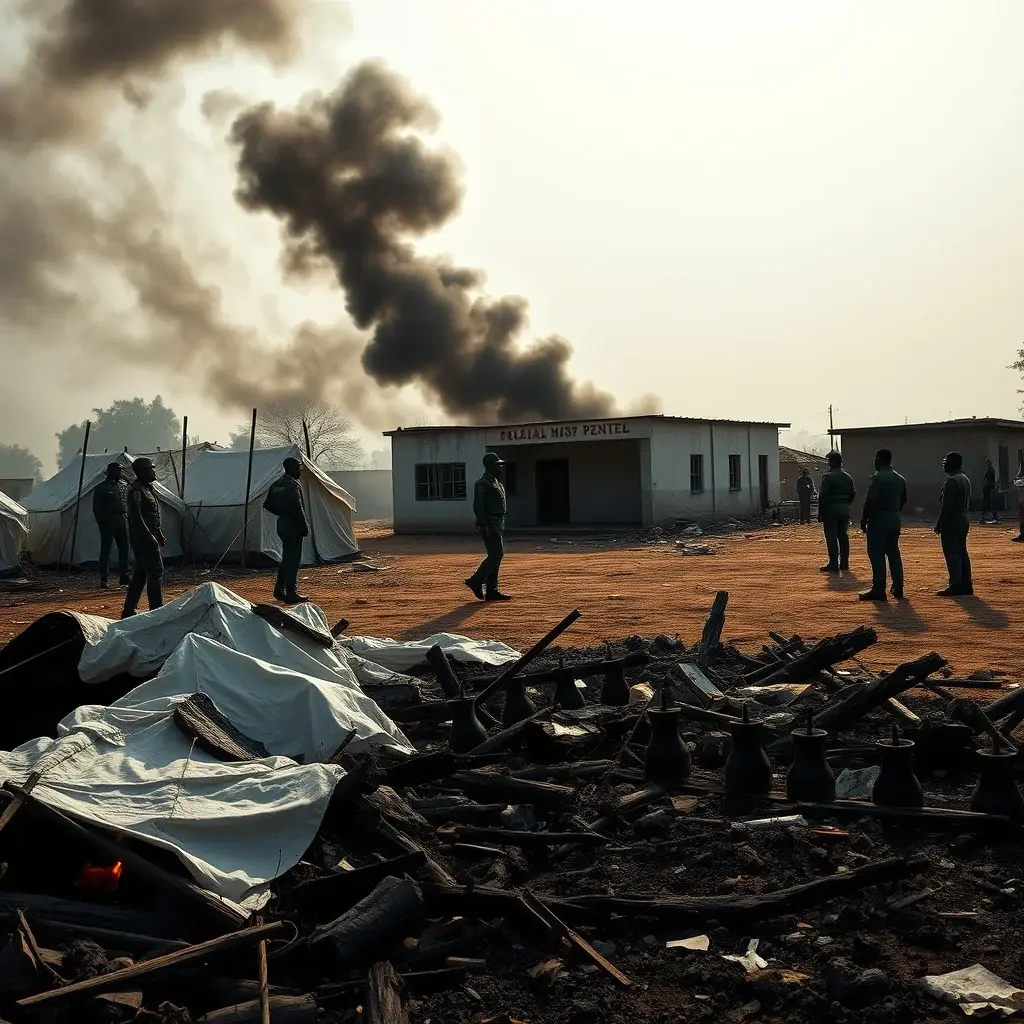
An angry crowd set fire to tents used as isolation wards at Rwampara General Hospital in the eastern Democratic Republic of Congo on Wednesday, after being prevented from retrieving the body of a young man believed to have died from Ebola for a traditional burial. The incident, which occurred near Bunia in Ituri province, the current epicentre of the outbreak, highlights the deep-seated mistrust and misinformation fueling resistance to public health efforts.
Context of the Outbreak and Local Resistance
The Democratic Republic of Congo is grappling with a severe Ebola outbreak, declared a public health emergency of international concern by the World Health Organization (WHO). As of Wednesday, 139 deaths were attributed to the virus, with over 600 suspected cases reported in eastern DR Congo. The outbreak is caused by a rare species of Ebola, the Bundibugyo virus, for which a vaccine is not yet readily available and could take up to nine months to develop.
Adding to the complexity, two cases have been detected in neighboring Uganda, prompting authorities there to temporarily suspend cross-border transport. The M23 rebel group, which controls parts of eastern DR Congo, also confirmed the first case in South Kivu province, hundreds of kilometers from the current epicentre, raising concerns about access and containment in rebel-held territories.
The Rwampara Hospital Incident
The unrest at Rwampara General Hospital erupted when family and friends of a young man, reportedly a popular local footballer, were denied access to his body. Authorities insist on safe and dignified burials for Ebola victims, a protocol involving trained teams in protective gear to prevent further transmission of the highly infectious virus. However, the deceased’s mother claimed her son died of typhoid fever, not Ebola.
Witnesses described the crowd initiating the violence by throwing projectiles at the hospital. Local politician Luc Malembe Malembe confirmed that tents used as isolation wards were set ablaze. In the ensuing chaos, police fired warning shots to disperse the protesters, and a healthcare worker sustained injuries from thrown stones before law enforcement intervened.
Jean Claude Mukendi, who is coordinating security for the Ebola response in Ituri, suggested that the crowd, upset by the death of a well-known figure, failed to grasp the reality of the disease. Malembe echoed this sentiment, stating that a significant segment of the population, particularly in remote areas, lacks proper information and believes Ebola is a fabrication by outsiders or NGOs seeking financial gain.
Impact on Healthcare Operations and Patients
The burning of the tents, which housed six patients receiving treatment, raised immediate concerns about their safety. However, the medical charity Alima, which reportedly operated the tents, confirmed that all patients were accounted for and are currently receiving care within the hospital. Following the incident, medical staff were placed under military protection to ensure their safety and the continuation of essential services.
The broader impact of the outbreak is also being felt in other sectors. DR Congo’s national football team cancelled its pre-World Cup training camp in the capital, Kinshasa, due to the escalating health crisis.
Data and Expert Perspectives
The WHO has classified the situation as a public health emergency of international concern, though not at a pandemic level. Official figures vary slightly, with the WHO reporting 139 deaths out of 600 suspected cases, while the Congolese Health Minister stated 159 deaths had been registered. The Bundibugyo strain of the virus presents unique challenges, lacking an immediate vaccine.
The incident at Rwampara underscores a persistent challenge in combating Ebola outbreaks in the region: deep-seated mistrust in authorities and healthcare providers, often fueled by misinformation and cultural beliefs. This resistance to safe burial practices and treatment protocols directly impedes containment efforts.
Implications and Future Watch
The burning of hospital tents and the underlying mistrust have severe implications for the ongoing fight against Ebola. It jeopardizes the safety of healthcare workers, disrupts treatment, and hinders contact tracing and safe burial operations, which are critical for breaking the chain of transmission. The expansion of the virus into new provinces and neighboring countries further elevates the stakes.
Moving forward, it will be crucial to observe how authorities and international health organizations address the pervasive misinformation and build community trust. Strategies that involve local leaders, culturally sensitive communication, and greater transparency will be vital. The response in areas controlled by rebel groups like the M23 also presents a significant challenge, requiring delicate negotiations and collaboration to ensure effective containment measures can be implemented.










Leave a Reply