
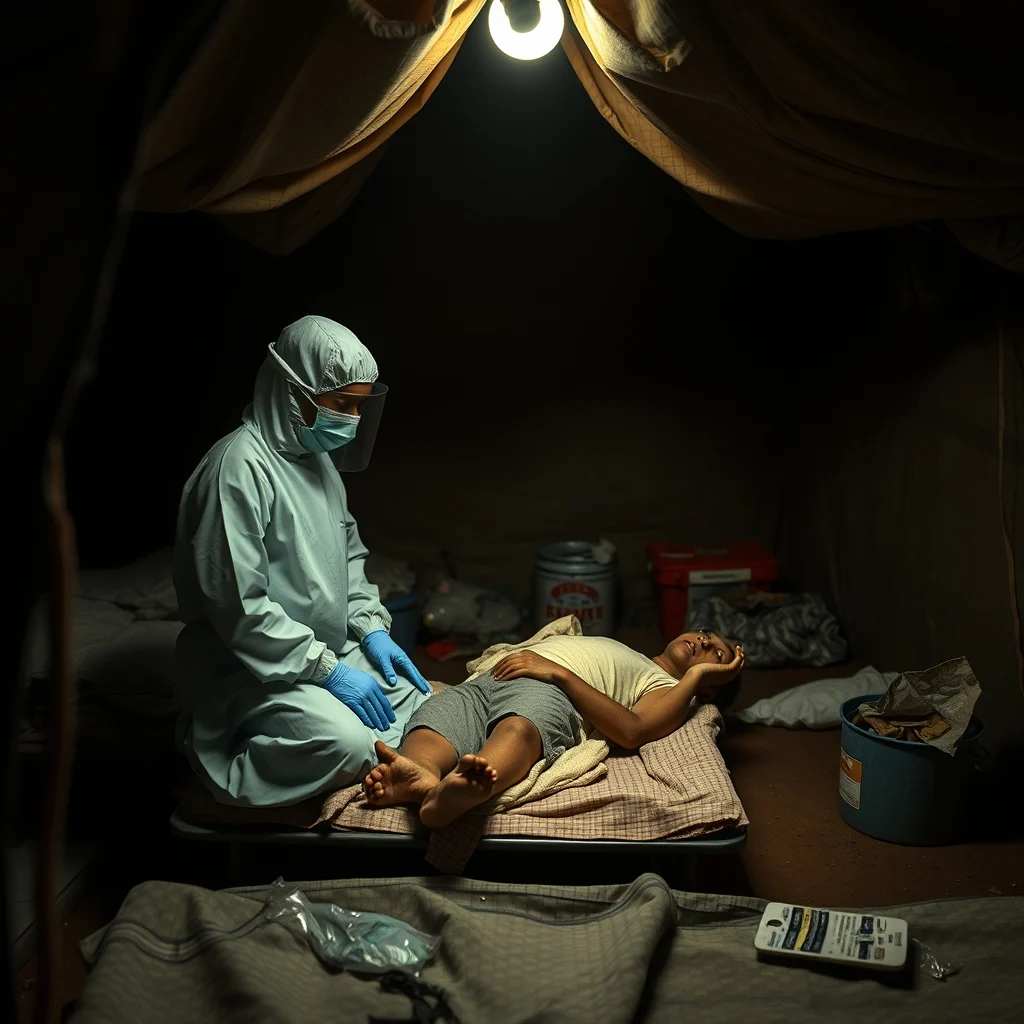
Africa’s top health agency, the Africa Centres for Disease Control and Prevention (Africa CDC), has declared a new Ebola outbreak in the eastern Democratic Republic of Congo’s Ituri province. The outbreak has so far resulted in approximately 246 cases and 80 deaths, primarily affecting the gold-mining towns of Mongwalu and Rwampara. Ugandan officials also confirmed one imported case from the DR Congo, marking a concerning regional spread.
Context of a Recurring Threat
Ebola, a deadly viral disease first discovered in 1976 in what is now the DR Congo, is believed to have originated from bats. This marks the 17th significant outbreak of the virus in the country, underscoring its persistent presence in the region. The virus spreads through direct contact with bodily fluids of infected individuals or animals, and can cause severe bleeding and organ failure.
Initial symptoms of Ebola often mimic other common illnesses, including fever, muscle pain, fatigue, headache, and sore throat. These can progress to more severe manifestations such as vomiting, diarrhoea, rash, and internal and external bleeding. The World Health Organisation (WHO) states that there is no proven cure for Ebola, and the average fatality rate hovers around 50%, highlighting the severity of any new outbreak.
Current Outbreak Details and Concerns
Preliminary tests conducted at the Institut National de Recherche Biomédicale (INRB) in Kinshasa have confirmed the presence of the virus in a significant portion of samples analyzed. Of the 80 reported deaths, four have been linked to lab-confirmed cases, according to the Africa CDC. Suspected cases have also emerged in Bunia, the provincial capital of Ituri, with laboratory confirmation pending.
The Africa CDC has expressed particular concern over the potential for further spread. The urban nature of Rwampara and Bunia, coupled with extensive mining activities in Mongwalu, presents a high risk. Dr. Jean Kaseya, the health agency’s executive director, emphasized the critical need for regional coordination due to substantial population movement between affected areas and neighboring countries.
Regional Implications and Response Efforts
The confirmation of an imported case in Uganda on Friday has amplified these concerns. A 59-year-old Congolese man, who had been hospitalized in Kampala, died after testing positive for Ebola. While Uganda has not yet identified local transmissions, the imported case necessitates immediate surveillance and response measures.
The Congolese government, while not yet officially declaring an outbreak, is expected to hold a press conference soon. In parallel, the Africa CDC is convening a meeting with the DR Congo, Uganda, South Sudan, and international partners to strategize on response priorities, including cross-border surveillance and containment efforts. These proactive measures are crucial given the history of devastating Ebola outbreaks in the region.
A History of Devastation
Ebola has had a profound impact across Africa over the past five decades, claiming approximately 15,000 lives in various countries. The DR Congo has experienced some of the most severe outbreaks, including the devastating 2018-2020 epidemic that resulted in nearly 2,300 deaths. Last year, an outbreak in the Kasai province claimed 45 lives, serving as a stark reminder of the virus’s enduring threat.
Challenges in Ituri Province
Adding complexity to the current response is the security situation in Ituri province, which has been under military rule since 2021. The presence of numerous armed groups, including the Islamic State-affiliated Allied Democratic Forces (ADF), has historically hindered public health interventions and created an environment where disease can spread more easily.
What to Watch Next
The coming days will be critical in assessing the effectiveness of containment strategies and the extent of regional spread. Close monitoring of case numbers, the identification of the specific Ebola strain, and the success of cross-border surveillance efforts will be key indicators. The ability of health authorities and international partners to navigate the security challenges in Ituri and implement rapid response measures will ultimately determine the trajectory of this new outbreak.










Leave a Reply