
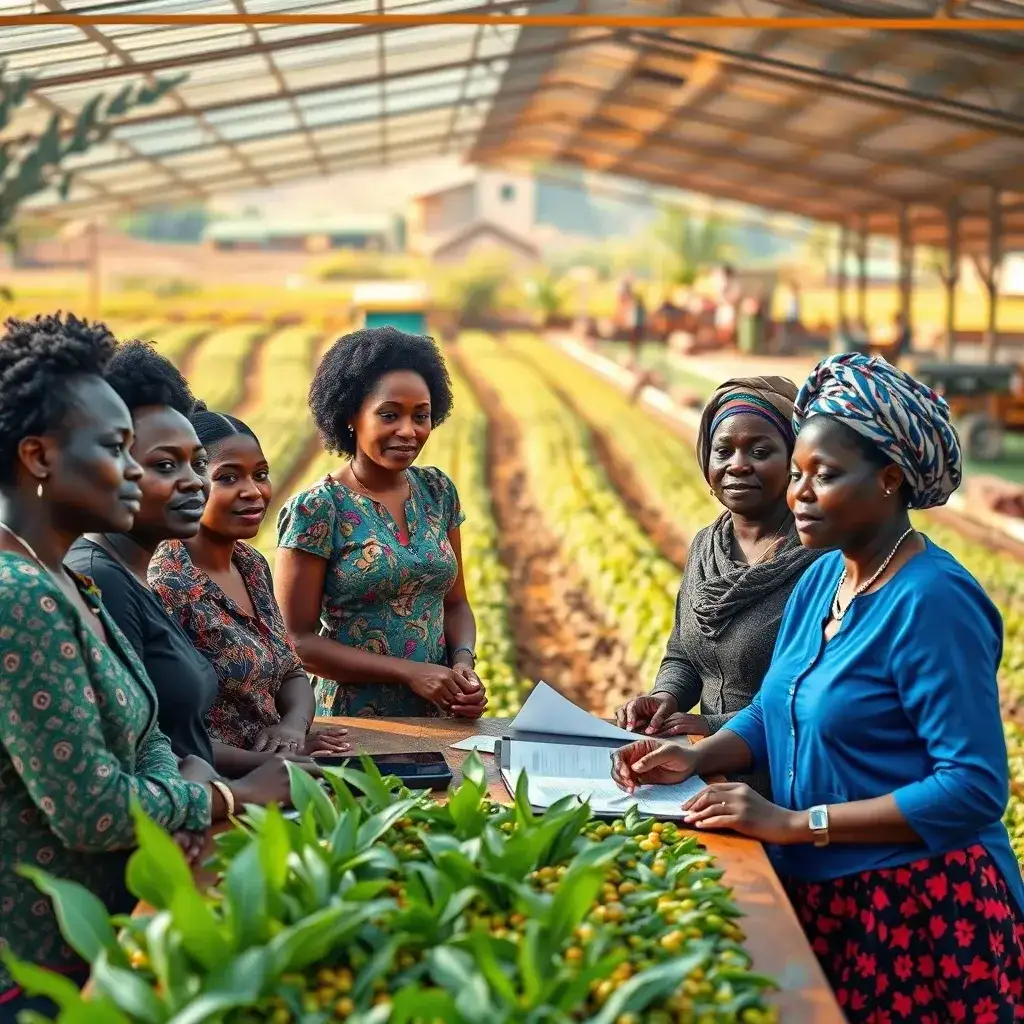
Ecobank Group and Proparco, the French development finance institution, announced a significant new partnership on Monday, May 11, designed to mobilize up to €300 million over three years. This substantial funding aims to enhance agricultural value chains and empower women entrepreneurs across the African continent, with the agreement formalized at the Africa Forward Summit in Nairobi.
Context: A Vital Sector Facing Funding Gaps
The agreement, signed as a Memorandum of Understanding (MoU), seeks to address critical financing shortfalls in Africa’s agricultural sector. Agriculture is a cornerstone of the continent’s economy, contributing approximately 20% to its GDP and employing nearly half of its workforce. Despite its importance, the sector remains significantly underfunded, hindering its potential for growth and stability.
Expanding Financial Support for Agriculture
Under the new arrangement, Proparco will deploy various financial instruments to support Ecobank’s lending activities. These include partial portfolio guarantees, co-financing, and trade finance support. The initiative is designed to enable Ecobank to scale up lending to agricultural small and medium-sized enterprises (SMEs) across 33 African countries. Proparco’s support will specifically target agri-SMEs through its Impact+ and ARIZ guarantee programs, aiming to mobilize up to €100 million over three years. Furthermore, the partnership will extend to agro-industrial companies involved in staple and cash crop value chains, providing long-term investment and working capital financing. Proparco will also offer partial risk guarantees to bolster Ecobank’s financing for agricultural commodity traders, with a target of €200 million for this segment.
Empowering Women Entrepreneurs Through Ellevate
Beyond agriculture, the partnership places a strong emphasis on supporting women-led businesses through Ecobank’s existing Ellevate programme. A specific commitment letter was signed to bolster this initiative in Côte d’Ivoire, Ghana, and Kenya. Launched in 2020, Ellevate provides women entrepreneurs with tailored financial products, mentorship, training, networking opportunities, and digital tools.
With Proparco’s backing, the Ellevate programme will now offer intensive 12-month business and financial management training camps for 400 women entrepreneurs across the three specified countries. The Ellevate programme currently operates in over 30 African countries and has already supported approximately 84,000 businesses.
Addressing Current Challenges
The timing of this partnership is particularly crucial. Both Ecobank and Proparco highlighted the current pressures on African food systems. Rising geopolitical tensions, escalating energy prices, high fertilizer costs, and ongoing supply chain disruptions are creating significant challenges. These factors underscore the strategic priority of enhancing agricultural financing to ensure food security and economic resilience.
Expert Perspectives
Jeremy Awori, Chief Executive Officer of Ecobank Group, emphasized the need for large-scale execution to drive Africa’s growth. “Through this expanded partnership with Proparco, we are mobilizing €300 million and directing it into agricultural value chains and women-led businesses supported by our Ellevate programme,” Awori stated. He added that the capital would be directed into sectors with a direct impact on livelihoods and economic growth.
Françoise Lombard, Chief Executive Officer of Proparco, echoed the sentiment, describing agriculture as central to Africa’s future but critically underfinanced. “The agreement will support large-scale solutions aimed at strengthening food security, improving resilience, and reducing inequalities, including gender inequalities,” Lombard commented.
Implications for the Continent and Beyond
This substantial financial commitment from Ecobank and Proparco is poised to make a tangible difference in key sectors vital for Africa’s development. By increasing access to finance for agricultural SMEs and commodity traders, the partnership aims to boost production, improve market access, and enhance the overall efficiency of food value chains. This could lead to improved food security and greater economic stability across the continent.
The dedicated support for women entrepreneurs through the Ellevate programme is also expected to foster greater economic inclusion and empowerment. By providing targeted training and financial resources, the initiative aims to unlock the full potential of women-led businesses, contributing to job creation and broader economic diversification.
What to Watch Next
Moving forward, close monitoring of the deployment of these funds will be essential. Key indicators to watch will include the number of agri-SMEs and women-led businesses receiving financing, the tangible impact on agricultural productivity and food security, and the overall economic growth spurred by these investments. The success of this blended finance approach could also serve as a model for future large-scale development finance initiatives across Africa and other emerging markets.










Leave a Reply