
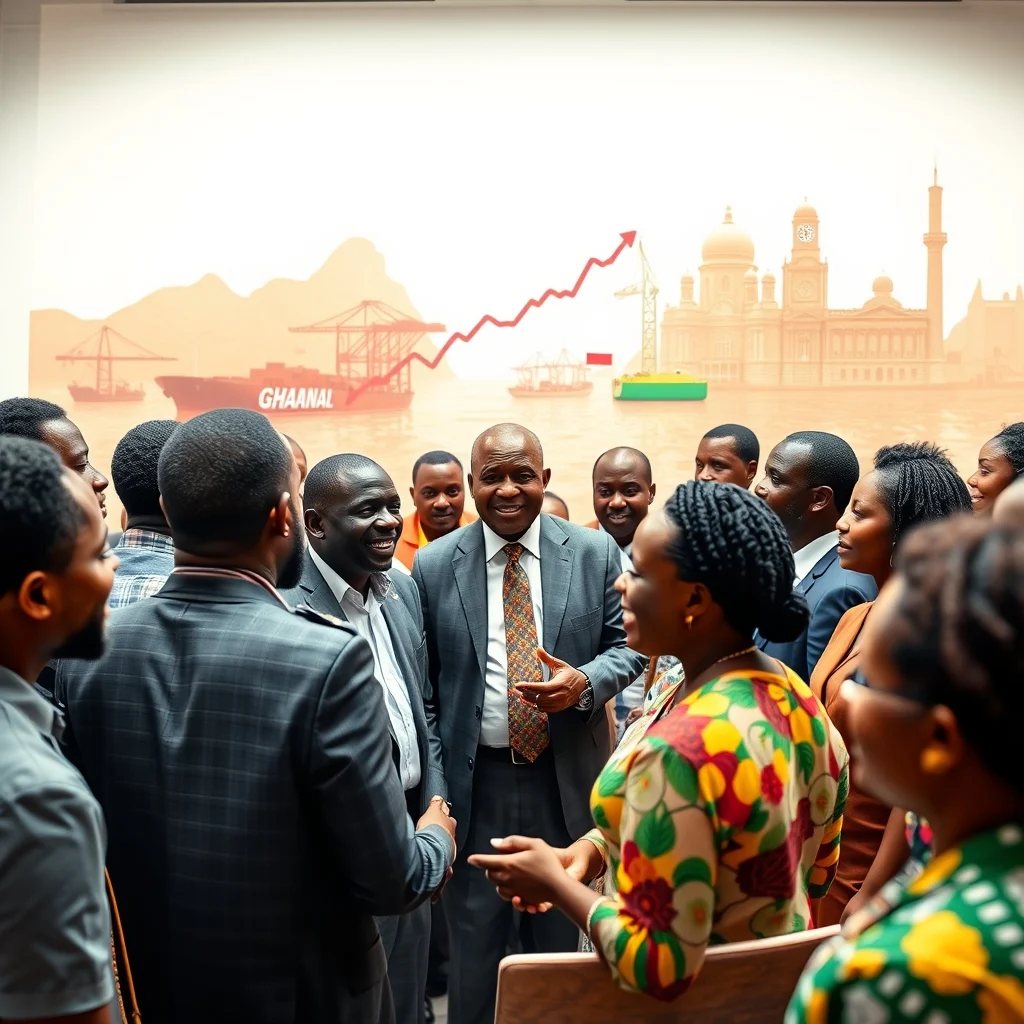
Ghana’s Minister of Finance, Dr. Cassiel Ato Baah Forson, has extended a fervent invitation to both domestic and international investors, as well as the Ghanaian diaspora, to invest in the nation, asserting that the economy has successfully navigated its recent challenges and is now on a stable trajectory. The appeal was made during President John Dramani Mahama’s town hall meeting with the Ghanaian diaspora in London as part of a five-day official visit to the United Kingdom.
Economic Landscape: From Crisis to Recovery
The Finance Minister painted a stark picture of Ghana’s economic situation prior to the current administration’s interventions. He described the economy as having been inherited in a dire state, facing a crisis of unprecedented scale in 2022. This period was characterized by immense pressure on the Ghanaian cedi, soaring inflation, a significant decline in investor confidence, strained external reserves, and a loss of access to international capital markets.
During this tumultuous period, Ghana experienced a series of sovereign rating downgrades. Moody’s downgraded the nation to CAA1 in February 2022, followed by S&P’s CCC+ rating in August. Fitch also downgraded Ghana to CCC in August and further to double C in September of the same year, culminating in Ghana losing access to international capital markets by October 2022. The country’s euro bonds widened to over 3400 basis points, a historic high. This crisis even impacted critical institutions, with the Ghana Cocoa Board unable to secure a syndicated loan for the first time in over three decades, and domestic and commercial banks facing difficulties in obtaining external funding or establishing letters of credit.
Signs of a Resurgent Economy
However, Dr. Forson presented a significantly more optimistic outlook, declaring that Ghana is now “back.” He attributed this turnaround to the difficult but necessary decisions implemented under President Mahama’s leadership. The positive outcomes include a resurgence in GDP growth, with Ghana recording a six percent GDP growth in 2025. Notably, non-oil GDP growth reached an impressive 7.6 percent, the highest in 14 years.
Ghana’s economy has now surpassed the $100 billion threshold, positioning it as a fully-fledged emerging economy and ranking as the eighth largest in Africa. The GDP per capita has also seen a significant rise to $3,385.
Fiscal Prudence and Debt Sustainability
A key highlight of the economic recovery is the improved debt situation. Ghana’s debt has transitioned from an unsustainable level to a moderate risk of debt distress. The debt-to-GDP ratio has fallen to 44.7 percent, significantly ahead of the IMF’s projected target of 45 percent for 2034, a feat achieved eight years ahead of schedule.
Inflation has seen a dramatic reduction, dropping from 23.8 percent in December 2024 to 3.4 percent by April 2024. Borrowing costs have also decreased substantially, with the 91-day Treasury Bill declining by 2,300 basis points from 28.4 percent to 4.8 percent by April 2026. The yields on two-year, three-year, and five-year bonds now range between 11-12 percent, a stark contrast to the previous 25 percent. The Monetary Policy Rate has also been reduced by 1,300 basis points, from 27 percent in January to 14 percent in April.
Diaspora Engagement and Future Outlook
The Minister underscored the vital role of the diaspora, acknowledging that remittances amounted to over $7 billion last year. He emphasized their importance as partners in nation-building and encouraged them to “come home and contribute.” The Bank of Ghana is working with the Ministry of Finance to ensure these remittances directly impact the balance of payments.
Dr. Forson, who himself lived in London, shared personal connections to the city, highlighting that many in leadership roles have experience living abroad and have returned to serve Ghana. This personal narrative aimed to resonate with the diaspora, suggesting that they too can return and play a significant role in the country’s development.
The current administration is committed to sustaining these economic gains. The positive current account balance, which recorded a surplus of 8.3 percent of GDP in 2025 after years of deficit, is projected to reach double digits (over 10 percent) by 2026. This performance is presented as a testament to the effectiveness of fiscal prudence and discipline.
Implications for Investors and the Diaspora
The message from Ghana’s Finance Minister is clear: the nation is actively seeking investment and talent. The economic indicators presented suggest a more stable and predictable environment for businesses and investors. The reduction in borrowing costs and inflation, coupled with robust GDP growth, presents an attractive proposition for those looking to capitalize on emerging markets.
For the Ghanaian diaspora, the invitation signifies an opportunity to reconnect with their homeland, contribute to its growth, and potentially find lucrative opportunities. The government’s focus on ensuring remittances contribute to national economic stability further underscores the importance placed on this demographic.
What to Watch Next
Investors and the diaspora will be closely watching the government’s continued adherence to fiscal discipline and the implementation of policies designed to attract and retain foreign direct investment. The success of future infrastructure projects and the stability of key economic indicators like inflation and currency exchange rates will be critical. Furthermore, the effectiveness of initiatives aimed at integrating diaspora contributions into the national economy will be a key area to monitor as Ghana seeks to solidify its position as a prime investment destination in Africa.










Leave a Reply