
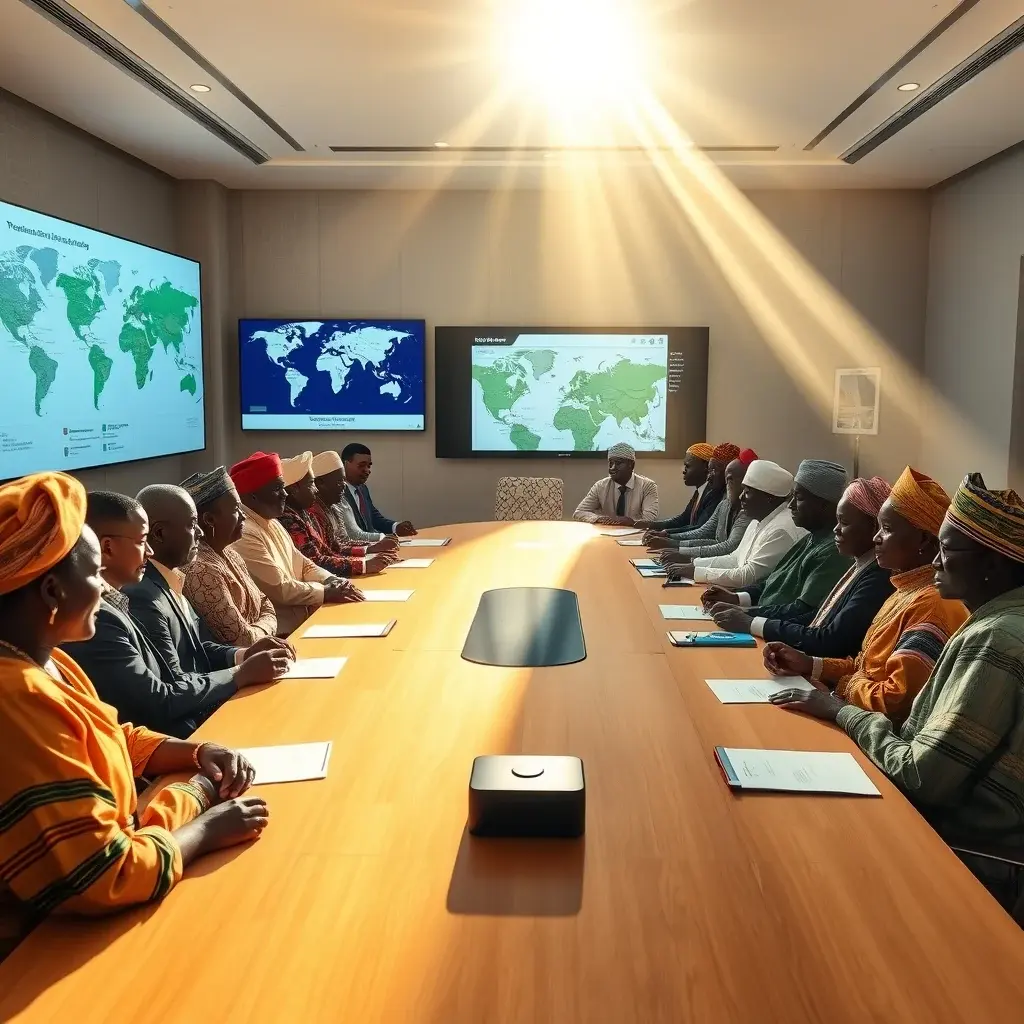
As the Economic Community of West African States (ECOWAS) prepares for a pivotal leadership transition in July 2026, the West African region finds itself at a critical juncture, confronting converging political, security, economic, and social challenges that have strained regional institutions and eroded confidence in integration. This upcoming change in leadership presents a significant opportunity for ECOWAS to redefine its role, reassert its legitimacy, and recommit to the aspirations of its people.
A Legacy Tested by Modern Challenges
For nearly five decades, ECOWAS has been a cornerstone of West African cooperation, fostering economic integration, conflict resolution, democratic governance, and the free movement of people. However, the organization now faces unprecedented tests to its cohesion and relevance.
Regional Fragmentation and Democratic Strain
The recent withdrawal of Mali, Burkina Faso, and Niger from ECOWAS has starkly illuminated deep-seated divisions regarding governance, security, national sovereignty, and the trajectory of regional cooperation. This fragmentation challenges the bloc’s unity and its long-standing success.
Concurrently, democratic governance across West Africa is experiencing a significant downturn. The rise of military coups, electoral disputes, restrictions on civil liberties, and a general decline in public trust towards political institutions signal a broader democratic recession.
Many citizens question whether existing democratic systems are effectively delivering on promises of security, economic opportunity, and accountable governance. This gap between democratic ideals and lived realities poses a profound challenge to both national governments and regional bodies like ECOWAS.
Compounding Security and Economic Headwinds
The security landscape remains fraught with peril. Violent extremist groups continue to expand their influence from the Sahel towards coastal states, while organized crime, illicit trafficking, intercommunal conflicts, and climate-induced resource competition further destabilize the region.
Despite substantial military interventions, persistent insecurity highlights the need for comprehensive strategies that address the root causes of instability, including governance failures, social exclusion, and economic marginalization.
Economically, West Africa faces mounting difficulties, including rising debt, high inflation, significant unemployment, and growing inequality. These issues disproportionately affect young people, who represent the majority of the region’s population and possess immense potential.
A pervasive sentiment exists that regional institutions are disconnected from the daily struggles and aspirations of ordinary citizens for dignity, inclusion, and prosperity.
The Imperative for Strategic Renewal
The impending leadership transition offers a critical window for strategic renewal. The next generation of ECOWAS leaders must acknowledge that conventional approaches will not suffice to tackle the region’s complex and interconnected challenges.
The focus must shift from merely preserving existing structures to adapting them for a dynamic and evolving political and geopolitical environment.
Qualities of Future ECOWAS Leadership
The leadership required today differs significantly from that of previous eras. The incoming head must first be a bridge builder, capable of mending fractured trust among member states and re-engaging those who have distanced themselves from the bloc. Sustainable regional integration necessitates patient diplomacy, mutual respect, and a shared vision of collective interests, rather than isolation or confrontation.
Second, ECOWAS needs a principled pragmatist. While upholding constitutional governance and democratic norms is crucial, defending democracy requires addressing the underlying governance deficits, inequalities, and institutional weaknesses that often foster instability. The new leadership must demonstrate that democratic governance can yield tangible improvements in citizens’ lives.
Third, the organization calls for a citizen-centered regionalist. ECOWAS must move beyond elite-driven initiatives to actively involve citizens, including youth, women, entrepreneurs, and civil society organizations, as central participants in shaping regional policies and integration efforts.
Fourth, the region demands a security innovator. Military solutions alone are insufficient. Lasting security hinges on robust institutions, inclusive governance, economic opportunities, climate resilience, and social cohesion. The next ECOWAS leadership must champion a broader concept of human security, prioritizing people alongside states.
Institutional Reform and Citizen Re-engagement
Crucially, the incoming leadership must commit to significant institutional reform. Restoring confidence requires enhancing transparency, strengthening accountability, improving policy implementation, and ensuring that regional decisions are responsive to on-the-ground realities.
Citizens are more likely to embrace regional integration when they witness its tangible benefits, such as improved mobility, expanded trade, better infrastructure, and enhanced economic prospects.
A Defining Moment for West African Integration
The challenge for the new ECOWAS leadership is both immediate and historic. It involves rebuilding trust, reconnecting with citizens, defending democratic values while addressing their root causes, and responding to security threats within a broader development and governance framework.
The transition presents an opportunity to reimagine the future of regional integration, aligning with ECOWAS’s long-standing vision of an “ECOWAS of the Peoples.” This requires a critical review of protocols, institutional frameworks, decision-making processes, and operational models to ensure they are fit for purpose in a rapidly evolving global context.
The ultimate measure of the next ECOWAS leadership will be whether West Africans regain their belief that regional integration can genuinely improve their lives, strengthen their democracies, and secure their collective future in an era marked by fragmentation and uncertainty. This may prove to be the most significant leadership challenge of all.










Leave a Reply