
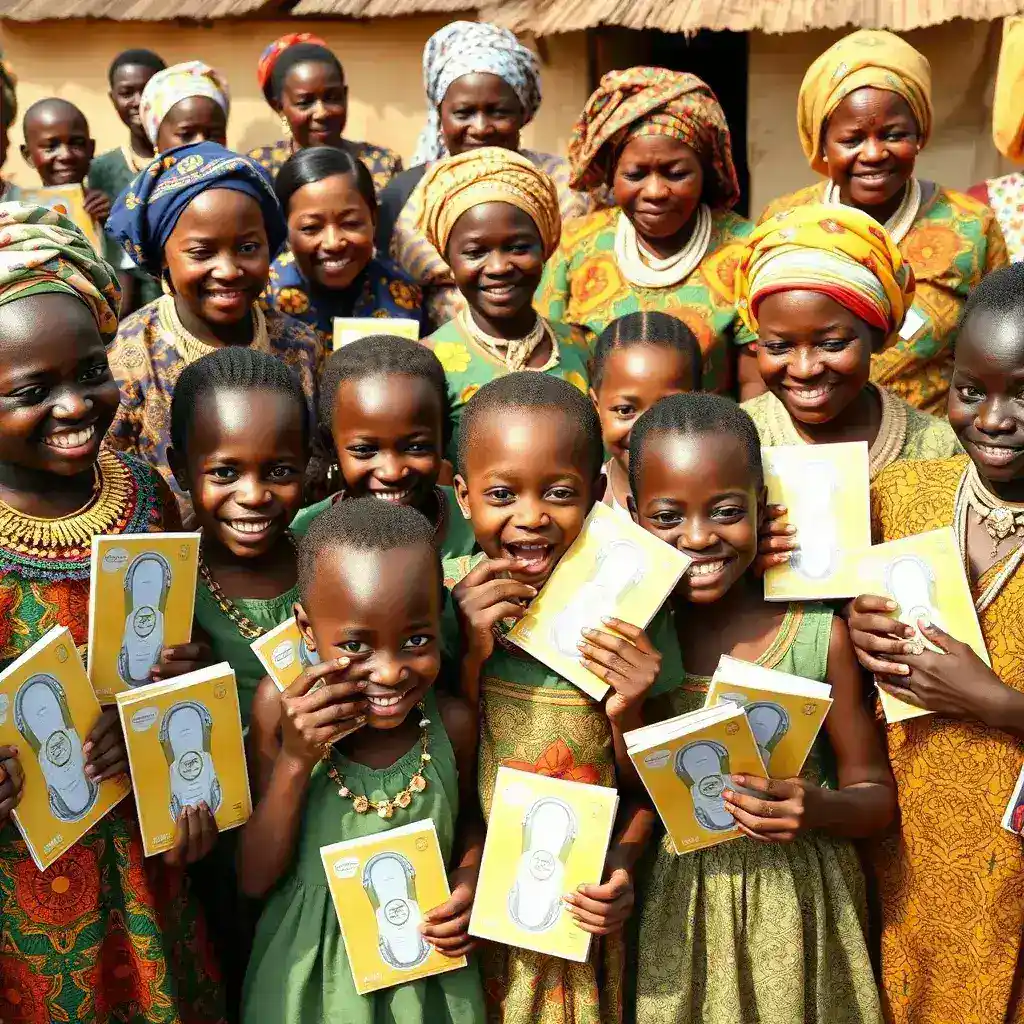
Hundreds of schoolgirls in Ghana’s Ekumfi District received free sanitary pads and exercise books on Wednesday, May 24, as traditional leaders and the Member of Parliament marked World Menstrual Hygiene Day with a community health outreach at Aboano. The initiative, organized by the Ekumfi Traditional Council’s queen mothers in partnership with local officials and benevolent citizens, combined essential product distribution with crucial education on menstrual hygiene and reproductive health.
Education at the Core of the Campaign
A central component of the program was an educational session led by Stella Opoku, a nursing officer from the Ekumfi District Health Directorate. Opoku provided students with practical guidance on menstrual hygiene, covering the proper use and disposal of sanitary pads, maintaining personal cleanliness during menstruation, and tracking menstrual cycles.
“Many girls miss school or feel ashamed simply because they lack basic information and access to safe products,” Opoku stated during the event. She emphasized that good menstrual hygiene is vital for preventing infections and ensuring girls remain in school.
Each participating girl received a pack of sanitary pads and educational materials, aiming to alleviate two significant barriers to their schooling: the lack of menstrual products and inadequate learning resources.
From Teenage Pregnancy Campaign to Sustained Support
Nana Ama Benyiwa VI, Paramount Queen Mother of the Ekumfi Traditional Council, explained that the initiative evolved from a campaign launched four years prior to address escalating teenage pregnancy rates in the district.
“Ekumfi District was once ranked high among districts in the Central Region for teenage pregnancy. It was alarming,” Nana Benyiwa VI recounted. “That campaign opened our eyes to the fact that ignorance, poverty, and lack of support were pushing many girls out of school.”
She highlighted that girls’ education remains a priority for her vision for Ekumfi. Through sustained awareness programs and community engagement by the queen mothers, there has been a noticeable reduction in teenage pregnancy cases in recent years.
“This is not just about pads. It is about dignity, confidence, and keeping our girls in school,” she added, acknowledging the financial and logistical support from MP Dr. Ekow Othniel Kwainoe.
Addressing Menstrual Poverty and its Consequences
In a speech read on his behalf by the Ekumfi District Chief Executive, Ishmael Nana Asamoah, Dr. Ekow Othniel Kwainoe expressed concern over the silent struggles many girls across Ghana face due to unaffordability of sanitary pads and hygiene materials.
He detailed how this lack of access leads to girls missing school days and resorting to unsafe alternatives, increasing their risk of infections and serious health issues. Dr. Kwainoe also pointed out the dire consequence of financial hardship, where some vulnerable girls engage in exploitative relationships to afford basic necessities like sanitary products.
“Some girls are lured into unhealthy relationships with men simply because they need money to buy sanitary pads and personal hygiene products,” he stated. “This situation contributes significantly to teenage pregnancy, school dropout, emotional trauma, and the destruction of many promising futures.”
The MP emphasized that menstrual poverty directly links to teenage pregnancy, as financial dependency on older men for basic needs, including menstrual products, pushes vulnerable girls into such relationships.
Call to Action for Stakeholders
Dr. Kwainoe urged parents and guardians to assume full responsibility for their daughters’ welfare. He also called upon teachers and health professionals across the constituency to implement regular educational programs in schools and communities.
These programs, he stressed, are crucial for equipping girls with essential knowledge on proper menstrual hygiene and reproductive health, thereby empowering them to manage their periods safely and with dignity.
Traditional Leadership Support
The event was graced by the presence of several queen mothers from across the traditional area, including Nana Ajoa Amowah (ii) of Srafa Aboano, Nana Araba Arhinfua Ill of Abor, Nana Amposima (Tufohemaa Bogyano), Nana Owudom of Essakyir, and Nana Besiwa (Ekosti hemaa). Their attendance underscored the significant role traditional leadership plays in championing social interventions at the grassroots level.
World Menstrual Hygiene Day, observed globally on May 28, aims to break taboos surrounding menstruation, improve access to menstrual products, and ensure all individuals can manage their periods safely and with dignity.
The continued efforts in Ekumfi District highlight a growing recognition of the critical link between menstrual health, education, and overall well-being for young girls. What remains to be seen is the scalability of such integrated approaches and the sustained commitment from all stakeholders to eradicate period poverty and its associated challenges in communities across Ghana and beyond.










Leave a Reply