
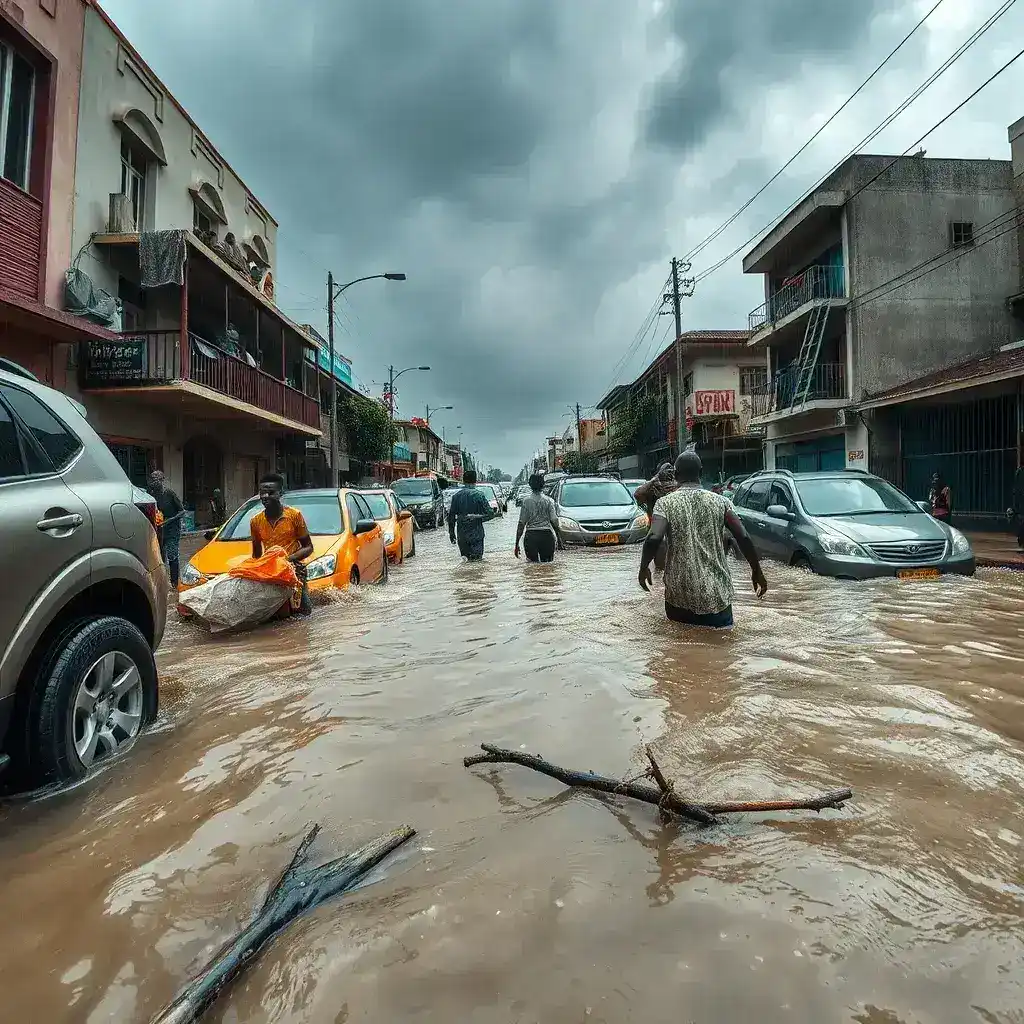
The Ghana Institution of Engineers (GhIE) is preparing a unified set of recommendations to tackle Accra’s persistent flooding issues, spurred by recent deluges that inundated parts of the capital following heavy rains on June 3. The institution’s leadership is currently consulting its members to formulate a cohesive strategy before presenting it publicly.
Context of Persistent Flooding
Accra has grappled with severe flooding for decades, a problem exacerbated by rapid urbanization and inadequate infrastructure. The city’s drainage systems are frequently overwhelmed during intense rainfall events, leading to widespread disruption.
Contributing factors consistently cited by experts include poor drainage maintenance, the encroachment of buildings on natural waterways, and the indiscriminate dumping of waste, which clogs existing drainage channels. These issues combine to create a vulnerability that becomes acutely apparent with each significant rain event.
GhIE’s Response to Recent Floods
The recent floods on June 3, which disrupted traffic and submerged numerous communities, have reignited public concern and scrutiny of the authorities’ flood management efforts. In response, GhIE President, Ing. Ludwig Annang Hesse, stated that the engineering community is actively engaged in internal consultations.
“We are consulting among ourselves, and when we are sure of what we want to say collectively, we will come out, and it will be very soon,” Ing. Hesse announced on JoyNews’ Super Morning Show. He emphasized the need for a consensus-driven approach to ensure their recommendations are robust and representative of professional expertise across the sector.
Ing. Hesse refuted any suggestion of professional silence, explaining that such consultations are vital for developing comprehensive and practical solutions. The institution aims to contribute evidence-based recommendations to the national discourse on flood mitigation.
Expert Perspectives and Contributing Factors
The recurring nature of Accra’s floods points to systemic challenges that require multifaceted solutions. Experts have long identified a combination of factors leading to the city’s vulnerability.
A 2020 report by the World Bank highlighted the critical need for improved urban planning and infrastructure investment to manage flood risks in Accra. The report underscored that inadequate drainage capacity, coupled with increased impervious surfaces from development, significantly raises the potential for flooding.
Furthermore, the issue of solid waste management is intrinsically linked to drainage efficiency. Improper disposal of waste, including plastics and other debris, directly obstructs drainage systems, reducing their capacity to channel rainwater effectively. This problem is compounded by a lack of consistent maintenance and desilting of these vital networks.
Implications for the Capital
The persistent flooding poses significant threats to Accra’s residents, economy, and overall development. Beyond the immediate disruption to daily life and transportation, floods can lead to property damage, loss of livelihoods, and public health concerns due to contaminated water.
Economically, the disruption caused by floods impacts businesses, damages infrastructure, and necessitates costly emergency responses and repairs. The cycle of flooding and rebuilding places a continuous strain on public resources.
The GhIE’s impending recommendations are anticipated to provide a technical roadmap for policymakers, urging a review of current flood management strategies. The focus is expected to be on long-term, sustainable solutions rather than short-term fixes.
Looking Ahead
With the rainy season expected to intensify, the GhIE’s forthcoming position will be closely watched by the public and government agencies alike. The pressure is mounting for tangible actions and investments in resilient infrastructure. Observers will be keen to see if the institution’s evidence-based proposals can cut through political and logistical hurdles to effect lasting change in Accra’s battle against the floods.










Leave a Reply