
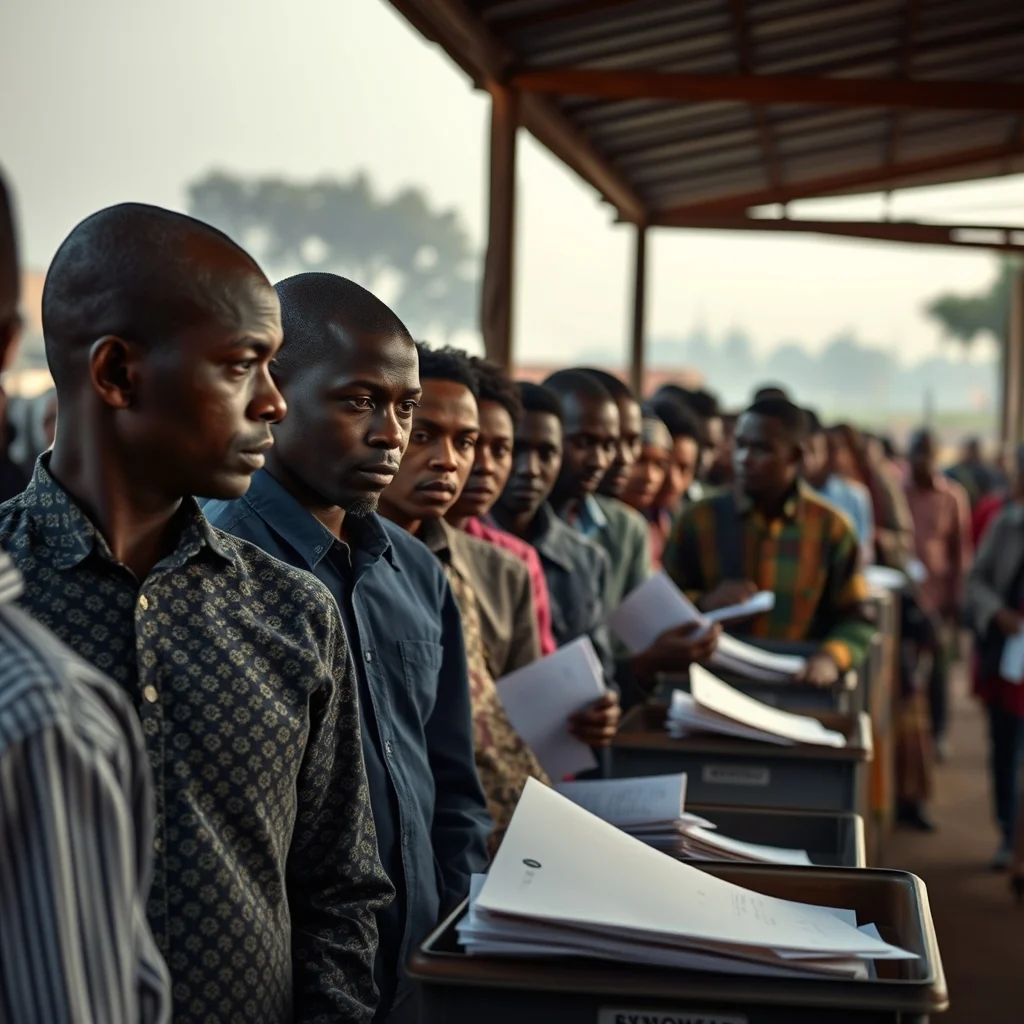
Ethiopia is holding its seventh general election since 1991 on Monday, but significant portions of the population, including the entire northern Tigray region, will be unable to vote due to ongoing conflict and political complexities. The election determines the composition of the 547-member parliament, with the party securing at least 274 seats forming the next government for a five-year term.
Context: A Shifting Political Landscape
Prime Minister Abiy Ahmed, who came to power in 2018 following widespread anti-government protests, dissolved the ruling coalition and established the more centralized Prosperity Party. Initially lauded for democratic reforms, including releasing political prisoners and journalists, and for brokering peace with Eritrea, Abiy’s tenure has since been marked by accusations of suppressing dissent and widespread conflict.
The 2020 war against Tigray’s leaders resulted in an estimated 600,000 deaths and pushed the region to the brink of famine. This conflict, alongside ongoing insurgencies in Amhara and Oromia, has severely impacted the electoral process and the ability of citizens to participate.
Main Body: Contested Elections and Unresolved Conflicts
Opposition figures, such as veteran politician Prof. Merera Gurdina of the Oromo Federalist Congress, describe the upcoming election as the least competitive in recent history, with some participating only to avoid deregistration. The media faces tight regulation, with many international organizations, including the BBC, denied press accreditation.
Reporters Without Borders ranked Ethiopia 148th out of 180 countries in its 2025 press freedom index. Human Rights Watch has condemned the government for arbitrary arrests of journalists, and the Committee to Protect Journalists has noted a “troubling pattern of repressive regulatory action” against the press.
Supporters Highlight Development Amidst Criticism
Supporters of Prime Minister Abiy Ahmed point to significant urban transformation projects in the capital, Addis Ababa, such as the “Corridor Development” and “Riverside” initiatives, as evidence of progress. These projects aim to improve transport and public spaces, though they have also led to criticisms of mass demolitions and displacement.
Economically, Ethiopia, Africa’s second-most populous nation, is among the continent’s fast-growing economies, with support from the IMF and World Bank conditional on liberalizing its foreign currency exchange market and managing its debt, which stood at $36.5 billion in 2024.
Security Concerns Cast a Shadow
Beyond the exclusion of Tigray, violent insurgencies persist in the populous regions of Amhara and Oromia. Fano militias in Amhara and the Oromo Liberation Army (OLA) in Oromia continue to engage government forces, resulting in thousands of civilian deaths and hundreds of thousands displaced. These groups seek greater ethnic autonomy, feeling betrayed by Abiy’s policies.
The conflict monitoring group Acled reported over 9,400 deaths in 2024 due to violence in these regions. Despite these challenges, the government asserts that 97% of areas in Amhara and Oromia are ready for elections, a claim disputed by opposition alliances like the Coalition for Ethiopian Unity.
Tigray’s Exclusion and Regional Tensions
The entire northern region of Tigray, home to an estimated six million people, has been excluded from the vote. Following a peace deal in November 2022 between the government and the Tigray People’s Liberation Front (TPLF), an interim administration was in place. However, tensions have escalated, particularly over the TPLF’s reappointment of its leader without consultation and its failure to register as a new party, leading to its effective ban.
The TPLF also alleges that the government has reneged on aspects of the peace accord, particularly regarding the return of territory lost during the war, such as western Tigray, where around a million people were displaced.
Eritrea and Port Ambitions Fuel Instability
Relations with neighboring Eritrea, which fought alongside Ethiopia during the Tigray civil war, have soured, largely due to Abiy’s ambition for access to a Red Sea port. Ethiopia lost its coastline when Eritrea gained independence over 30 years ago.
Reports suggest Eritrea is also engaging with the TPLF, further increasing tensions between Addis Ababa and Tigray’s leadership. The electoral board’s decision to cancel voting in all of Tigray’s 38 constituencies has raised fears of a return to wider conflict.
Expert Perspectives and Voter Hopes
Magnus Taylor, a Horn of Africa expert at the International Crisis Group, notes that while Prime Minister Abiy is likely confident of re-election, the internal security issues and potential for renewed conflict cannot be overlooked. He stresses the need for regional mediation to facilitate communication between the government and Tigray’s leaders.
Despite the prevailing insecurity and political tensions, over 50.5 million people have registered to vote. Many young and first-time voters express hope that the election will bring stability. Fenet Dereje, a resident of Addis Ababa, stated, “If the outcome of the election is not positive, I think it will affect my daily life economically and politically.”
Implications and Future Outlook
The Deputy Prime Minister has suggested a desire for diverse voices in parliament, aiming to avoid a complete sweep by the ruling party. However, the exclusion of Tigray and the ongoing conflicts in other regions raise serious questions about the legitimacy and inclusivity of the electoral outcome. The coming period will be critical in observing whether Ethiopia can navigate its deep-seated internal divisions and regional tensions to foster lasting peace and stability, or if the excluded regions and unresolved conflicts will lead to further fragmentation and instability.










Leave a Reply