
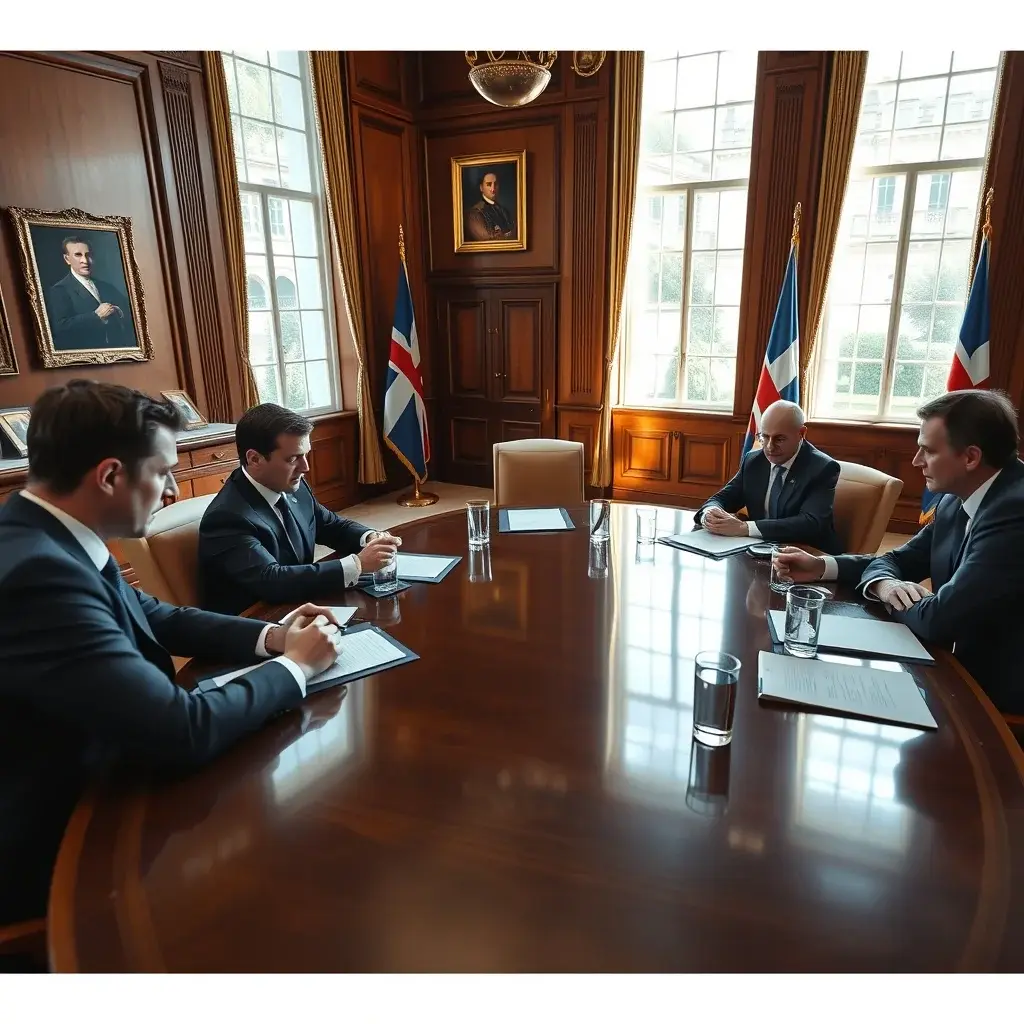
Ukrainian President Volodymyr Zelensky arrived in London on Sunday afternoon for urgent talks with key European allies, including French President Emmanuel Macron and German Chancellor Friedrich Merz. Hosted by UK Prime Minister Sir Keir Starmer at Downing Street, the meeting of the E3 group, a core bloc of Kyiv’s supporters, aims to bolster European defense cooperation and discuss diplomatic pathways amidst a backdrop of escalating attacks and a perceived shift in US foreign policy priorities.
Context of Shifting Alliances and Intensified Conflict
The summit takes place as the United States, under President Donald Trump, reportedly redirects its focus towards the conflict with Iran. This shift has amplified concerns in Kyiv about sustained Western support. Previously, in December, the US had urged Russia and Ukraine to accelerate a peace plan, marking a significant diplomatic push that now appears to be losing momentum.
President Zelensky used his arrival announcement on X to highlight the critical agenda items: “our defence in the war, greater co-operation for the security of all of Europe in the area of air defence, and our shared view of diplomatic prospects.” He stressed the imperative for Europe to be an active and strong participant in any negotiations, underscoring the urgency of coordinated action.
Heightened Attacks and Nuclear Concerns
The diplomatic gathering occurred hours after Ukrainian officials reported a “vile” Russian drone attack that partially destroyed a storage facility for spent nuclear fuel near the Chornobyl nuclear plant. While authorities confirmed no injuries and that radiation levels remained stable, Ukraine’s state-owned nuclear operator, Enerhoatom, condemned the strike as a deliberate threat to nuclear safety. President Zelensky echoed these sentiments, calling the attack on “extremely critical infrastructure” a deliberate act by Russia.
This incident follows a pattern of escalating hostilities. In the Zaporizhzhia region, authorities reported at least three fatalities from a Russian strike on a village just outside the city, adding to two deaths from the previous day’s attacks. Zaporizhzhia has been under relentless assault, highlighting the ongoing humanitarian crisis and the critical need for enhanced defensive capabilities.
Ukraine’s Evolving Defense Capabilities
The discussions in London also touch upon Ukraine’s rapidly developing defense sector. In recent months, Ukraine has demonstrated an increasing capacity to strike targets within Russia, including drone attacks on St. Petersburg. These actions, described as “unprecedented” by Russian authorities, signal Ukraine’s growing ability to project force deep into Russian territory, a significant development in the five-year conflict.
However, diplomatic avenues remain challenging. Russian President Vladimir Putin recently rejected President Zelensky’s proposal for face-to-face talks, stating he saw no point in a meeting. Putin reiterated his stance that a truce would only allow Ukraine to regroup and that the war would only end when Russia’s objectives were met. Zelensky’s open letter, calling for direct negotiations, emphasized the risk of the conflict fading from global attention, particularly that of the US.
Implications for European Security and the War
The London summit underscores a growing European resolve to take greater ownership of regional security, especially in the face of potential wavering from traditional allies. The focus on air defense cooperation signals a strategic shift towards bolstering Ukraine’s ability to withstand aerial assaults, a critical component of its defense strategy.
The E3 leaders’ unified stance and commitment to security guarantees for Ukraine’s future peace process are crucial. As the conflict grinds on and diplomatic solutions appear distant, the coordination among these key European powers will be vital in shaping the ongoing war and its eventual resolution. The international community will be watching closely to see if this strengthened European alignment can effectively counterbalance shifting global priorities and de-escalate the immediate threats, particularly those impacting civilian populations and critical infrastructure like nuclear facilities.










Leave a Reply