
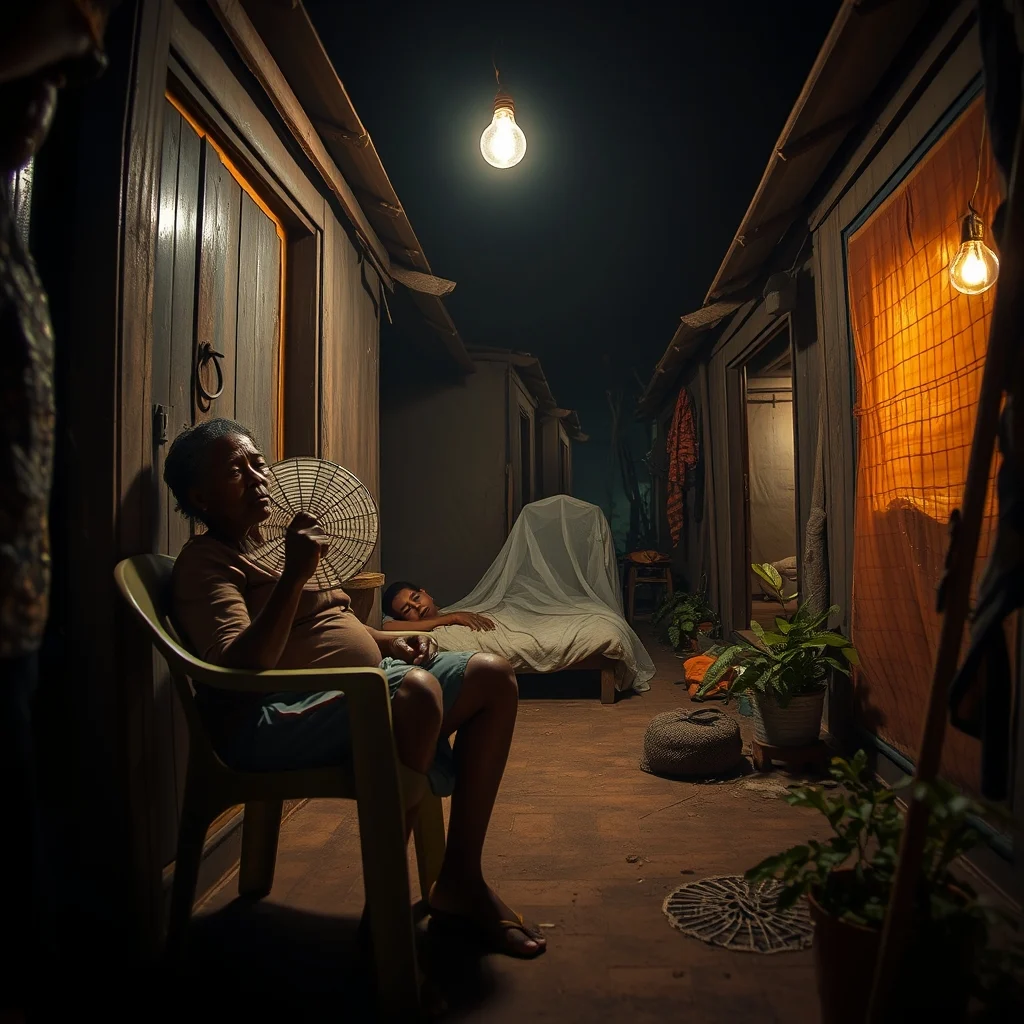
Residents in Accra’s Timber Market area are experiencing increasingly difficult nights as extreme heat traps indoor temperatures, preventing sleep and disrupting daily routines, family life, and intimacy. What was once an occasional discomfort has escalated into a nightly struggle, forcing many to seek relief outdoors even late into the night.
The Nightly Battle Against Heat
For individuals like Stella Atuotanga, nighttime in Timber Market offers little respite from the oppressive heat. Even after multiple baths, the lingering warmth indoors makes sleep elusive. “Especially when the lights go off, it becomes very difficult. Sometimes we just have to manage through the night because the heat is too much,” she stated.
The small wooden rooms common in the area trap heat absorbed during the day, making them unbearable for extended periods. This forces residents, including Stella, to repeatedly leave their rooms in search of cooler air. “Sometimes people even leave their rooms and sleep outside. If you go around at night, you will see people sleeping outside. It is not because they do not have rooms. They do. The heat is just too much,” Stella explained.
Impact on Personal Relationships
Beyond the physical discomfort, the escalating heat is beginning to strain personal relationships. Stella shared how the extreme temperatures affect intimacy, stating, “Yes, it is true that the heat affects intimacy. When the weather is too hot, you are not comfortable in your own body because you are sweating too much.” She further elaborated, “Personally, when there is too much heat, I do not allow my partner to come close to me for sex.”
Josephine Abagri, another resident, echoed these sentiments, finding even basic rest a challenge. “There’s too much heat in the room. That is why you see me out here at this time,” she said, sitting outside her room late at night. Her mother, Janet, noted a significant change from previous years, recalling, “In the olden days, the heat was down. But now the sun is really shining. Even when you put on the fan, it blows heat.” This indicates a generational shift in the experience of heat.
Academic Research Confirms Widespread Effects
Research conducted by academics at the University of Ghana corroborates these lived experiences, finding similar patterns in both Accra and Tamale. Professor Ebenezer Amankwaa, who led the study, highlighted the issue of intimacy as a significant finding. “One issue that emerged strongly was intimacy within marriages. Some men complained that the extreme heat at night affected intimacy with their spouses,” he reported.
The study also identified housing structures as a contributing factor to the problem. Sensors placed in homes revealed that modern cement buildings with metal roofs trap considerably more heat compared to traditional mud houses with thatched roofs. This suggests that building materials play a crucial role in mitigating or exacerbating heat stress.
Broader Societal Impacts
The impact of rising temperatures extends beyond intimate relationships. Professor Amankwaa noted that children are also struggling to sleep due to the heat, leading to sleepless nights for mothers who try to keep them cool. “Another issue was that children were unable to sleep because of the heat. When children cannot sleep, mothers also stay awake trying to keep them cool,” he explained.
This disruption to sleep has significant implications for economic productivity. Professor Amankwaa warned, “When people do not sleep well because of heat, they become less productive during the day. Reduced productivity affects income.” This highlights a direct link between climate change impacts and economic well-being.
Climate Change Beyond Urban Centers
The effects of extreme heat and changing rainfall patterns are not confined to urban areas. In Gbrumo, hundreds of kilometers away, prolonged heat and declining rainfall have caused the community’s primary dam to dry up. This has created a water crisis, forcing women to travel long distances in search of water.
The chief of Gbrumo, Alhassan Mussah, pointed out the cascading effects of the water scarcity, including hygiene challenges. “If you have sex, where is the water to shower?” he questioned. “Some children here have still not taken their bath because there is no water.”
Looking Ahead
Climate experts caution that these widespread disruptions to daily routines, from sleep to basic hygiene, underscore the escalating and often underreported impacts of climate change on ordinary lives. As temperatures continue to rise and weather patterns become more erratic, communities may face increasing challenges in adapting their homes and lifestyles. The focus is shifting towards understanding how infrastructure, community planning, and individual behaviors need to evolve to cope with a hotter future, with potential implications for public health, economic stability, and social well-being across diverse regions.










Leave a Reply