
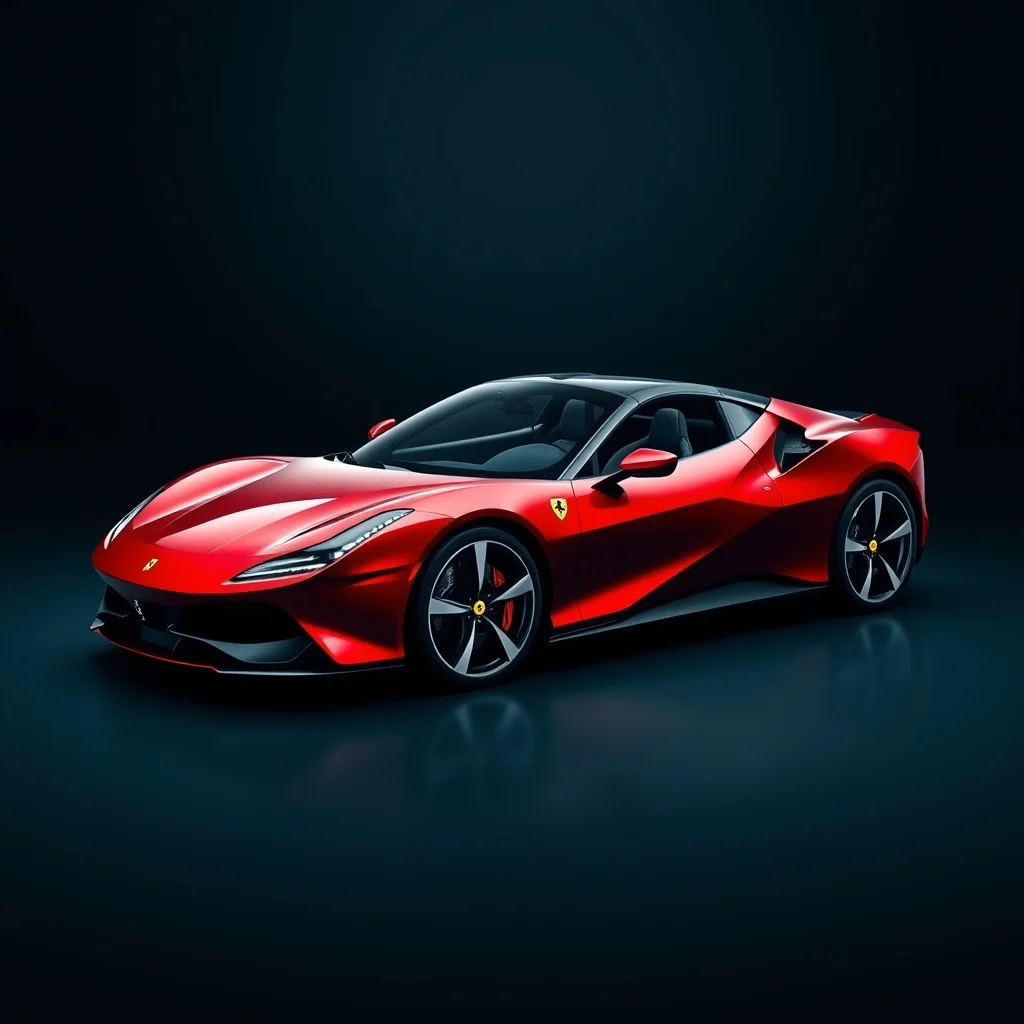
Luxury sports car manufacturer Ferrari has officially unveiled its first-ever fully electric vehicle, the $640,000 Luce, marking a significant departure from its long-standing combustion engine legacy. The groundbreaking model, which took half a decade to develop, was revealed by CEO Benedetto Vigna in Rome, with its name translating to “light” in Italian.
A New Design Direction and Five-Seat Configuration
The Luce distinguishes itself not only by its electric powertrain but also by its innovative five-seater configuration, a first for the iconic Italian brand. This radical redesign was a collaborative effort with LoveFrom, an agency founded by former Apple design chief Sir Jony Ive. This partnership signals a potential shift in Ferrari’s design philosophy, moving beyond its traditional two-seater, performance-focused aesthetics.
Polarizing Reception and Industry Context
Initial reactions on social media have been sharply divided. While some users have praised the Luce as an “absolute masterclass in design” and a “total game changer,” others have been highly critical, with comments ranging from “straight to the junkyard trash” to comparisons with Jaguar’s controversial electric concept car, which also faced backlash for abandoning classic styling.
Ferrari’s chief design officer, Flavio Manzoni, acknowledged that the concept of an electric Ferrari with a new design is “polarizing.” He suggested that criticism is an inherent part of the innovation process and expressed confidence that the design will gain appreciation over time.
Performance and In-House Manufacturing
Despite the design debate, the Luce boasts impressive performance specifications. It features a Ferrari-made electric motor on each wheel, enabling it to accelerate from 0 to 60 mph (96 km/h) in approximately 2.5 seconds. A key aspect of Ferrari’s strategy with the Luce is its commitment to in-house manufacturing for all components. The company states this will ensure the car can be repaired by Ferrari well into the future, thereby protecting its resale value.
Ferrari’s Electric Strategy Amidst Shifting Market Trends
Ferrari’s move into the all-electric space comes at a time when some of its supercar rivals have scaled back their EV ambitions. Lamborghini has notably pivoted to hybrid models, citing low demand for high-end luxury EVs. Porsche has also reduced its EV plans, facing challenges with weak sales in China and potential tariffs in the United States.
The broader automotive industry has encountered significant obstacles in the transition to EVs. Major manufacturers like Ford and Volkswagen have reportedly refocused on petrol cars, particularly in markets like the US, influenced by fluctuating demand and regulatory shifts. Western automakers also face intense competition from Chinese manufacturers, known for their rapid and cost-effective production capabilities.
Ferrari’s Unique Market Position and Financial Performance
As Europe’s most valuable carmaker, Ferrari has historically relied on selling highly exclusive vehicles. This strategy has largely insulated it from the pressures faced by volume manufacturers. However, Ferrari’s shares have experienced a notable decline of over 25% in the past year, reflecting a broader downturn in the luxury goods market influenced by global inflation.
Future Outlook: A Hybrid Approach
Despite the introduction of the all-electric Luce, Ferrari has emphasized that it will continue to offer its traditional petrol and hybrid models alongside its new EV. This dual-pronged approach suggests a strategy to cater to diverse customer preferences and market demands while navigating the complex transition to electrification.
The unveiling of the Luce represents a bold, albeit polarizing, step for Ferrari. The company’s ability to balance its heritage with future-facing technology, manage public perception, and adapt to the evolving automotive landscape will be crucial as it moves forward. The market’s reception to this new design and powertrain, alongside the performance of its competitors, will set the stage for the future direction of high-performance electric vehicles.










Leave a Reply