
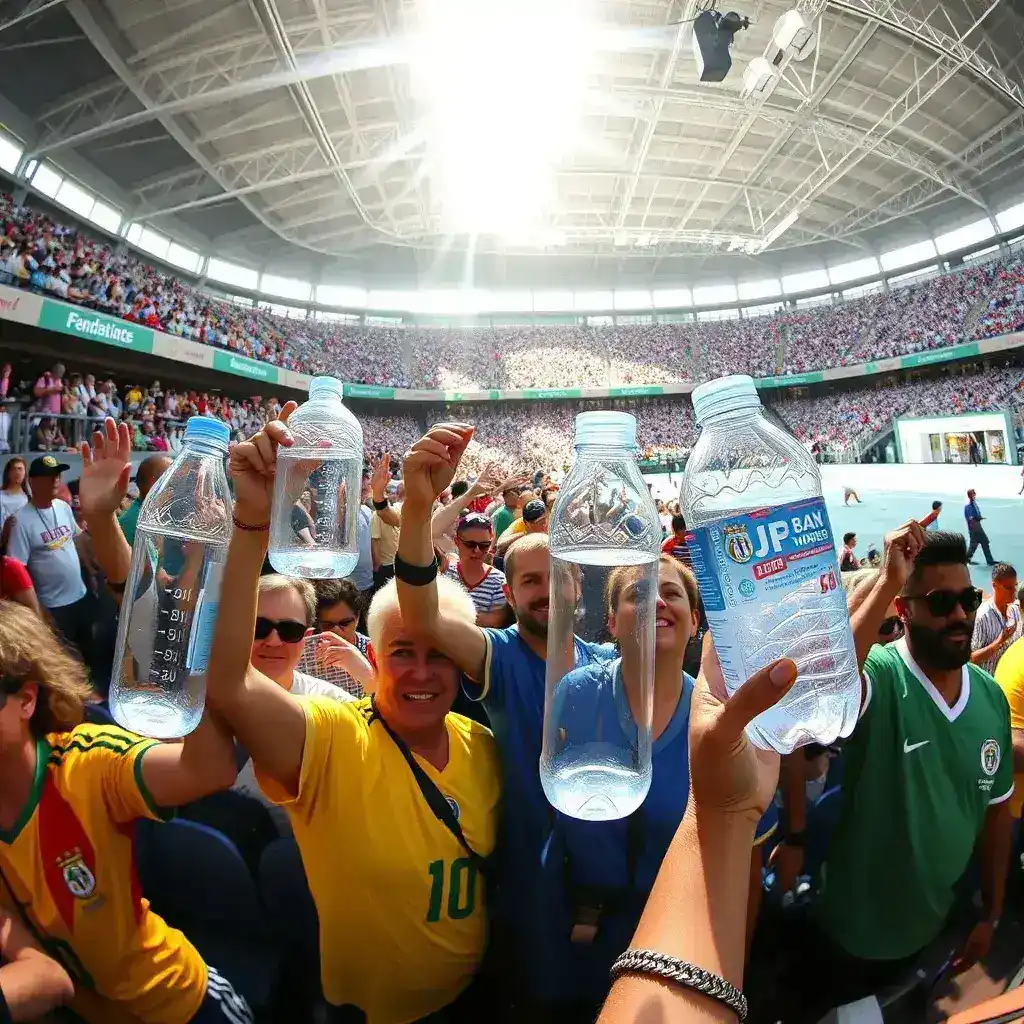
FIFA has reversed its controversial policy barring spectators from bringing reusable water bottles into stadiums for the upcoming World Cup in the United States and Canada, announcing a new guideline Friday following widespread criticism from fan groups and political figures concerned about extreme summer heat and potential price gouging.
Policy Shift Amidst Criticism
The swift policy reversal comes after an internal document update on Tuesday suddenly prohibited reusable water bottles, allowing only empty transparent bottles up to 1 litre. This change threatened to compel attendees to purchase beverages exclusively from concession stands, which are expected to maintain high prices consistent with other major events.
Under the newly amended regulations, fans can now bring one factory-sealed, disposable plastic bottle of up to 20 ounces (590 ml) into matches across the US and Canada. However, hard-sided reusable containers remain prohibited.
Safety Concerns vs. Financial Scepticism
FIFA initially defended the original prohibition by citing safety concerns, stating that heavy reusable containers could pose a risk if thrown onto the pitch or into the stands. “FIFA is committed to protecting the health and safety of all players, referees, fans, volunteers, and staff,” the organization stated, adding that the ban was intended to “prevent risk and injury to players and attendees.”
However, fan organizations widely rejected this rationale, suggesting the policy was primarily a financial manoeuvre to benefit corporate sponsors. Coca-Cola, a longtime FIFA sponsor, exclusively supplies beverages at the tournament venues.
The English fan group Free Lions expressed immediate anger, stating, “Naturally, the immediate thought from supporters is this is just the latest money grab.” They questioned the logic given FIFA’s provision of ‘drinks breaks’ for players and hoped that water fountains would remain free for use.
Extreme Heat Forecast
Meteorologists have warned that the tournament, scheduled from June 11 to July 19, coincides with peak summer heat. Temperatures are projected to exceed 90 degrees Fahrenheit in several host cities.
A report by the World Weather Attribution research group estimated that 26 out of 104 games could be played in conditions where the Wet Bulb Global Temperature surpasses 26 degrees Celsius (78.8 degrees Fahrenheit). Cities like Miami and Houston could experience heat index values over 100 degrees Fahrenheit due to high humidity.
Climate scientists highlight the significant health risks for spectators outside air-conditioned areas. “In a major sports tournament, there’ll be lots of walking around the city for fans,” said Theodore Keeping, a climate scientist at Imperial College London. “There needs to be some way in which fans can get water that is not really expensive, because some people simply will make the choice not to buy water, and that puts fans at a high level of risk.”










Leave a Reply