
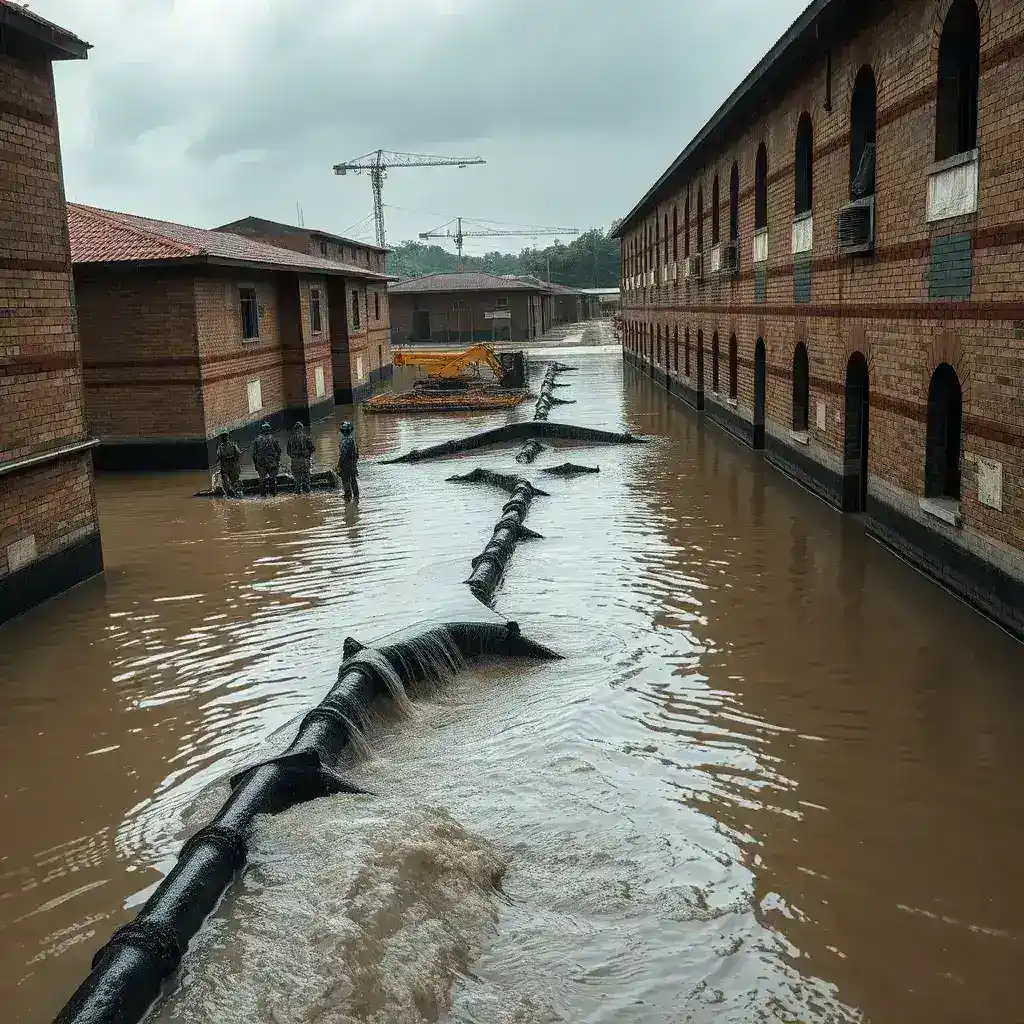
Persistent flooding at the Sekondi Central Prisons is raising significant concerns about the structural integrity of the facility and the potential for prisoner escapes, as warned by prison officials on Friday, May 29. The situation is exacerbated by ongoing road construction projects within the Sekondi-Takoradi metropolis, which have disrupted natural drainage systems.
Drainage Mismanagement Blamed for Flooding
Benedict Bob Dery, Director of Prisons in charge of Operations and Facility Management, detailed how contractors on the Takoradi-Sekondi road project redirected a larger drainage system into a smaller gutter. This action has led to water overflowing into the prison compound during periods of heavy rainfall.
Mr. Dery highlighted that this recurring flooding poses a dual threat: compromising the aging prison’s infrastructure and creating serious health hazards for inmates and staff. The constant inundation weakens the cell walls, increasing the risk of breaches and potential escapes.
Aging Infrastructure Meets Modern Construction Challenges
The Sekondi Central Prisons, an older facility, is particularly vulnerable to the effects of persistent waterlogging. Mr. Dery emphasized that the structural integrity of the cells is being threatened, making the possibility of escapes a tangible concern.
Beyond the immediate security risks, the stagnant water within the prison grounds can become a breeding ground for disease. This presents a significant public health challenge that requires immediate attention to prevent outbreaks within the correctional facility.
Urgent Intervention Called For
In response to the escalating crisis, Mr. Dery has issued an urgent call for intervention from relevant authorities. Addressing the underlying drainage challenges is crucial to prevent further deterioration of the prison’s infrastructure and to safeguard the security and well-being of all individuals within the facility.
The Western Regional Minister, Joseph Nelson, was briefed on the situation, underscoring the seriousness of the issue and the need for swift action. The collaboration between prison authorities, municipal government, and construction contractors will be essential in finding and implementing a sustainable solution to the flooding problem.
Broader Implications for Urban Development and Infrastructure
This incident at Sekondi Central Prisons highlights a broader challenge faced by many urban areas: the impact of new development on existing infrastructure, particularly drainage systems. As cities expand and construction projects proliferate, careful planning and consideration of water management are paramount to avoid unintended consequences.
The situation serves as a stark reminder that infrastructure projects, while often beneficial for development, can inadvertently create vulnerabilities if not executed with a comprehensive understanding of their environmental and security implications. The potential for jailbreaks and health crises underscores the critical need for inter-agency coordination and robust oversight in all major construction endeavors.
What to Watch Next
Moving forward, attention will be on the responsiveness of local authorities and construction firms to Mr. Dery’s call for action. The implementation of effective drainage solutions and any potential modifications to ongoing road construction will be key indicators of progress. Furthermore, the long-term resilience of the Sekondi Central Prisons against future flooding events will be a critical factor to monitor, along with the health and security status within the facility.










Leave a Reply