
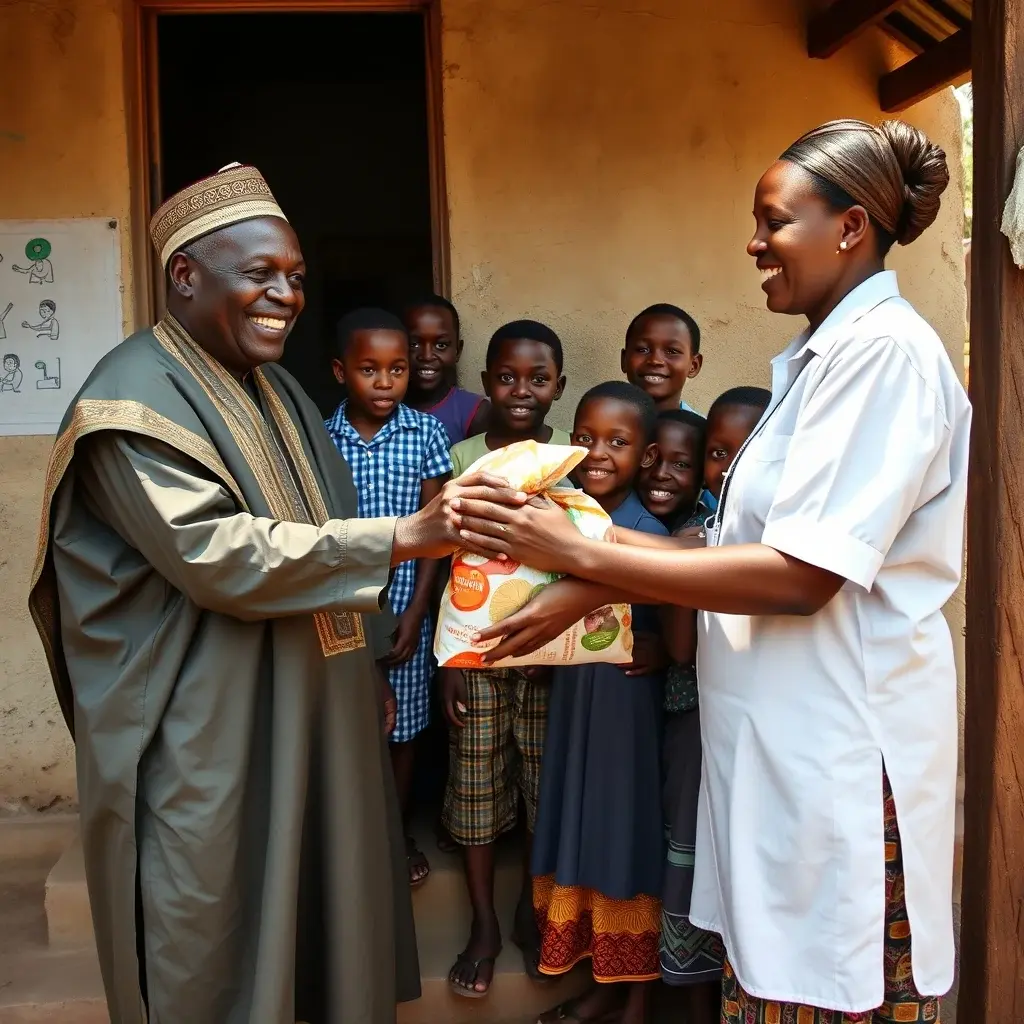
Nana Yaw Basoa, immediate past Ahafo Regional Representative of the Council of State, has called for a united front involving government, religious bodies, corporations, and individuals to prioritize the safety, health, and overall well-being of vulnerable groups, particularly orphans. The plea, made on Monday, June 1, 2026, at Susuanso in the Tano North Municipality of the Ahafo Region, highlighted the critical need for targeted support for children without parental care to ensure their holistic development.
Basoa, a former presidential advisor, stressed that supporting the less fortunate is not solely the domain of the wealthy but a fundamental civic and moral duty essential for building an inclusive and equitable society. His remarks came during a donation to community orphanages as part of his 40th marriage anniversary celebrations.
Context of Philanthropic Efforts
The Basoa family’s donation included assorted food items and essential supplies for two local institutions: the Mums-love Children Home and Rehabilitation Centre and the Generation Hope Orphanage. The heads of these orphanages, Asante Nkrumah and Imoro Adams, expressed deep gratitude, describing the contribution as life-changing and vital for the daily sustenance and morale of the children under their care.
These anniversary-related donations are part of a larger, ongoing commitment by Nana Yaw Basoa to improve living standards and infrastructure within the Ahafo Region. This extends beyond immediate aid to long-term community development projects.
Broader Impact and SDG Alignment
Prior to this, Basoa had previously funded the construction of a four-unit classroom block for the Akokoanmon rural community. This educational intervention significantly eased the burden on young students who previously had to travel long distances to access basic education.
Further demonstrating a commitment to community health, the Basoa family also donated a modern medical incubator, valued at $15,000, to the St. John of God Hospital in Duayaw-Nkwanta. This significant contribution is expected to enhance neonatal healthcare delivery and capacity within the municipality.
Nana Yaw Basoa’s multi-faceted interventions serve as a practical example of advancing the United Nations Sustainable Development Goals (SDGs). His direct support to orphanages aligns with SDG 1 (No Poverty) and SDG 2 (Zero Hunger) by ensuring nutritional well-being and social protection for institutionalized children.
The donation of the medical incubator directly addresses SDG 3 (Good Health and Wellbeing), contributing to global efforts to reduce preventable deaths of newborns and young children. The educational infrastructure project supports SDG 4 (Quality Education) by removing geographical barriers to learning and ensuring safe educational environments for rural youth.
Call for Collective Action and Partnerships
By issuing a public call for collective action, Nana Yaw Basoa also championed SDG 17 (Partnerships for the Goals). This emphasizes the crucial role of cross-sector collaboration between citizens, institutions, and government in achieving sustainable human development.
The former Council of State member’s plea underscores the fact that the responsibility for the welfare of vulnerable children rests on the shoulders of the entire community, not just a select few. The consistent support required for orphanages highlights the ongoing need for sustained engagement from various stakeholders.
Implications and Future Outlook
Basoa’s actions and appeal highlight a growing awareness of the interconnectedness of social well-being and economic development. The emphasis on collective responsibility and partnerships suggests a potential shift towards more integrated approaches to addressing societal challenges.
The success of such localized initiatives, when amplified through broader stakeholder engagement, could serve as a model for other regions. The effectiveness of these interventions will be closely watched, particularly in their ability to foster sustainable improvements in the lives of vulnerable populations and contribute to achieving national development objectives.










Leave a Reply