
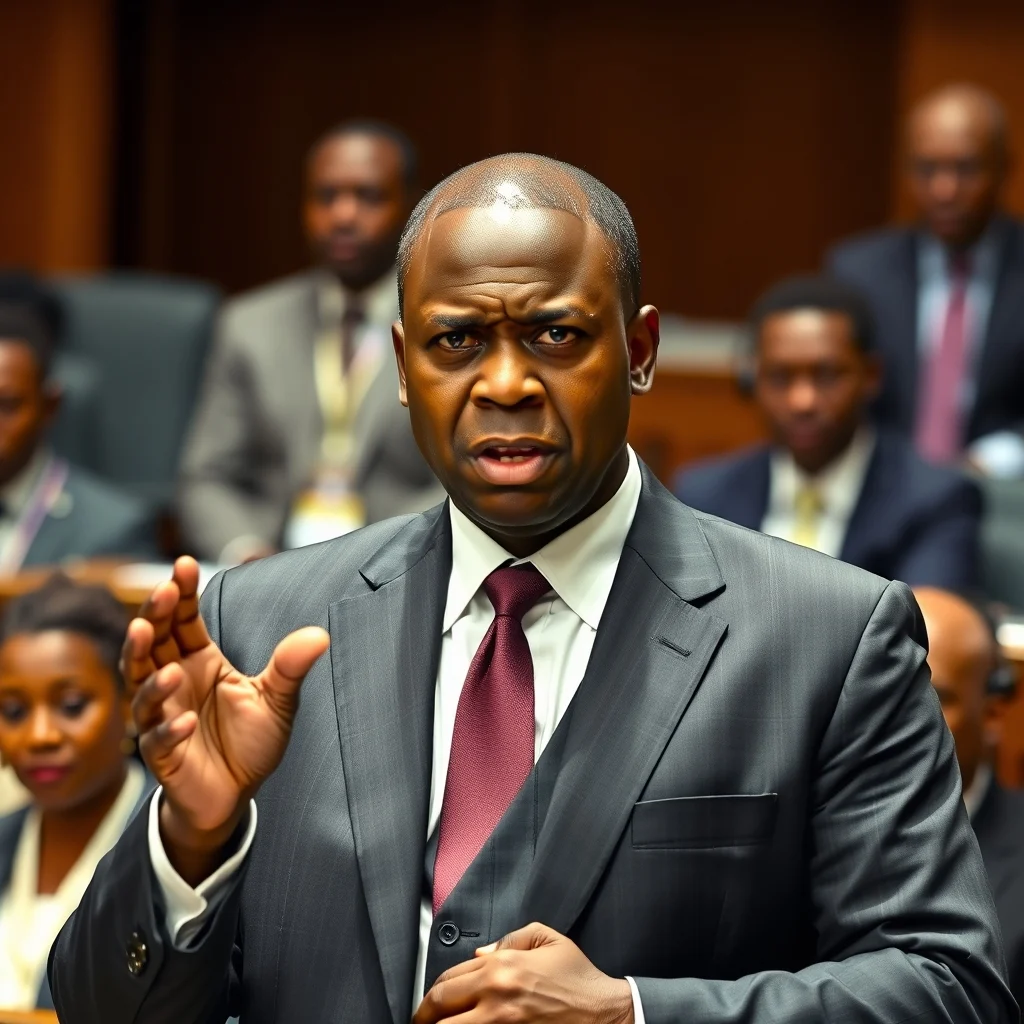
Former Finance Minister Dr. Mohammed Amin Adam has voiced strong criticism regarding the government’s economic management, asserting that crucial fiscal and monetary targets have been missed despite official pronouncements of macroeconomic stability. Speaking in Parliament, the Karaga Member of Parliament highlighted shortcomings in revenue mobilization and questioned the effectiveness of the claimed stability in reducing borrowing costs.
Revenue Mobilization Shortfalls
Dr. Amin Adam pointed out that the government failed to meet its revenue-to-GDP targets under the International Monetary Fund (IMF) supported program. He stated that the target, which had been revised downwards to 13%, was still not achieved.
This shortfall in revenue mobilization raises concerns about the government’s capacity to fund its expenditures and manage its debt effectively. It also casts doubt on the efficacy of the fiscal policies being implemented.
Questioning Economic Stability
The former Finance Minister also challenged the government’s narrative of economic stability. He argued that a decline in inflation, a key indicator of stability, has not translated into lower borrowing costs for the government.
“Stability, when we talk about stability, is supposed to achieve a certain purpose which is to bring down the cost of borrowing,” Dr. Amin Adam explained. He noted that even with inflation falling to 23%, the government had not succeeded in lowering its financing costs.
This disconnect suggests that other factors, such as perceived economic risk, investor confidence, or structural issues in the financial markets, might be hindering the reduction of borrowing expenses. High borrowing costs can strain public finances, diverting resources that could otherwise be used for development projects or social services.
Defining Economic Stability
Dr. Amin Adam emphasized that economic stability should be assessed beyond headline indicators like inflation. He proposed that improvements in access to affordable credit for businesses and citizens, along with stronger fiscal outcomes, are essential components of genuine economic recovery.
He urged the government to prioritize tangible economic gains and demonstrable improvements in the lives of citizens over political narratives. This perspective suggests a need for a more holistic and results-oriented approach to economic governance.
Implications and Future Outlook
The criticism from a former Finance Minister carries significant weight and could influence investor confidence and public perception of the government’s economic stewardship. The missed revenue targets and the failure to translate inflation gains into lower borrowing costs suggest that deeper structural reforms may be necessary.
Moving forward, it will be crucial to observe whether the government addresses these concerns by implementing more robust fiscal measures and policies aimed at improving credit accessibility and reducing financing costs. The success of the IMF program and the overall economic trajectory will depend on the government’s ability to demonstrate tangible progress beyond statistical improvements.










Leave a Reply