
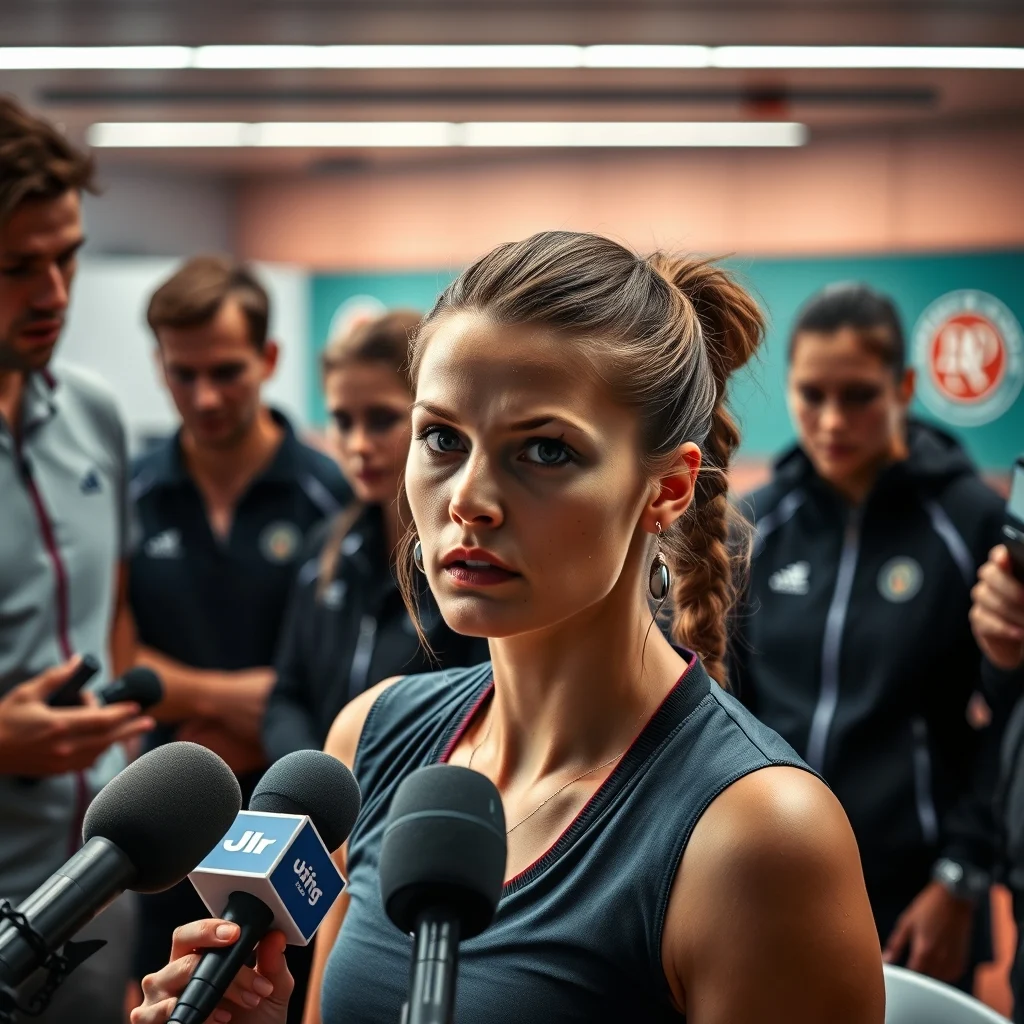
World number one Aryna Sabalenka and several other top tennis players at the French Open cut short their pre-tournament media duties on Friday, participating in a 15-minute limit as a symbolic protest against the prize money allocation at Grand Slam tournaments. The action, which took place on media day ahead of the main draw, aimed to draw attention to players’ belief that a larger share of tournament revenue should be distributed as prize money, particularly benefiting lower-ranked athletes.
Context: A Long-Standing Dispute
This media limitation is the latest salvo in a protracted dispute between players and the four Grand Slam organizers regarding revenue distribution and player welfare. Players argue that while Grand Slams generate significant revenue, the percentage allocated to prize money, especially for those outside the top ranks, has not kept pace. The 15-minute media limit specifically symbolizes the approximately 15% of revenue the French Open currently offers as prize money, a figure players deem insufficient.
Discussions between player representatives and Grand Slam committees have been ongoing for some time, with players seeking a commitment to increase prize money to 22% of revenue by 2030. While recent Grand Slams have seen prize money increases, the rates of growth have varied, with the US Open offering a 20% hike last year and the Australian Open nearly 16% in January. The French Open’s 9.5% increase this year, while an increase, is seen as falling short by many competitors.
The ‘Work-to-Rule’ Directive
Sabalenka, a leading voice in player advocacy, stated her respect for journalists but emphasized the need to make a point. “We just wanted to make our point and we are united – 15 minutes is better than zero,” she told reporters before concluding her session. She noted that players are aware of the situation and are collectively demonstrating their stance.
Other prominent players, including men’s world number one Jannik Sinner and four-time French Open champion Iga Swiatek, also adhered to the 15-minute media limit. Sinner highlighted a perceived lack of “respect” towards the athletes, while American player Taylor Fritz stated that the action was a response to feeling “ignored” by tournament organizers.
Novak Djokovic, a staunch advocate for players’ rights, did not participate in the specific media action, explaining he was not involved in the planning stages. However, he reiterated his consistent support for players, emphasizing the need to improve conditions and financial security for a larger number of athletes within the sport.
Player Demands Extend Beyond Prize Money
The players’ demands encompass more than just immediate prize money increases. They are also seeking improved provisions for player welfare, including contributions towards pension and healthcare funds, as well as maternity support. Furthermore, players desire greater consultation in decisions that impact their grueling schedules, such as late-night matches and tournament formats.
Grand Slam rules mandate that main-draw players must participate in “feature media opportunities” to promote the sport and engage fans. Failure to comply can result in fines of up to £50,000, unless a valid reason is provided. However, players who completed their core media commitments within the 15-minute limit on Friday are not expected to face penalties.
Official Response and Future Implications
French Open tournament director Amelie Mauresmo expressed sadness over the players’ action but conveyed confidence in reaching a resolution. She, along with French Tennis Federation president Gilles Moretton, is scheduled to meet with Larry Scott, who represents the players in the dispute. The possibility of further actions, including a potential boycott of future Grand Slams, remains a topic of discussion among players, though many are hesitant to issue ultimatums without full readiness to follow through.
The protest highlights a growing assertiveness among top athletes in demanding fairer revenue distribution and better overall conditions. As the French Open commences, the spotlight remains on the ongoing negotiations and the potential for future player actions if their concerns are not adequately addressed. The outcome of these discussions could significantly shape the economic landscape and player experience at major tennis tournaments for years to come.










Leave a Reply