
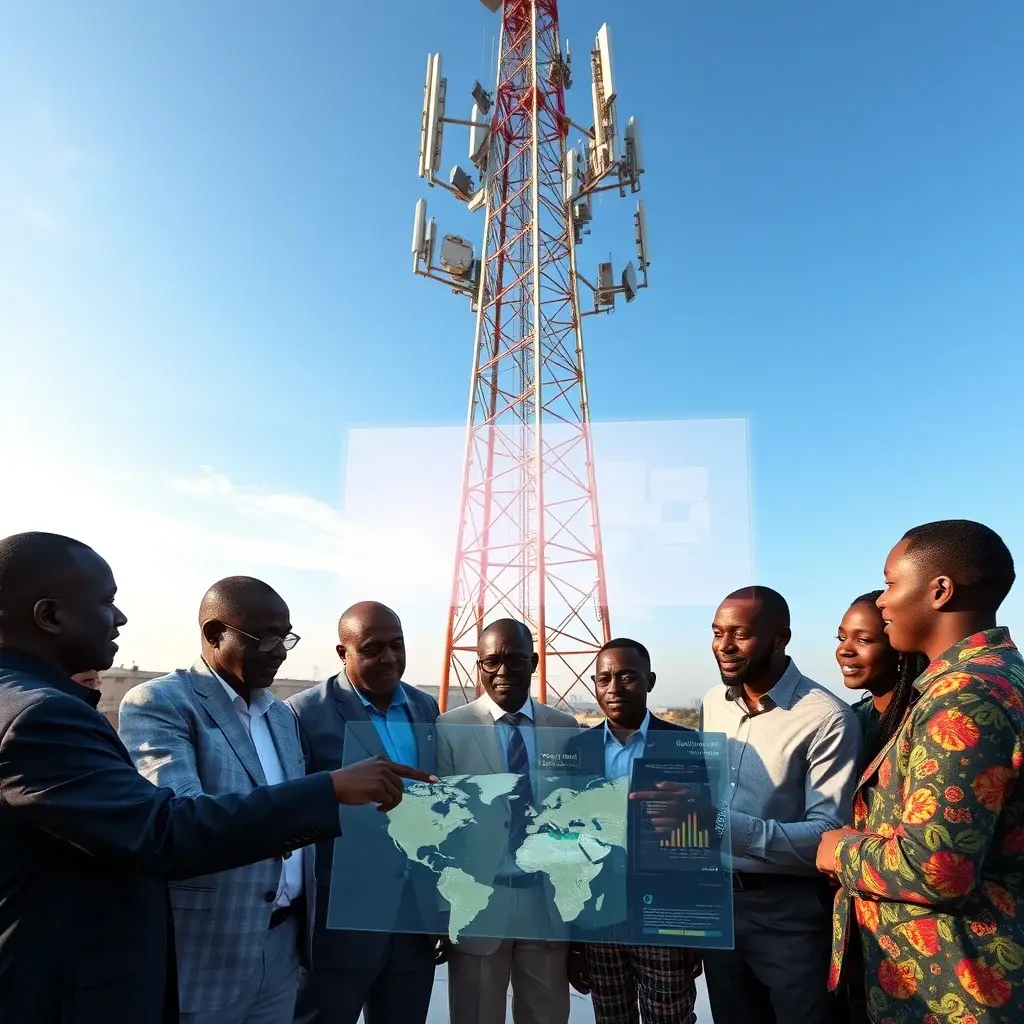
Ghana’s government has officially set an ambitious target: to achieve 70% nationwide 5G population coverage by March 2027. This goal was announced by Mr. Samuel Nartey George, Minister of Communications, Digital Technology and Innovations, during a critical stakeholder workshop on spectrum management held in Accra. The initiative is a cornerstone of a broader digital transformation strategy for the nation, aiming to position Ghana as a leader in African digital innovation.
Digital Strategy Pillars
The 5G rollout is not an isolated effort but is integrated into a comprehensive digital strategy. This strategy rests on five key pillars: enacting necessary legal reforms, fostering the development and adoption of artificial intelligence, building robust digital infrastructure, enhancing digital skills among the population, and implementing effective spectrum management practices.
‘70% Coverage for Ghana at 70’
The government has branded this ambitious coverage target as ’70 per cent coverage for Ghana at 70′. This slogan cleverly aligns the telecommunications goal with Ghana’s 70th Independence Anniversary, scheduled for March 2027. Minister George emphasized the clarity of this objective during the workshop, stating, “Our target is unambiguous, we want 70 per cent population coverage of 5G by Ghana’s 70th Independence Day celebrations in March 2027.”
Collaborative Effort Required
Achieving such a widespread 5G network necessitates a strong, unified approach. Mr. George highlighted the crucial need for collaboration between government entities, the regulatory bodies, and private sector players, including mobile network operators and infrastructure providers. He acknowledged the ambitious nature of the goal but expressed confidence in its attainability through coordinated actions, increased investment, and efficient allocation of radio frequency spectrum.
Rollout Obligations and Rural Connectivity
To ensure the benefits of 5G reach all citizens, the government plans to implement strict rollout obligations. These obligations will be directly tied to spectrum allocation, compelling operators to extend their services to underserved and rural communities as a condition of their licenses. “We cannot give spectrum without firm commitments to rural connectivity,” the Minister asserted, underscoring a commitment to bridging the digital divide.
Addressing Cost Disparities
Beyond coverage, the government is also focusing on the affordability of telecommunications services. Minister George acknowledged the existing disparities in costs between urban and rural areas as a significant policy concern. He indicated that these pricing gaps would be reviewed to promote more equitable access to digital services nationwide. Investments in resilient infrastructure, reliable backup power systems, and network redundancy are also deemed crucial for ensuring the sustained reliability of 5G services.
Industry’s Role and Quality of Service
The Minister urged industry stakeholders to actively align with the government’s vision. This alignment involves significant investment in network expansion, fostering innovation, and developing consumer-centric services. He stressed that digital connectivity should serve as a fundamental platform for economic growth and broad digital inclusion across the country.
Echoing the importance of user experience, Rev. Ing. Edmund Yirenkyi Fianko, Acting Director-General of the National Communications Authority (NCA), stated that the successful deployment of 5G hinges not just on coverage but critically on service quality. “Deployment without quality could not be considered a success,” he remarked. He noted that increasing data demands and rising consumer expectations are already straining existing networks, leading to persistent service challenges in certain areas. Fianko emphasized that 5G deployment must prioritize high Quality of Service (QoS) and equitable access for both urban and rural populations. “To sustain a digital economy, quality of service and quality of experience must remain at the top of our agenda,” he concluded.
Future Outlook
The government’s clear commitment and the outlined strategy signal a significant push towards digital transformation in Ghana. Stakeholders will be watching closely as the regulatory framework evolves and investment commitments materialize. The success of this 70% coverage target by 2027 will likely depend on the synergy between government policy, regulatory oversight, and the proactive investment and deployment strategies of the telecommunications industry, with a keen eye on ensuring equitable access and high service quality for all Ghanaians.










Leave a Reply