
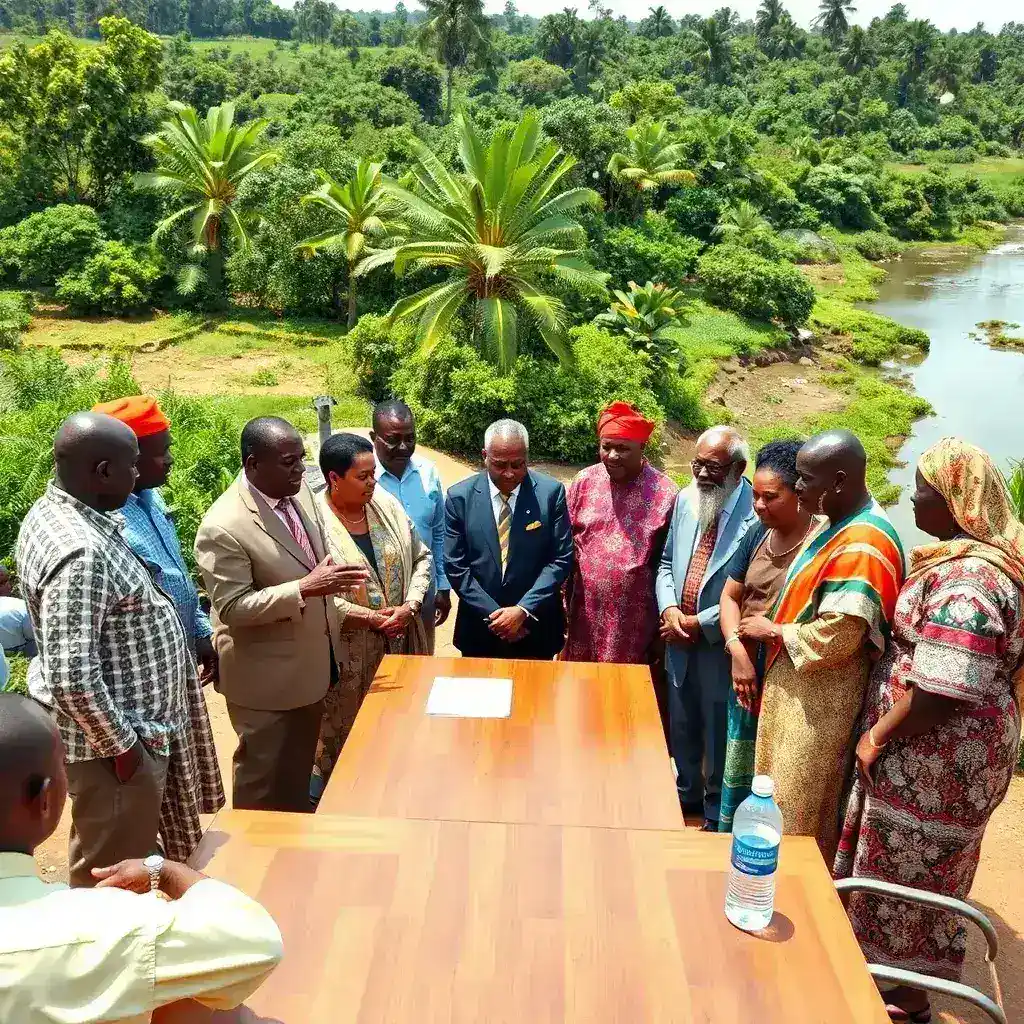
Leaders and traditional authorities from Ghana’s Wa West District and Burkina Faso’s Commune of Batié met recently in Wechiau, Ghana, to reaffirm their commitment to transforming their shared border into a zone of economic integration, peace, and sustainable development. The high-level engagement, part of the German development agency’s SKBoWa project, aimed to strengthen cooperation and social cohesion in these frontier communities amidst regional security challenges.
Bridging Artificial Divides
Razack Yamusah Abdulai Issahaku, speaking for the Chief of Wechiau, Naa Imoru Nandong Gomah II, emphasized that national borders are artificial constructs that should not sever the deep-rooted cultural and familial ties connecting communities on both sides.
He highlighted the Black Volta River not as a divider, but as a shared resource vital to both populations. Issahaku drew a parallel with wildlife, noting that animals, like hippos and elephants, cross borders freely without passports, questioning why humans should be divided by land.
“If animals can share one ecosystem, why should humans fight over one land?” he posed, advocating for a border management approach focused on shared opportunities rather than division.
Strengthening Security Through Cooperation
Issahaku urged security agencies from both nations to bolster intelligence sharing and collaborative efforts, asserting that such cooperation is a more effective strategy for maintaining peace than solely relying on armed enforcement.
Wa West District Chief Executive Richard Wulo echoed the sentiment, describing the relationship between Wa West and Batié as historically grounded in shared heritage, family links, and trade.
In the context of rising insecurity in West Africa, Wulo called for enhanced unity among border communities and outlined the SKBoWa project’s three core pillars: inclusive dialogue, community micro-projects, and a ‘Soccer for Peace’ tournament designed to foster social cohesion and youth engagement.
Commitment Across the Volta
The Chief of Batié, Dah Sanhoulo, underscored the necessity of inter-community cooperation. He noted the delegation’s successful crossing of the Black Volta River, despite its full capacity, as a tangible demonstration of their commitment to the peace initiative.
Sanhoulo called for regular joint border patrols and improved communication channels between Ghanaian and Burkinabe security forces. This, he believes, will enable the swift resolution of localized disputes before they escalate into larger conflicts.
He also proposed that local government authorities delegate specific development responsibilities to traditional leaders, leveraging their influence to promote peace and development more effectively.
Shared Resources, Shared Future
A broad consensus emerged among participants regarding the need to share social infrastructure and resources across the border. Issahaku championed unrestricted access to essential services like healthcare, education, and agricultural resources, irrespective of nationality.
“If a clinic is full in Wechiau, Batié mothers should enter. If Batié has seeds that survive drought, Wechiau farmers should plant them,” he stated, reinforcing the idea that effective border management should maximize mutual benefits.
Project Goals and Next Steps
Dorcas Affi, the GIZ SKBoWa Project Components Manager, reiterated the project’s central aim: to strengthen friendship, cooperation, and peaceful coexistence among border communities. She highlighted dialogue and joint activities, such as the recent football tournaments, as crucial tools for conflict prevention and long-term regional stability.
To translate these discussions into tangible outcomes, participants engaged in working groups. These groups focused on promoting social cohesion, addressing border harassment through enhanced cross-border cooperation, and strengthening local economic development.
The resolutions from these working groups are expected to shape the future trajectory of development, security cooperation, and community integration efforts between the Wa West District and the Commune of Batié, paving the way for a more unified and prosperous border region.










Leave a Reply