
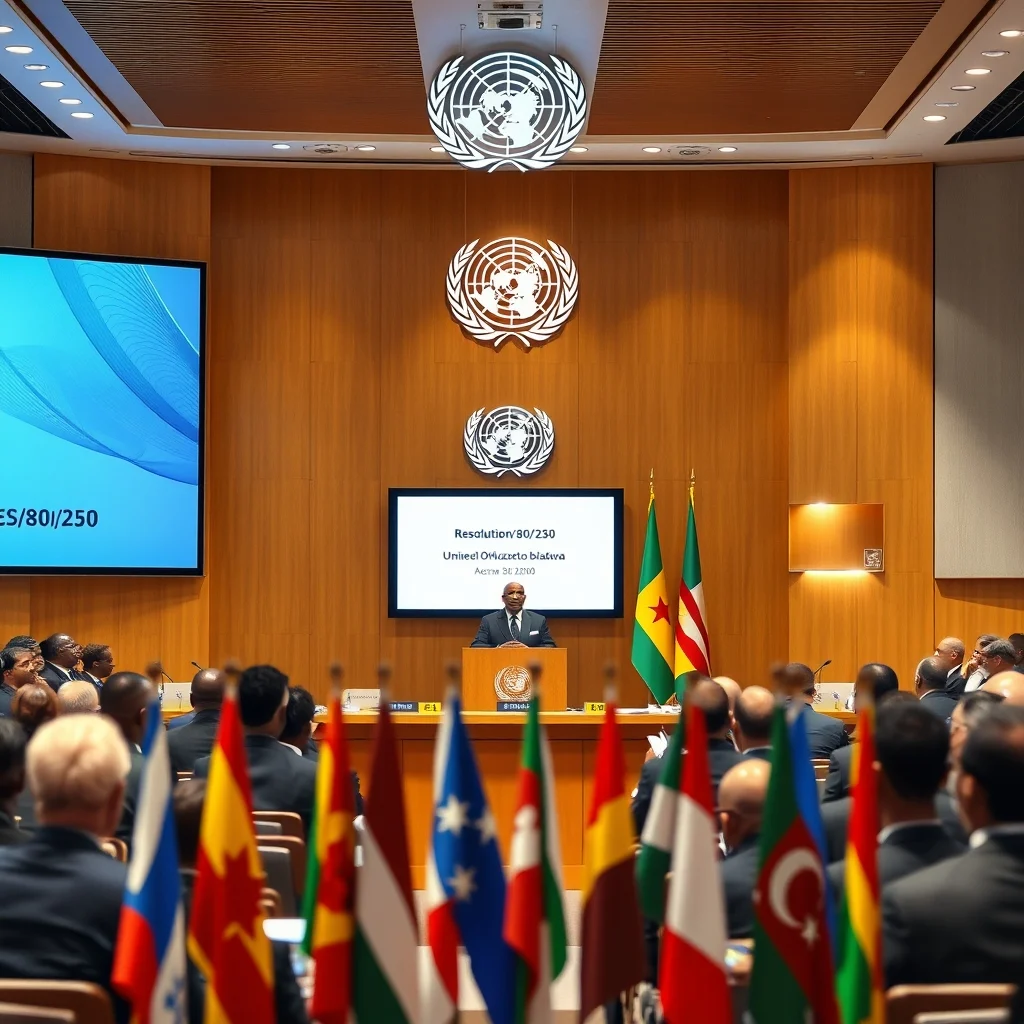
Accra, Ghana – On April 29, 2026, Ghana’s Minister for Foreign Affairs, Samuel Okudzeto Ablakwa, briefed the Diplomatic Corps in Accra on a landmark United Nations General Assembly Resolution (A/RES/80/250). The resolution formally acknowledges the Trafficking of Enslaved Africans and Racialised Chattel Enslavement of Africans as the gravest crimes against humanity, marking a significant global shift towards acknowledging historical atrocities and their ongoing impact.
A Historic Milestone in Global Acknowledgement
Minister Ablakwa described the resolution’s adoption as a historic milestone, signifying the international community’s formal recognition of the transatlantic slave trade’s atrocities. This acknowledgement extends to the profound and lasting global inequalities that continue to stem from this period.
The resolution specifically recognizes the enslavement and trafficking of Africans as crimes against humanity. It further highlights their transgenerational consequences, which continue to shape present-day global disparities.
This development signals a crucial transition from historical denial to a position of responsibility and constructive engagement on the international stage. It is expected to bolster global discussions surrounding reparatory justice.
Ghana’s Commitment to Reparatory Justice
Ghana is actively championing the principles embedded in this resolution. The nation is committed to advancing these objectives through sustained international dialogue and good-faith cooperation with all partners.
A key aspect of this commitment is the restitution of cultural property. Minister Ablakwa emphasized the importance of reclaiming artefacts and historical manuscripts, viewing them as vital for restoring dignity and cultural identity to affected communities.
Upcoming Conference to Solidify Frameworks
The next phase of implementation will involve a High-Level Consultative Conference. Scheduled to take place from June 17 to 19, 2026, this conference aims to build global consensus and establish a structured framework for reparatory justice.
This pivotal event will convene Heads of State and Government, policymakers, scholars, and civil society actors. Their deliberations will focus on developing robust legal frameworks and effective implementation mechanisms.
As part of the conference program, participants will engage in a commemorative visit to Christiansborg Castle in Osu. This historic site holds significant links to the transatlantic slave trade. The timing of the visit, coinciding with Juneteenth, underscores a powerful symbol of solidarity with people of African descent worldwide.
Diplomatic Engagement and Future Outlook
Minister Ablakwa expressed his gratitude to the Diplomatic Corps for their ongoing engagement and support. He reaffirmed Ghana’s dedication to maintaining an open dialogue on reparatory justice and advancing the resolution’s overarching goals.
The adoption of UN Resolution A/RES/80/250 and Ghana’s proactive stance represent a significant step in confronting the legacies of slavery. The upcoming conference is poised to be a critical juncture in translating this global acknowledgement into tangible actions and frameworks for justice.










Leave a Reply