
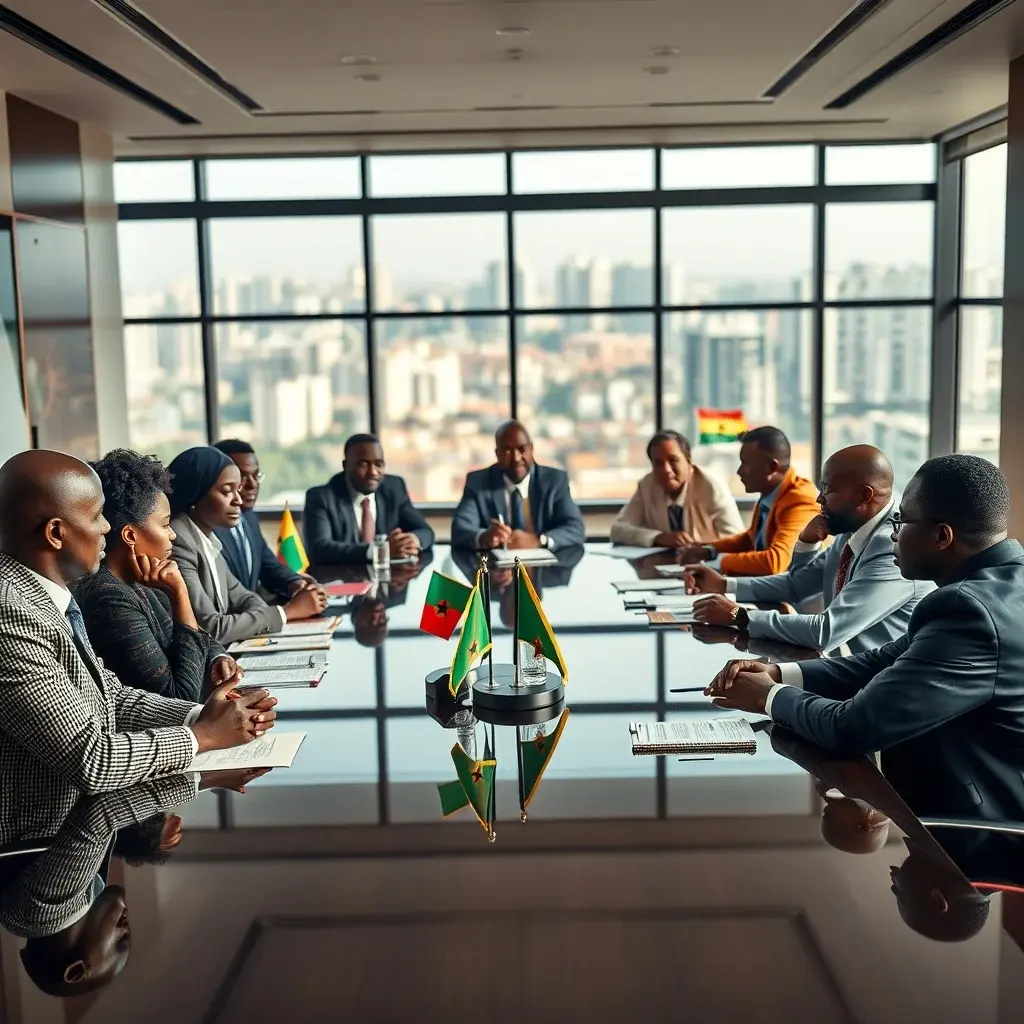
Accra, Ghana – As Ghana navigates its rich reserves of gold, bauxite, manganese, oil, and emerging lithium, a critical national conversation is underway regarding who truly benefits from these resources. Joy Business has convened a high-level roundtable, “To Nationalise or Transform? Rethinking Ghana’s Approach to Mining, Oil and Critical Minerals,” to dissect whether increased Ghanaian ownership alone will drive national development or if broader reforms are essential.
The Urgency of Resource Governance
Ghana, with over a century of gold mining and over a decade of oil production since 2010, now stands at the cusp of capitalizing on critical minerals like lithium. This strategic moment coincides with a rising tide of resource nationalism across Africa, fueled by increased commodity prices and a strong desire for local participation and benefit from natural wealth.
The central question debated is whether greater state or local ownership of extractive industries will automatically translate into improved national outcomes. Participants are exploring whether deeper reforms in governance, financing mechanisms, industrialization strategies, and accountability frameworks are more critical for long-term growth and development.
Diverse Perspectives on National Control
The roundtable discussion features a diverse panel representing various sectors and viewpoints. The Institute of Economic Affairs (IEA), through economist Samuel Manu, advocates for nationalization, focusing on ownership models and sovereign wealth funds as pathways to financing long-term growth.
Conversely, Ing. Dr. Kenneth Ashigbey from the Ghana Chamber of Mines offers an industry perspective, cautioning against blunt nationalization calls. He emphasizes the importance of investor confidence, global competitiveness, and the practical implications for ongoing mining operations.
Wisdom Puplampu of the Minerals Commission is set to provide insights into the regulatory landscape, including existing local content policies and overall mineral governance structures. Dr. Adu Owusu Sarkodie from the Centre for Policy Scrutiny will address crucial issues of accountability and transparency, aiming to prevent elite capture and maximize national benefit.
Further enriching the debate, Dr. Frank Boateng, Acting Director of the Institute of Mineral Resource Investment and Governance at the University of Mines and Technology (UMaT), will share global lessons learned from other resource-rich nations, examining their experiences with nationalization, strategic partnerships, and local industrialization efforts.
Global Economic Realities and Future Competitiveness
Gideon Ayi-Owoo, a Partner and Resources & Industry Expert at Deloitte Africa, will bring a broad continental and global industry perspective. His contribution is expected to cover the realities of financing in the extractive sector, current investment trends, strategies for critical minerals, and how Ghana can maintain global competitiveness while enhancing local value retention.
The dialogue, broadcast live on JoyNews TV, Joy FM, and JoyNews social media, aims to move beyond theoretical discussions. A key expected outcome is a policy brief containing actionable recommendations, which will be disseminated to government bodies, state institutions, and the public.
Implications for Ghana’s Economic Trajectory
This intensive discussion underscores a pivotal moment for Ghana’s economic future. The decisions made regarding the governance and ownership of its vast natural resources will significantly shape its development trajectory. The push for greater local participation, coupled with global demand for critical minerals, necessitates a nuanced approach that balances national control with economic viability and global competitiveness.
The insights generated from this roundtable are expected to inform policy decisions, potentially influencing future legislation and investment strategies in Ghana’s extractive industries. Stakeholders will be watching closely to see how the recommendations translate into tangible policies that ensure the nation’s mineral wealth benefits its citizens broadly and sustainably. The focus will be on whether Ghana can forge a path that leverages its resources for transformative, long-term development, rather than simply asserting ownership.










Leave a Reply